
 The Messianic Movement is not inauthentic; on the contrary, it is a challenge to the Christian world to reconsider its theological foundations. The Christian Churches are confronted with an unexpected partner. This means that their presence compels us to think and to act decisively differently in the future than we have in the past.
It was a hot summer day in 1995 when young Rabbi Marty Waldman, Secretary General of the Union of Messianic Jewish Congregations (UMJC), was sitting in his office in Dallas, Texas, preparing a teaching on Acts 15—about the Council in Jerusalem. There, he had a "vision." Rabbi Marty saw a need for another Council in Jerusalem. This Second Council should revisit and redress the outcomes of the First. This time, the Gentiles would have to welcome back the Jews as their Older Brothers.
In keeping with our name as an initiative, we hope for a final unity of Jew and Gentile—expressed in something like a solemn convocation, reminiscent of the First Jerusalem Council described in Acts 15. This, in a sense, represents the ultimate goal of the TJCII initiative.
 A recent Crisis Magazine interview on Israel and Zionism with Christendom College Professor Matthew Tsakanikas contains numerous theological and factual errors — from misreading Paul to misrepresenting Catholic tradition. CAMERA's David Orenstein responds with careful, well-sourced corrections drawn from Scripture, Church documents, and leading Catholic scholars. Essential reading for Catholics seeking clarity on what the Church truly teaches about God's covenant with the Jewish people.
 Dr. André Villeneuve discusses the role of Israel in the age of the Church on Michael Lofton's "Reason and Theology" podcast. Topics include God's covenant with Israel, supersessionism, the idea of the Church as "new Israel", Israel's role in the age of the Church, the modern state of Israel, Zionism, the Israeli-Palestinian conflict, and Israel's role in regard to Jesus' Second Coming.
 The Hidden Roots of the Crisis of the Church in the Holy Land: In the troubled Holy Land, divided and torn by conflict, local Church leaders and Christians of all colors often claim to speak a tireless message of justice, reconciliation and peace. If only more people would listen to this message - so they claim - it would surely dramatically improve the prospects for peace between the conflicting parties in the region. But is this true?
 For Zion’s Sake addresses the growing confusion and hostility toward Israel within Catholic discourse, and calls for a truthful, charitable, and theologically grounded engagement with the Jewish people’s land, state, and covenantal identity. This appeal confronts the resurgence of supersessionism and anti‑Zionism, and affirms the enduring significance of Israel in Scripture, tradition, and the Church’s post‑conciliar teaching. We invite Catholics to rediscover Israel’s place in God’s design and to stand against the distortions that obscure it.
 While most Evangelical Protestants are generally friendly to the Jewish people and the State of Israel, there is a small band of Evangelical pastors and professors who want to line up all Evangelicals unilaterally on the Palestinian side. The most egregious example may be Anglican vicar Stephen Sizer, whose has chummed up with the likes of Naturei Karta and Iranian President Ahmadinejad. But Gary Burge probably wields the greater influence.
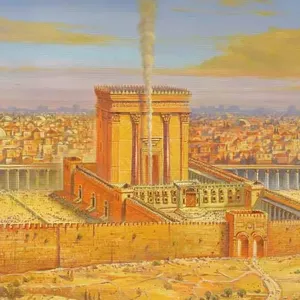 Who is the true Father of Zionism — Theodor Herzl, or God himself? Long before the nineteenth century, God declared Zion his eternal dwelling and promised to return his people there. Here is the complete biblical witness — 177 occurrences of "Zion" across the entire canon of Scripture.
 Part III: Messianic Judaism and Christian Zionism: The rise of the Zionist movement in the late 19th century. Early Christian Zionism. Early Hebrew-Christians and early Hebrew-Catholics. The turning point: 1967. From Hebrew-Christians to Messianic Jews. The Messianic movement today in Israel and among the nations. Messianic theology and faith; Messianic congregations and worship; Messianic culture and life in Israel. Christian Zionism and Christian supporters of Israel today. Toward Jerusalem Council II - welcoming Jewish believers back into the Church.
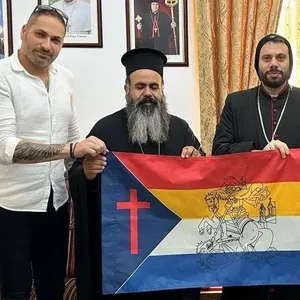 Paddy Monaghan responds to the recent Jerusalem Patriarchs’ denunciation of Christian Zionism. Drawing on decades of Catholic renewal and the witness of evangelical Catholic leaders worldwide, Monaghan argues that biblical Zionism is not a political distortion but a faithful expression of historic Christian teaching on God’s enduring covenant with Israel.
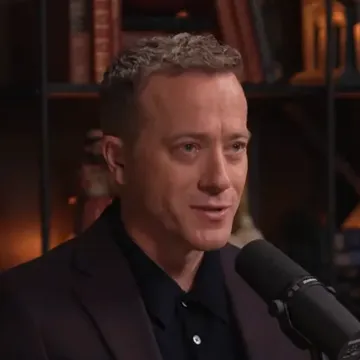 Matt Fradd claims to lay out "the Catholic position" on Christian Zionism. The problem? He gets it wrong. The Church does not teach what he says it teaches. Church Fathers, papal preachers, Benedict XVI, John Paul II, even a key editor of the Catechism all contradict him. Here's the evidence.
 Matt Fradd recently claimed that Catholic teaching clearly condemns Christian Zionism — and packaged that claim as a "catechism." But in doing so he committed a basic error: presenting a contested theological opinion as settled Church teaching. This point-by-point refutation exposes the loaded questions, false dilemmas, selective citations, and supersessionist assumptions that run through his argument.
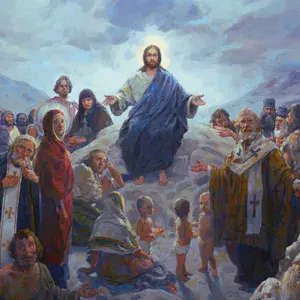 Has God rejected his people? Supersessionists claim that God's promises to Israel were "fulfilled" — and therefore abolished — by the coming of Christ. The New Testament itself tells a different story. Here is a compilation of NT verses affirming that God's covenant with Israel remains intact.
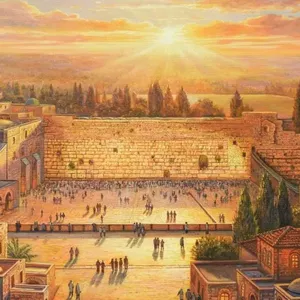 Two Catholic scholars have written directly to Pope Leo XIV, posing a question the Church has long sidestepped: does the modern State of Israel carry any theological significance, or is its existence a matter of politics alone? Their open letter considers this "theological silence" in the light of Scripture, Tradition, and Church history — and argues that the moment has come for an answer.
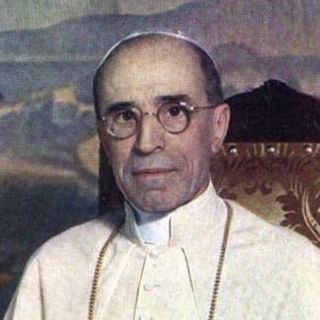 An organization researching the history of Pius XII's relationship with the Jews says that a series of documents recently uncovered show a pattern of direct actions by Archbishop Eugenio Pacelli (the future Pope) that culminated in the establishment of the modern State of Israel.
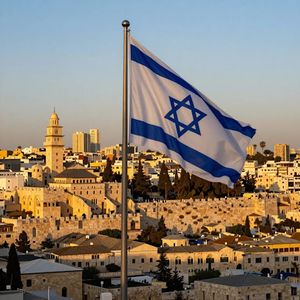 Test your knowledge of Israel and the Church. Don't worry if you're unsure about the answers; just take your best guess. This quiz highlights common beliefs and assumptions on these topics and then offers clear, well-grounded explanations drawn from Catholic teaching.
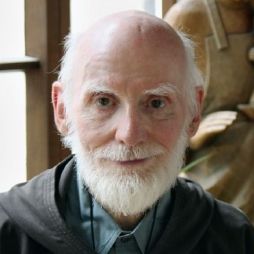 Br. Tilbert Moser proposes a biblical alternative to the Two-State Solution and Vatican recognition of the Palestinian State. This article is currently available in German only.
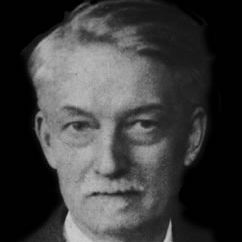 The central fact, which has its deepest meaning for the philosophy of history and for human destiny—and which no one seems to take into account—is that the passion of Israel today is taking on more and more distinctly the form of the Cross.
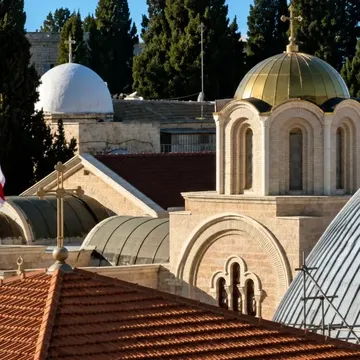 Is Christian Zionism really a “damaging ideology”—or is the controversy rooted in something deeper? This article examines the Jerusalem churches’ recent condemnation of Christian Zionism, probing its theological claims, political context, and implications for Palestinian Christians. It asks whether the churches’ opposition reflects timeless Christian theology—or a political posture shaped by the realities of the modern Middle East.