

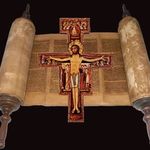
 There are no disagreements between Judaism and Catholicism. Where their teachings diverge, it is because they apply to two different, well, let’s call them universes, two ways that human experience is unified (uni-verse, “turned into one”) in relation to G-d according to their respective covenants.
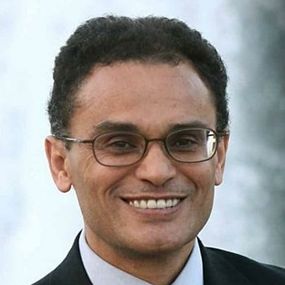 Here is a translation of Magdi Allam’s account of his conversion to Catholicism. The formerly Muslim journalist was baptized by Benedict XVI at Saturday's Easter Vigil Mass 2008 in St. Peter's Basilica.
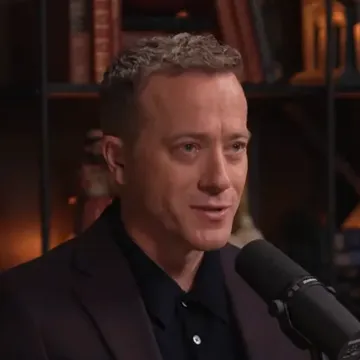 Matt Fradd claims to lay out "the Catholic position" on Christian Zionism. The problem? He gets it wrong. The Church does not teach what he says it teaches. Church Fathers, papal preachers, Benedict XVI, John Paul II, even a key editor of the Catechism all contradict him. Here's the evidence.
 Matt Fradd recently claimed that Catholic teaching clearly condemns Christian Zionism — and packaged that claim as a "catechism." But in doing so he committed a basic error: presenting a contested theological opinion as settled Church teaching. This point-by-point refutation exposes the loaded questions, false dilemmas, selective citations, and supersessionist assumptions that run through his argument.
 Having been raised in a Conservative Jewish home in suburban Toronto, I was a regular attendee at synagogue on Sabbaths and High Holidays. My father is a Holocaust survivor from Poland and my mother’s family escaped the pogroms in Russia. Both settled here in Canada and raised my sister and myself in a Jewish and Yiddish speaking environment where all of our friends were Jewish and Israel was our raison d’être. Christianity was the religion of the outsiders, the faith of anti-semites and Jew-haters, the creed of the Crusaders, Inquisitors, Persecutors, and Nazis. Yet my mother would remind me continually that "Jesus was a Jew"...
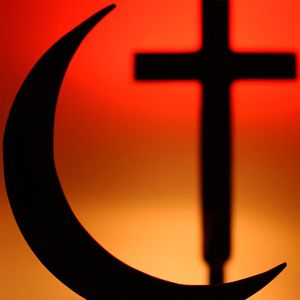 Jesus and Muhammad could hardly have been more different in how they lived or in what they taught others. Why should we not expect starkly contrasting legacies - from the conduct of their closest companions to the livability of modern-day countries influenced by the predominance of one founder's teachings over the other?
 Jesus Christ suffers in the passion of Israel. In striking Israel, the anti-Semites strike him, insult him and spit on him. To persecute the house of Israel is to persecute Christ, not in his mystical body as when the Church is persecuted, but in his fleshly lineage and in his forgetful people whom he ceaselessly loves and calls. In the passion of Israel, Christ suffers and acts as the shepherd of Zion and the Messiah of Israel, in order gradually to conform his people to him.
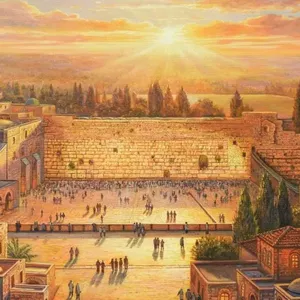 Two Catholic scholars have written directly to Pope Leo XIV, posing a question the Church has long sidestepped: does the modern State of Israel carry any theological significance, or is its existence a matter of politics alone? Their open letter considers this "theological silence" in the light of Scripture, Tradition, and Church history — and argues that the moment has come for an answer.
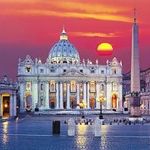 'To reunite all his children, scattered and led astray by sin, the Father willed to call the whole of humanity together into his Son's Church. The Church is the place where humanity must rediscover its unity and salvation. The Church is "the world reconciled." She is that bark which "in the full sail of the Lord's cross, by the breath of the Holy Spirit, navigates safely in this world." According to another image dear to the Church Fathers, she is prefigured by Noah's ark, which alone saves from the flood.' (CCC 845)
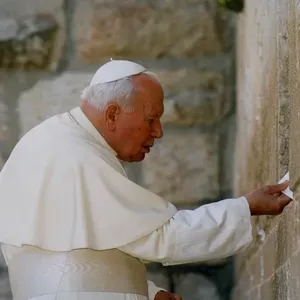 In March 2000 Pope John Paul II visited Israel. During the visit a historic ceremony was held in the Hall of Remembrance in Yad Vashem expressing the wish for reconciliation between the Catholic Church and the Jewish people.
 The history of the relationship between Israel and Christendom is drenched with blood and tears. It is a history of mistrust and hostility, but also - thank God - a history marked again and again by attempts at forgiveness, understanding and mutual acceptance... Can Christian faith, left in its inner power and dignity, not only tolerate Judaism but accept it in its historic mission? Or can it not? Can there be true reconciliation without abandoning the faith, or is reconciliation tied to such abandonment?
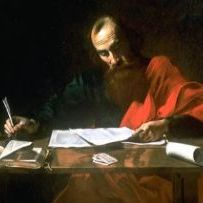 For most Jews, Saint Paul was a renegade Jew remembered with bitterness for the criticism he aimed at the Jewish religion after he became an ardent follower of Jesus of Nazareth. Perhaps it is time for this negative view of Paul to be balanced by the solid defence of the Jewish people that he wrote in the mid 50’s of the first century C.E., in a letter to the Roman church.
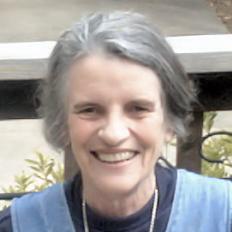 As right wing political atheists of a Jewish ancestry, we didn't fit in with anyone around us: not with Catholics, not with the sprinkling of Protestants, certainly not with Orthodox religious Jews in full regalia, nor Reform Jews, nor Zionist atheist Jews, nor left-wing non-Zionist Jews. Later, as a Catholic, I realized that my desire to belong to an identifiable group forever and ever had a psychological as well as a theological reason.
 The doctrine of original sin is an essential component of the Christian faith. If catechists don’t explain well the nature, effect, and consequences of original sin, they will find it very difficult not only to address the major moral issues of our day, but also to effectively communicate the Gospel.
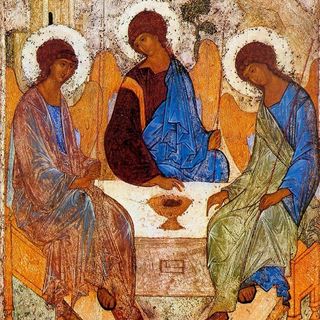 The Trinity is the central mystery of the Christian faith. The term describes the inner life of God, who is an eternal communion of Persons and a Family whose life is love. Is the concept of the Trinity a Christian invention, derived from Greco-Roman pagan ideas? Or do we already find hints of the Trinity in the Hebrew Bible and in Jewish sources?
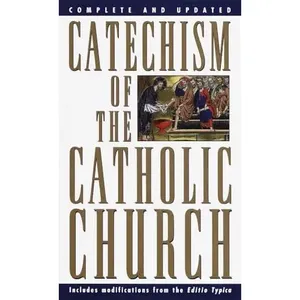 The Catechism of the Catholic Church, initially promulgated in 1992, represents the most authoritative modern synthesis of Catholic doctrine. Among its teachings are a set of passages that address the Church’s relationship with the Jewish people and Judaism — a relationship the Catechism insists is unique, living, and theologically constitutive of Christian identity itself.
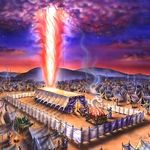 The Exodus, God's deliverance of Israel out of Egyptian slavery through Moses, prefigured God's redemption of all humanity from the slavery of sin through a new and greater Savior, Jesus the Messiah. The liturgical life of the Israelites in the desert on their way to the Promised Land prefigured the liturgical and sacramental life of the Church as it heads towards its heavenly Promised Land.
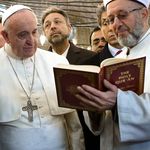 This article examines the Catholic response to the growth of Islam in the West in light of the Church’s vision for interreligious dialogue and evangelization. Does the Catholic Church have a coherent strategy in respect to Islam? Is this strategy working? Is it realistic? Is it biblical?
Cardin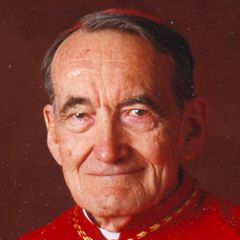 al Avery Dulles (1918-2008), of blessed memory, discusses the present status of God's covenant with Israel, a subject which has been extensively discussed in Jewish-Christian dialogues since the Shoah. Catholics look for an approach that fits in the framework of Catholic doctrine, much of which has been summarized by the Second Vatican Council...
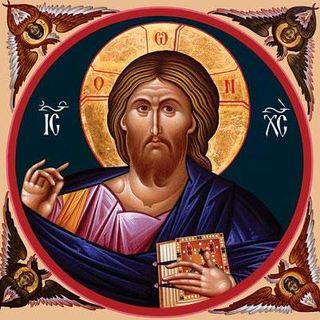 Is the Messiah to be a mere man, as is commonly thought in traditional Judaism, or is he divine, as it is held by Christians? Did the concept of a divine Messiah derive from Greek pagan influences, or is it rooted in the Bible? Is it a New Testament innovation or can we find hints and traces of this idea throughout the Hebrew Bible and Jewish literature? Read about the divinity of the Messiah in the Patristic writings, in the New Testament, and in the Hebrew Scriptures and Jewish literature.
