

October 2025 marks the 60th anniversary of "Nostra Aetate," the Vatican II declaration that redefined the relationship between Christians and Jews. As brief as it was unexpected, this document set the course for interfaith dialogue for the century to come. In a seeming 'about-face' to centuries of prejudice, the Church declared:
God holds the Jews most dear for the sake of their father; He does not repent of the gifts He makes or of the calls He issues…Since the spiritual [brotherhood] common to Christians and Jews is so great, this synod wants to foster…that mutual respect which is the fruit of…fraternal dialogues.
Even after the Holocaust, this new 'brotherhood' seemed inconceivable. For most of Christian history, it was assumed by many that the Church had 'replaced' Israel and that Jews were cursed for rejecting Christ. Such 'replacement theology' inspired attitudes ranging from benevolent condescension to outright contempt and gave 'justification' for unspeakable atrocities for centuries.
This attitude persists today. E. Michael Jones, a Catholic writer who has published several books -most of them self-published- about the 'Jewish rebellious spirit' which is undermining the Church and Western society. While his audience is limited, Candace Owens-host of the third-largest news podcast and a recent Catholic convert-has spent much of the past two years voicing antisemiticremarks, even reviving the medieval 'blood libel' myth (a belief that Jews would murder Christian children before Passover to use their blood in their celebrations). A decade ago, such claims would have been dismissed as neo-Nazi propaganda. Today, they mirror a world turning against the Jews.
This month also marks two years since the October 7th attack, when Hamas terrorists killed nearly 1,200 Israeli civilians-the largest slaughter of Jews since the Holocaust. Responses have ranged from apathy to celebration, with Pro-Hamas rallies taking place during the attack in various cities. The violence is not limited to Israel: in 2024, the Anti-Defamation League reported 9,354 anti-Semitic attacks in America, the highest in over a decade.
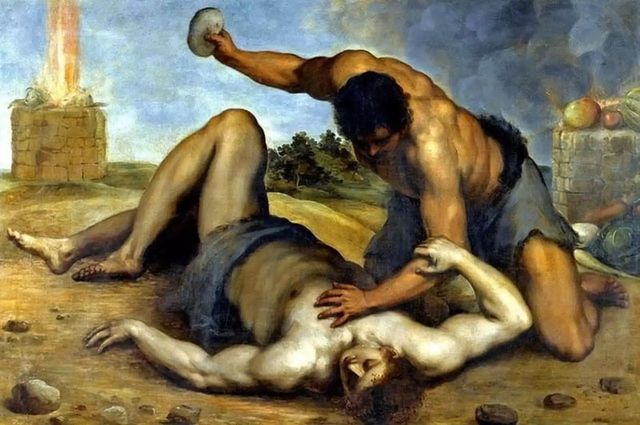
In this time of crisis for the Jewish people, Catholics are called by the Second Vatican Council (and by Christ) to stand arm in arm with them. In imitation of the story of Cain and Abel, the world stands over the blood of the Jews and asks, "Am I my Brother's Keeper?" To give a clear answer, we must work through the tension in our faith and history, so that we may provide a true testimony of Christ to the world. Nostra Aetate was not designed to answer every question, but to frame the conversation and give a foundation to work from.
Nor can [the Church] forget that she draws sustenance from the root of that well-cultivated olive tree [the Jewish people] onto which have been grafted the wild shoots, the Gentiles. Indeed, the Church believes that by His cross Christ…reconciled Jews and Gentiles, making both one in Himself. -Nostra Aetate 4
The image of the olive tree draws our minds back to St. Paul's Epistle to the Romans. At the time of this letter, the Church was experiencing intense growing pains. While initially, a majority of believers were Jewish by birth and custom, the Church's ranks soon swelled with gentile converts from all over the Roman Empire. The question of the Jews' place in salvation history was a central issue for Gentile believers.
Paul opens chapter 11 with a direct answer: "I ask, then, has God rejected [the Jews]? By no means…God has not rejected His people whom He foreknew" (Rom 11:1-2). The Old Testament is the story of God's continual faithfulness to His people despite their human failures. Even when, because of their sin, they are taken into captivity in Babylon, He remembers His promises.
Paul recognizes that only a portion of Israel has accepted Christ through faith, but explains, "[Through] their stumbling, salvation has come to the Gentiles, so as to make Israel jealous." Far from rejecting the Jewish nation and replacing them, God has brought salvation to the Gentiles for the sake of winning back the Jewish people! If this did not humble the Gentiles enough, Paul continues:
If the root [God's covenant] is holy, then the branches also are holy. But if some branches were broken off, and you [Gentiles], a wild olive shoot, were grafted in their place to share the rich root of the olive tree… So do not become proud, but stand in awe. For if God did not spare the natural branches, perhaps he will not spare you (Rom 11:16-22)
This is the root Nostra Aetate cites and the humility to which we are called. We are not replacements-for no parent replaces a lost child-but are adopted by grace. This profound mystery of faith compels us to "decry hatred, persecutions, displays of anti-Semitism, directed against Jews at any time and by anyone." - Nostra Aetate 4
Contempt for the Jewish people is to deny Christ, who remains the Jewish Messiah, longing to gather His people unto Himself. We are invited, as prodigal sons, to wait with our Father for our elder brother's return and for the "day when all peoples will address the Lord in a single voice and serve Him shoulder to shoulder" (NA 4). Until that day comes, Catholics must be vigilant to confront every instance of antisemitism within the Church and to stand united with the Jewish people in the face of persecution.