
 Critics of Christian Zionism usually dismiss it for one of three reasons: (1) They say it contradicts the New Testament, which replaces the Old Testament focus on a particular land by the vision of a whole world; (2) They think it is the exclusive concern of premillennial dispensationalists; (3) It is said to be more political than theological, attached to right-wing American and Israeli political parties that wrongly identify the current Israeli state with the eschaton. Scholars recently made the case for a "new" Christian Zionism that takes a fresh approach to all three of these problems.
 A list of important works consulted during the writing of this book.
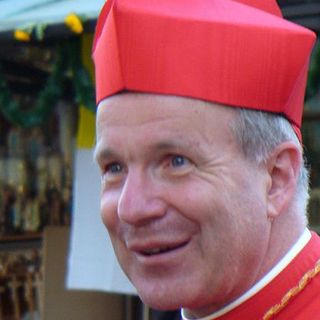 Christoph Cardinal Schönborn says European Christians' support for Israel is not based on Holocaust guilt and Christians should affirm Zionism as biblical. Schoenborn said it was doctrinally important for Christians to recognize Jews' connection to the "Holy Land" and Christians should rejoice in Jews' return to Palestine as a fulfillment of biblical prophecy.
 Dr. André Villeneuve addresses the problem of Catholic anti-Zionism—including 15 fallacies upon which it is based—and its underlying cause: the enduring influence of Catholic supersessionism.
 Since the October 7 Hamas attack against Israel, a troubling surge in global antisemitism has emerged—including within Catholic circles. A case in point is LifeSiteNews, given its track record of publishing anti-Israel narratives. Does LifeSiteNews have an antisemitism problem? Let's take a closer look.
 Two Catholic theologians have co-authored a document that asks a question Catholic institutions are avoiding: can a faithful Catholic be a Zionist? Their answer is yes. Here's why.
 This charter sets out the purpose, scope, and principles of Catholic Voices for Israel. In a moment when distorted appeals to Catholic teaching are shaping public debate about Israel, this document articulates a clear and faithful framework for Catholic reflection on the Jewish people, the land of Israel, and the modern State. It defines the aims of the initiative, the limits of its mandate, and the principles that guide its work.
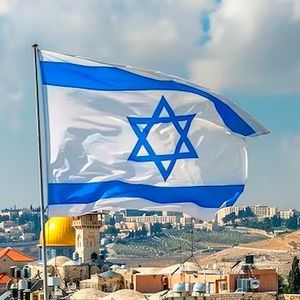 Many people today encounter claims about Israel that present themselves as Catholic but often distort the Church’s teaching. Catholic Voices for Israel seeks to gather Catholics committed to offering a clear, charitable, and faithful response articulating the positive role of the people, land, and State of Israel in Catholic thought.
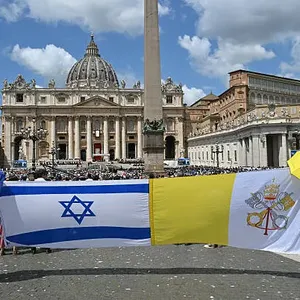 A curated record of all media coverage related to Catholic Voices for Israel, including articles, videos and podcasts. Updated as new items appear.
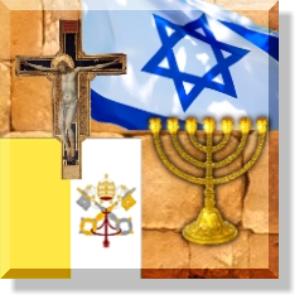 Catholic Voices for Israel (CVFI), a new initiative of Catholics for Israel, has officially launched with the release of its founding public statement, “For Zion’s Sake: A Catholic Appeal in Support of Israel.” The statement, signed by Catholic scholars, clergy, and faithful, directly challenges what it describes as a growing and until now largely unanswered current of anti-Israel sentiment—and in some cases outright antisemitism—in Catholic media and public discourse, while making a positive, comprehensive case for Catholic solidarity with the Jewish State and people.
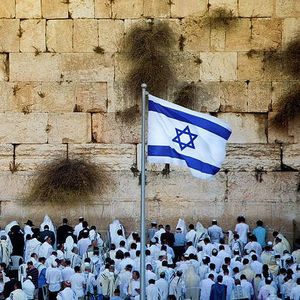 The unconditional gift of the election of the Jewish people is the theological foundation of Catholic Zionism. Many New Testament texts support the notion that Catholics should endorse Zionism. Jesus himself was a Jewish Christian Zionist. Catholics accept that the Jewish people still have a providential role to play, and their return to the land of Israel may be part of the still-to-be-completed redemptive plan.
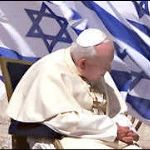 The Catholic Church recognizes Israel under international law. But does God? Antoine Lévy, OP, takes a deceptively simple question and follows it into the contested terrain where Catholic doctrine, Jewish theology, and two thousand years of supersessionism collide.
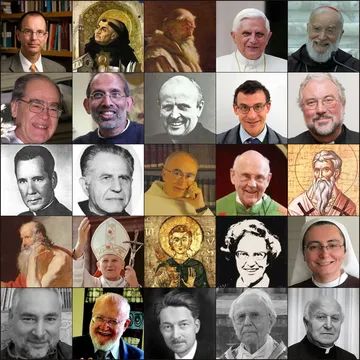 Is Catholic Zionism a modern invention — or a conviction with deep roots in the Church's own tradition? From the Church Fathers to recent popes, from Thomas Aquinas to Jacques Maritain, this compilation gathers the voices of Catholic theologians, scholars, and clergy across two thousand years who saw the Jewish people's return to their ancestral land as a sign of God's enduring faithfulness. See what they actually said, in their own words.
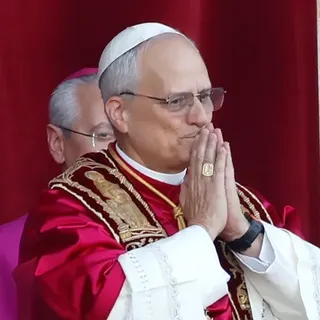 Some Catholic influencers call Israel "demonic." Others insist Zionism is a heresy. Now theologians André Villeneuve and Fr. Antoine Lévy are asking Pope Leo XIV to finally break the Church's silence and settle the question these voices claim to own. Middle East Forum covers CVFI's open letter and the antisemitic currents it's pushing back against.
It is impossible to understand the Bible with its narrative about the plan that God has for mankind without understanding the role of Israel as a people and a Nation. The Jews have been at the center of all that God does, beginning with the call of Abraham up to the book of Malachi at the end of the Old Testament; and they remain the center throughout the period of the first Christian century recorded in the New Testament.
Everything began with Abraham. The vocation of Abraham is the biblical foundation for Israel's key role in the divine plan of salvation. Genesis 12:1–3 refers to the call of Abraham and to God's promise to him as a permanent covenant for all his offspring. The Lord said to Abram, "... and I will make of you a great nation, and I will bless you and make your name great, so that you will be a blessing.I will bless those who bless you, and him who dishonors you I will curse, andin you all the families of the earth shall be blessed."
Something terrible happened. Very soon after the beginning of Church history, the Gentiles became the majority among the believers, and they rejected God's divine strategy. For the Evil One, it must have been clear: if this unity between Jews and Gentiles were to continue, his reign over mankind would finally be lost. Already, the key victory over evil and death had been won when Jesus died on the cross and rose again. However, as long as Satan can hinder the unity between Jews and Gentiles in the Messiah, the fruit of redemption—the social dimension of healing and restoration—cannot be fully realized.
One day, the Emperor of Prussia, Frederick II the Great (1712-86)—an agnostic and disciple of the Enlightenment movement—was discussing with his personal physician various problems related to late 18th century. Finally, he confronted the doctor with a frank question, "Is there any substantial reasoning for the existence of a personal God?" The physician replied, without hesitation, "The Jews, my king, the Jews!"
Today, the Messianic Jewish Movement is establishing itself—relatively small, yet spiritually strong. There are up to 150,000 Messianic Jews worldwide. Within their congregations, perhaps another 200,000 partly Jewish or Gentile relatives and friends have found a spiritual home. Their influence on both Jewish and Christian societies is far greater than one might expect. The faith of these Messianic Jews is expressed with deep conviction, dedication, and passion for the Lord.
The history of the Catholic Church's relationship with the Jews has been tragic across centuries. Jews were made second-class citizens, isolated into ghettos, and forced into conversion and baptism. Baptized Jews were often treated like prisoners, subjected to the controlling system of the so-called "Holy Inquisition."