

 This is the story of my return to the Catholic Church. I will attempt to explain how my walk with the Lord these past years has led me to this important and difficult decision, yet one that I make in peace and joy. It is addressed to my Evangelical Christian and Messianic Jewish friends in Israel, and particularly to those who do not believe that one can be a "true believer" and a Catholic at the same time. It is also written as a personal testimony for my many good friends around the world who may be interested in my walk of faith. To them I dedicate this essay and pray that it will help us to grow in unity in loving and worshiping the King of Kings.
 I am an Orthodox Jew by adoption. That is to say, I am a convert to Judaism, according to the halacha. I live in the company of other Orthodox Jews, with my husband and four children, in a religious community in Israel. I also love Jesus and the Gospel message, which I am still learning, and this means that I live my faith life mostly inwardly.
 On October 27, the Franciscan Friars of the Custody of the Holy Land head out to the Jordan Valley, accompanied by hundreds of pilgrims and local Christians, for their annual pilgrimage to Jesus’ baptismal site on the Jordan River.
"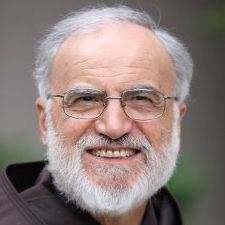 We know that God gave Israel the land but there is no mention of his taking it back again forever. Can we Christians exclude that what is happening in our day, that is, the return of Israel to the land of its fathers, is not connected in some way, still a mystery to us, to this providential order which concerns the chosen people and which is carried out even through human error and excess as happens in the Church itself?"
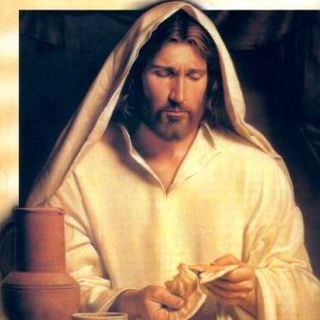 Did Jesus Suspend the Observance of the Law? This article examines some of the Biblical arguments in support of the traditional doctrine that exempts, not only the Gentile, but even the baptized Jew from keeping the Law of the Torah. We will examine here certain episodes which have been interpreted to show that Jesus suspended the observance of the Law: Jesus and the kashrut dietary laws, Jesus and the Sabbath, and Peter's vision of the animals in Acts 10.
 Ten basic steps outlining God's plan of salvation for us: God created us out of love and made a covenant with us; by sinning we have broken His covenant; God sent Jesus the Messiah to restore us to communion with Him; and He restores this communion through the Catholic Church He established and especially the seven sacraments.
 My name is Miryam Leah. I am 35 years old – Jewish, Italian, from an ultra-orthodox hassidic family (lubavitch – my father is the shaliach, the “sent one” of the Rebbe), and now for 8 years, Catholic and Dominican sister.
 Catholics for Israel is an apostolate faithful to the Church’s Magisterium, entrusted by Christ with authentically interpreting the word of God. Our convictions about Israel and the Jewish people rest on official Catholic teaching, especially Nostra Aetate §4 and the Catechism of the Catholic Church. Here we explain what that means for our mission and commitments.
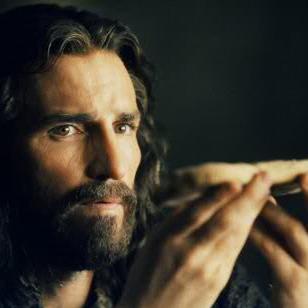 When Jesus distributed the matzo to the disciples saying, “This is My Body,” He perfected and updated the Biblical commandment to eat matzo on the Seder night, so that the commandment to eat matzo we received at Mt. Sinai would teach us how to respond to G-d as He revealed Himself through the Incarnation and the Cross.
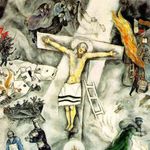 Part I: Israel and the Church from Abraham to Today - The origins of Israel: the Patriarchs; the Exodus and Mount Sinai; the kingdom of Israel; exile and return. Hebrews, Israelites and Jews. The Messiah and his rejection by his own people. The birth of the Church. Early Jewish-Christianity, the growth of Gentile Christianity, and the parting of ways. Israel in the patristic writings: the rise of "replacement theology." Christian anti-Semitism in the Middle-Ages. Theological evaluation: Israel and the Church in the New Testament.
 Part II: Israel and the Church Today - How Vatican II and Nostra Aetate transformed the Church's relationship with the Jewish people. Church documents on the Jewish people from Vatican II to the 21st century. The promised restoration of Israel according to the prophets. An evaluation: can Old Testament prophecies still apply to Israel today? The Catholic Church and the modern State of Israel. Israel's "passion, death and resurrection"?
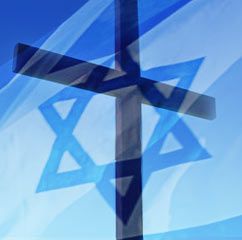 Part III: Messianic Judaism and Christian Zionism: The rise of the Zionist movement in the late 19th century. Early Christian Zionism. Early Hebrew-Christians and early Hebrew-Catholics. The turning point: 1967. From Hebrew-Christians to Messianic Jews. The Messianic movement today in Israel and among the nations. Messianic theology and faith; Messianic congregations and worship; Messianic culture and life in Israel. Christian Zionism and Christian supporters of Israel today. Toward Jerusalem Council II - welcoming Jewish believers back into the Church.
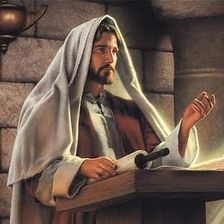 Is the baptized Jew obligated to keep the commandments of the Jewish Law? In the first part of this series, we see how Jesus did not abrogate the Law of Moses that was given to the Jewish people. We also see how the early Jewish-Christian community continued to live in accordance with the Torah.
 The Name of G-d is like a Temple: Just as a Temple locates G-d's Presence and offers men an opportunity to enter that Presence, the Name of G-d is the "place"—that through which-- we encounter the Presence of G-d.
 Having been raised in a Conservative Jewish home in suburban Toronto, I was a regular attendee at synagogue on Sabbaths and High Holidays. My father is a Holocaust survivor from Poland and my mother’s family escaped the pogroms in Russia. Both settled here in Canada and raised my sister and myself in a Jewish and Yiddish speaking environment where all of our friends were Jewish and Israel was our raison d’être. Christianity was the religion of the outsiders, the faith of anti-semites and Jew-haters, the creed of the Crusaders, Inquisitors, Persecutors, and Nazis. Yet my mother would remind me continually that "Jesus was a Jew"...
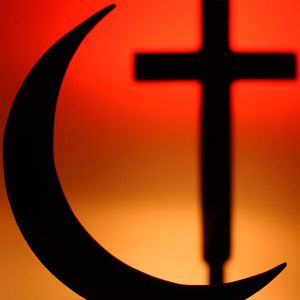 Jesus and Muhammad could hardly have been more different in how they lived or in what they taught others. Why should we not expect starkly contrasting legacies - from the conduct of their closest companions to the livability of modern-day countries influenced by the predominance of one founder's teachings over the other?
 No one could stand beneath the Cross there who wasn't willing to join Jesus on the Cross, to suffer with him. But only those who truly loved Jesus could do that, so only those who truly loved Jesus were worthy to stand with him beneath the Cross--and who truly loved him? Only those whose love the Gospel declares: The Blessed Virgin, Mary Magdalene, and the disciple whom he loved.
 Loving Israel, Loving Messiah, Loving the Church: three dimensions of one mission. Catholics for Israel helps Christians rediscover their Jewish roots, invites Jews and others to encounter the Messiah, and leads believers toward the fullness of communion with God in the Catholic Church. We seek reconciliation between Christians and the Jewish people, reconciliation with God through Jesus the Messiah, and unity among believers in his Church, the ark of God’s salvation.

From creation and the Fall to the calling of Abraham, the Exodus, and Israel’s journey through kingdom, exile, and restoration, follow the unfolding story of God’s faithful love. These lessons trace his covenants with Israel and the prophets’ promises to their fulfillment in Jesus the Messiah, opening onto the life of the Trinity, the Church, and the hope of his return.
 How does Jesus continue his saving work in the world today? Through the Church he founded. Explore her faith, authority, sacraments, and call to holiness in light of Israel’s story and God’s covenant promises. These lessons show how grace transforms our lives, draws us into communion with God, and equips us for love, family life, and mission.
