
 Two years after its publication, the authors of the "Kairos Palestine" document held an anniversary conference in Bethlehem, constituting themselves a tribunal before which to arraign all the churches of the world for not showing enough enthusiasm for their original document.
 This docuseries explores a groundbreaking initiative that has been working towards unifying Jews and Christians in the body of Messiah around the world, even moving entire nations and nation leaders to repentance for atrocities done to the Jewish people during the Holocaust.
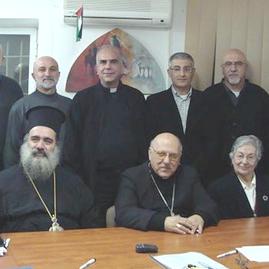
 For over two decades, parts of the Christian world have been bemused by the writings of self-styled "Palestinian Christian theologians." Since their brightest lights are Protestant pastors, they are minor figures among the overwhelmingly Orthodox and Catholic faithful of the Holy Land. But they are strangely popular in Liberal Protestant circles abroad and especially beloved of church bureaucrats.
 In the plan of God’s rule over history, Israel has a great role to play in preparing the nations for the return of the Messiah in glory. In the twentieth century began the great epochal change preparing mankind for the conclusive event of history: the final coming of the Kingdom of God, for which all Christians pray every day, saying: Thy Kingdom come!
 I would like to present three images, one taken from the Old, and the other two from the New Testament, images which express the unique divine plan which embraces Jews as well as Christians: the mountain upon which all the peoples of the world come as pilgrims; the wall which at one time divided humanity, definitely torn down by Jesus Christ; and the tree, nourished by a single root, which should shine in the abundance of its leaves.
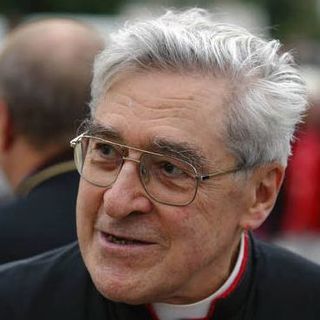 From Cardinal Jean-Marie Lustiger's Book 'The Promise':"The Church appears in Jerusalem, after Pentecost, as an "assembly" kahal in Hebrew, ecclesia in Greek. it is unthinkable that she would claim to replace Israel. She is not another Israel, but the very, fulfillment, in Israel, of God's plan..."
A compilation of authoritative Church documents pertaining to Jews and Judaism, from the 1965 Declaration Nostra Aetate to the 2015 The Gifts and the Calling of God are Irrevocable.
Nostra Aetate §4 marks the Church’s decisive turn toward a renewed relationship with the Jewish people. It affirms the enduring spiritual bond between the Church and Israel, rejects the idea that Jews are collectively guilty of Christ’s death, and condemns all forms of antisemitism. It lays the theological foundation for dialogue, mutual respect, and the recognition that God’s covenant with the Jewish people remains a living reality.
The 1974 Guidelines was the first document issued by the Commission for Religious Relations with the Jews. Practical rather than theological in character, it offers concrete suggestions for putting the intentions of Nostra Aetate into practice. Its central concern is that Christians strive to become acquainted with Judaism as Jews define it themselves, addressing dialogue across liturgy, education, and common social action.
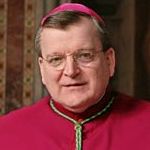 AHC President David Moss interviewed Archbishop Raymond L. Burke in La Crosse, Wisconsin on Aug 5, 2010, on the topic of the election and vocation of the Jewish people within the Catholic Church.
 God has tied His saving and redemptive concern for the welfare of all men to His love for the people of Israel. Only those who love the people of Israel can love the God of Israel. Israel is thus God's first-born, most precious in His eyes. -- Michael Wyschogrod (1928-2015)
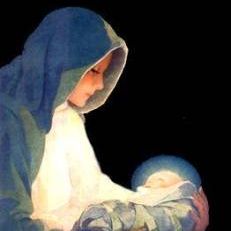 In this message I try to outline a a Jewish Catholic doctrine of Mary, a doctrine that, I think, does full justice to Mary as she is understood by the Church while, at the same time, acknowledging the dignity of Israel as it is understood in Judaism.
Memory and Reconciliationinvites the Church to examine the sins of her members in history, including those committed against the Jewish people. Section 5.4 highlights the unique gravity of Christian anti‑Judaism, calling Catholics to repentance, renewed fidelity to Israel’s enduring covenant, and a deeper commitment to healing the relationship wounded across centuries. It frames this examination not as self‑accusation but as a purification of memory that strengthens the Church’s witness to the God of mercy and truth.
The 1985 Notes deepen the Church’s postconciliar teaching by clarifying how Judaism should be presented in Catholic preaching, catechesis, and scholarship. They stress respect for Jewish self-understanding, highlight the ongoing vitality of Jewish covenantal life, and warn against theological distortions—especially supersessionism and misuse of Scripture. The document also urges Catholics to recognize the Jewish roots of Christian faith and to approach dialogue with historical honesty and genuine reciprocity.
 If we wish to grasp the meaning of God's Plan in history with regard to Israel, we must go far beyond the issues relating to the present political Israel or any other temporal vision regarding Israel. We must grasp the role Israel has in God's Plan in the last days of history, wherein we have entered with the end of the time of the nations and the beginning of the time of Israel as God’s nation called in the end times to accept Messiah.
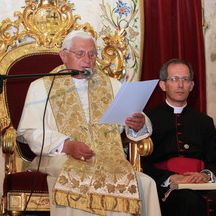 "Here the History of Humanity Was Decisively Changed."Here is the text of the address Benedict XVI gave during his visit to the Holy Sepulchre in Jerusalem.
 Test your knowledge of Israel and the Church. Don't worry if you're unsure about the answers; just take your best guess. This quiz highlights common beliefs and assumptions on these topics and then offers clear, well-grounded explanations drawn from Catholic teaching.
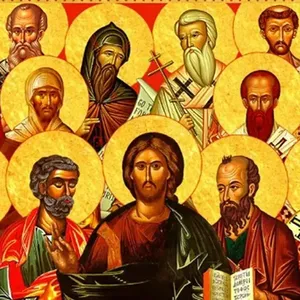 The Church Fathers are often remembered for their hostility toward Judaism. What is less well known is that nearly all of them also expected the Jewish people to be restored — returned not only to faith but, in the expectation of some, to their ancestral land. This article traces that overlooked tradition across more than a millennium of Christian thought.
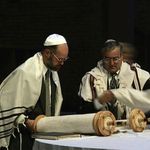 ….In the meantime, Israel retains its own mission. Israel is in the hands of God, who will save it “as a whole” at the proper time, when the number of the Gentiles is complete….the evangelization of the Gentiles was now the disciples’ particular task…. (Benedict XVI, Jesus of Nazareth, Vol 2, pp. 44-46).
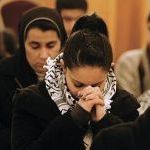 There has been much excellent academic study of the history of Christianity in the land of its birth. It could fill a whole library. In recent years, however, all that fine work has been eclipsed by the myth, created by the so-called "Palestinian narrative," of Palestinian Christianity.