

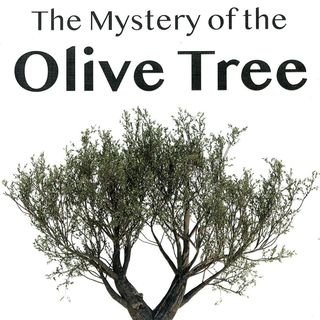
Le Mystère de l’Olivier : Unir Juifs et Gentils en vue du Retour du Christ présente la lecture profonde que Johannes Fichtenbauer propose de Romains 11 et de l’image paulinienne de l’olivier. À travers une vision biblique pénétrante et une clarté pastorale, l’ouvrage déploie le dessein mystérieux de Dieu pour Israël et les nations, ainsi que la manière dont ce dessein conduit vers le retour du Christ. Chaque chapitre invite le lecteur à découvrir comment Juifs et Gentils sont appelés à une destinée commune dans le Christ, au cœur du projet d’alliance de Dieu.
This book is written as a simplified narrative of a complex historical and theological subject. It is written in prophetic language, providing a spiritual overview of the historical developments surrounding the rise and disappearance of Messianic Judaism in ancient times, as well as its rebirth in recent decades. This prophetic perspective explores the task before us and the fitting response to the resurrection of these "dry bones" by the power of the Holy Spirit, as prophesied by the Prophet Ezekiel.
It is impossible to understand the Bible with its narrative about the plan that God has for mankind without understanding the role of Israel as a people and a Nation. The Jews have been at the center of all that God does, beginning with the call of Abraham up to the book of Malachi at the end of the Old Testament; and they remain the center throughout the period of the first Christian century recorded in the New Testament.
Everything began with Abraham. The vocation of Abraham is the biblical foundation for Israel's key role in the divine plan of salvation. Genesis 12:1–3 refers to the call of Abraham and to God's promise to him as a permanent covenant for all his offspring. The Lord said to Abram, "... and I will make of you a great nation, and I will bless you and make your name great, so that you will be a blessing.I will bless those who bless you, and him who dishonors you I will curse, andin you all the families of the earth shall be blessed."
Lire la suite : Chapter 2: All Blessings Are Mediated through Israel
Something terrible happened. Very soon after the beginning of Church history, the Gentiles became the majority among the believers, and they rejected God's divine strategy. For the Evil One, it must have been clear: if this unity between Jews and Gentiles were to continue, his reign over mankind would finally be lost. Already, the key victory over evil and death had been won when Jesus died on the cross and rose again. However, as long as Satan can hinder the unity between Jews and Gentiles in the Messiah, the fruit of redemption—the social dimension of healing and restoration—cannot be fully realized.
One day, the Emperor of Prussia, Frederick II the Great (1712-86)—an agnostic and disciple of the Enlightenment movement—was discussing with his personal physician various problems related to late 18th century. Finally, he confronted the doctor with a frank question, "Is there any substantial reasoning for the existence of a personal God?" The physician replied, without hesitation, "The Jews, my king, the Jews!"
Lire la suite : Chapter 4: A Modern Resurrection Miracle - The Messianic Jews
Today, the Messianic Jewish Movement is establishing itself—relatively small, yet spiritually strong. There are up to 150,000 Messianic Jews worldwide. Within their congregations, perhaps another 200,000 partly Jewish or Gentile relatives and friends have found a spiritual home. Their influence on both Jewish and Christian societies is far greater than one might expect. The faith of these Messianic Jews is expressed with deep conviction, dedication, and passion for the Lord.
Lire la suite : Chapter 5: Messianic Jews in the World Today
The history of the Catholic Church's relationship with the Jews has been tragic across centuries. Jews were made second-class citizens, isolated into ghettos, and forced into conversion and baptism. Baptized Jews were often treated like prisoners, subjected to the controlling system of the so-called "Holy Inquisition."
Lire la suite : Chapter 6: A Catholic Dialogue with the Messianic Jews
The Messianic Movement is not inauthentic; on the contrary, it is a challenge to the Christian world to reconsider its theological foundations. The Christian Churches are confronted with an unexpected partner. This means that their presence compels us to think and to act decisively differently in the future than we have in the past.
Lire la suite : Chapter 7: A Challenge for the Gentile Churches
It was a hot summer day in 1995 when young Rabbi Marty Waldman, Secretary General of the Union of Messianic Jewish Congregations (UMJC), was sitting in his office in Dallas, Texas, preparing a teaching on Acts 15—about the Council in Jerusalem. There, he had a "vision." Rabbi Marty saw a need for another Council in Jerusalem. This Second Council should revisit and redress the outcomes of the First. This time, the Gentiles would have to welcome back the Jews as their Older Brothers.
Lire la suite : Chapter 8: The Initiative "Towards a Second Council of Jerusalem" (TJCII)
In keeping with our name as an initiative, we hope for a final unity of Jew and Gentile—expressed in something like a solemn convocation, reminiscent of the First Jerusalem Council described in Acts 15. This, in a sense, represents the ultimate goal of the TJCII initiative.
Lire la suite : Chapter 9: The Vision of a Second Council of Jerusalem
A list of important works consulted during the writing of this book.
