
 The Hidden Roots of the Crisis of the Church in the Holy Land: In the troubled Holy Land, divided and torn by conflict, local Church leaders and Christians of all colors often claim to speak a tireless message of justice, reconciliation and peace. If only more people would listen to this message - so they claim - it would surely dramatically improve the prospects for peace between the conflicting parties in the region. But is this true?
 Ariel Ben Ami's and Mark Kinzer's reactions to my study regarding the different ways of understanding Israel have been important and I have appreciated the richness of their contents, albeit correcting some opinions I had expressed.
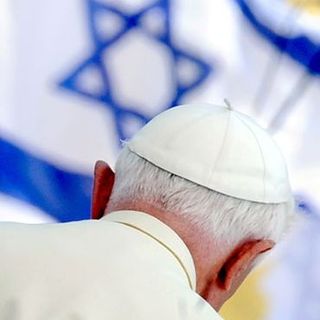 For Zion’s Sake addresses the growing confusion and hostility toward Israel within Catholic discourse, and calls for a truthful, charitable, and theologically grounded engagement with the Jewish people’s land, state, and covenantal identity. This appeal confronts the resurgence of supersessionism and anti‑Zionism, and affirms the enduring significance of Israel in Scripture, tradition, and the Church’s post‑conciliar teaching. We invite Catholics to rediscover Israel’s place in God’s design and to stand against the distortions that obscure it.
 While most Evangelical Protestants are generally friendly to the Jewish people and the State of Israel, there is a small band of Evangelical pastors and professors who want to line up all Evangelicals unilaterally on the Palestinian side. The most egregious example may be Anglican vicar Stephen Sizer, whose has chummed up with the likes of Naturei Karta and Iranian President Ahmadinejad. But Gary Burge probably wields the greater influence.
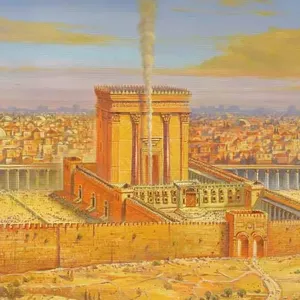 Who is the true Father of Zionism — Theodor Herzl, or God himself? Long before the nineteenth century, God declared Zion his eternal dwelling and promised to return his people there. Here is the complete biblical witness — 177 occurrences of "Zion" across the entire canon of Scripture.
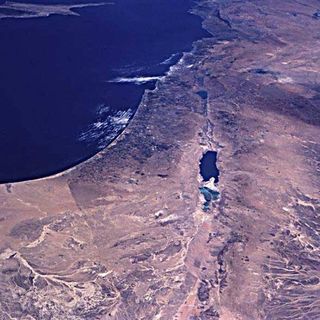 I often hear Catholics talking about going on a pilgrimage to the Holy Land, and I must confess that something lightly irritates me about this terminology. It seems that whenever Catholics talk about visiting the land of the Bible, they almost invariably call it “the Holy Land” and rarely “Israel.”
 On the heels of the Gaza disengagement, which was intended to empower the Palestinian Authority to improve the lives of its people, few journalists have reported on the acutely trying times facing the Christians residing in areas "governed" by the Palestinian Authority. Professor Justus Reid Weiner, Scholar in Residence at the Jerusalem Center for Public Affairs, provides an in-depth look into the nearly uninterrupted persecution of Christians throughout the decade since the Oslo peace process began. Read Human Rights of Christians in Palestinian Society.
 Catholics for Israel welcomes and applauds the decision of US President Donald Trump to recognize Jerusalem as the capital of Israel and to relocate the American Embassy there.
 Hamas denies Israel's right to exist. But for pontifical diplomacy, the Jewish state is wrong to defend itself with force. The custodian of the Holy Land reveals the thinking behind the Church's policy in the Middle East.
 An interview with Petra Heldt, head of the Ecumenical Theological Research Fraternity in Israel and proud friend of Israel, on Christians in Israel, dhimmitude and Sharia law, and Jewish-Christian relations.
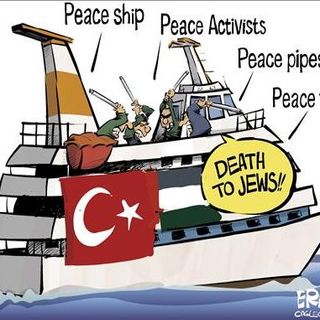 Not surprisingly, Israel's interception of the "humanitarian aid" flotilla heading for Gaza in the early morning of May 31, 2010, which ended with nine activists killed and dozens wounded, has sparked outrage and harsh condemnations from the international community. The incident has been described as an Israeli "crime" and "massacre" of peaceful humanitarian workers who only wished to relieve the suffering of the people of Gaza.
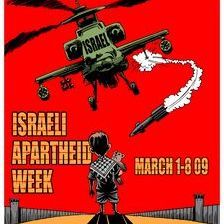 Day by day the anti-Israel alliance, and sadly in collaboration with major church movements mainly from the Protestant world, is seeking to make the Apartheid label stick to Israel. We see this at present in the fortnight of global agitation known as “Israel Apartheid Week.” There is more to this scheming than meets the eye in that the real agenda behind branding Israel an “Apartheid state” is to remove the Jewish State altogether.
 In this article, I examine three questions: First, the question "who is Israel?" - exploring five different ways of understanding the term "Israel." Second, I discuss the idea of God's blessing that comes "from" Israel and is intended "for" Israel. Third, I clarify the identity and mission of Catholics for Israel in light of these five ways of understanding Israel.
 Is the Church the "new Israel"? The New Testament uses the words "Israel" and "Israelite" 77 times. How many of those refer to the Church? And how many times does the text use the expression "new Israel" or "true Israel"?
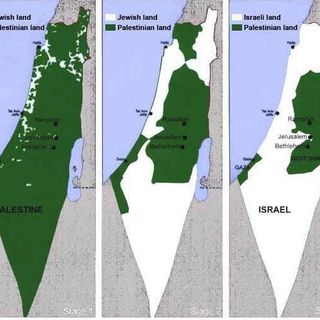 Perhaps you have seen this map before; it claims to illustrate the "Palestinian loss of land" from 1946 to 2000. The problem is that the map completely misrepresents the recent history of Palestine-Israel.
 God has tied His saving and redemptive concern for the welfare of all men to His love for the people of Israel. Only those who love the people of Israel can love the God of Israel. Israel is thus God's first-born, most precious in His eyes. -- Michael Wyschogrod (1928-2015)
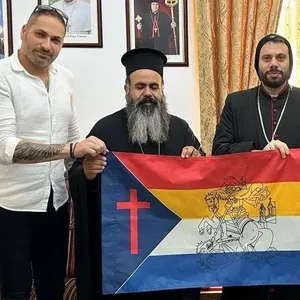 Paddy Monaghan responds to the recent Jerusalem Patriarchs’ denunciation of Christian Zionism. Drawing on decades of Catholic renewal and the witness of evangelical Catholic leaders worldwide, Monaghan argues that biblical Zionism is not a political distortion but a faithful expression of historic Christian teaching on God’s enduring covenant with Israel.
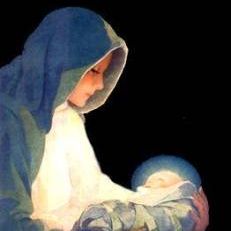 In this message I try to outline a a Jewish Catholic doctrine of Mary, a doctrine that, I think, does full justice to Mary as she is understood by the Church while, at the same time, acknowledging the dignity of Israel as it is understood in Judaism.
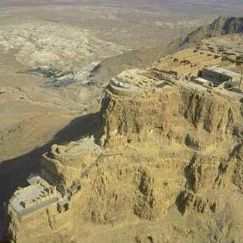
From Herod’s stronghold heights, a Remnant watched, as Silva’s legion circled them in vain. Across the changing hues of water far below, they looked with memory at Moab’s hills, secure as even Moses could not be, for they were here in Judah’s field.
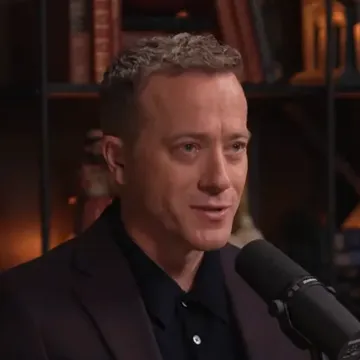 Matt Fradd claims to lay out "the Catholic position" on Christian Zionism. The problem? He gets it wrong. The Church does not teach what he says it teaches. Church Fathers, papal preachers, Benedict XVI, John Paul II, even a key editor of the Catechism all contradict him. Here's the evidence.