

An Introduction to the Catholic Church: Her Faith, Life, and Worship
Go to: Introduction | Portal to Lessons | Part I: God’s Story, Our Story
Purchase PowerPoint Presentations
Click a lesson title to open its presentation. Once it opens, click anywhere to advance to the next animation, or use the « and » arrows to move between slides.
Click a lesson thumbnail to watch its video.
PDF summary handouts are available below the lesson descriptions.
This lesson is a review of Part I of the course and an introduction to Part II. It examines two questions: (a) how does God speak to us? (b) how does God save us? By tracing the roles of prophet, priest, and king through salvation history, we see how Jesus fulfilled them and entrusted his mission to the Church. Through her teaching, sacramental life, and pastoral care, she brings us into communion with him—the way, the truth, and the life. Sacred Scripture, Sacred Tradition, and the Magisterium safeguard and transmit the faith. God progressively formed his people to be one, holy, catholic and apostolic.

Expands on lesson B01: God spoke to his people in salvation history through the offices of prophet, priest, and king. Jesus fulfilled these three roles and passed them on to the Church through apostolic succession. How revelation is transmitted through time. Why the Bible cannot serve as our sole rule of faith. The Bible and authority in the early Church. The inspiration, inerrancy, and interpretation of Sacred Scripture. The four senses of Scripture. The role of Sacred Tradition and the Magisterium’s infallible role in protecting the deposit of faith.
Continues the last lesson’s discussion on the Magisterium. Jesus appointed Peter as the rock on which he would build his Church and entrusted him with shepherding his flock. The “keys to the kingdom” and the king’s “prime minister” in the OT. The prominence of Peter and of the Church of Rome in the early Church. Early testimony to Peter’s successors. Peter’s successors throughout history. The pope, the college of bishops, and the Church’s teaching office. Papal infallibility. The pope as teacher, leader, and evangelist.
Now that we have studied the question of revelation and authority (why we should believe what the Church teaches), we begin to look at how we are to live in God’s kingdom. We first consider the goal of our journey. Only if we know where we are going and what the consequences of our choices are can we remain motivated to stay on the right path. The finality of death and the particular judgment each one will undergo. Hell: definitive self-exclusion from communion with God and the blessed. Purgatory: its role, its presence in Scripture, and the concept of temporal punishment. Heaven: the ultimate fulfillment of every human longing. The resurrection of the body.
The communion of saints unites God’s family on earth, in purgatory, and in heaven. Sharing in this communion is our deepest vocation. Who is a “saint”? The three states of the Church: the Church militant on earth, the Church triumphant in heaven, and the Church suffering in purgatory. The saints in heaven pray for the saints on earth, and we are called to communion with them. The saints on earth are to pray for those who suffer in purgatory. The Church will reach its perfection and full unity in the glory of heaven.
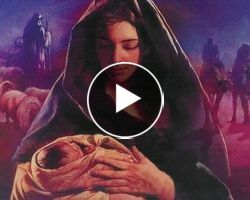
Having learned about the communion of saints, we now consider “God’s masterpiece” and the mother of all the saints: Miriam (Mary) - our Jewish mother. We study Mary in relation to the three “mountain peaks” of OT salvation history: creation, the exodus, and the Davidic kingdom. Mary is the New Eve, the Ark of the New Covenant, and the Queen Mother. She is immaculate and without sin, ever-virgin, Mother of God and Mother of the Church, and was assumed body and soul into heaven.

Now that we have studied the nature of the Church and those who most fully exemplify her holiness—Mary and the saints – we consider how to live the Christian life. This lesson and the following ones apply Old Testament salvation history to our own lives. We return to God’s purpose for human life at creation (Gen 1–2; A07–A08). We consider man’s dignity and vocation to beatitude, having been created in the image of God and redeemed by the Messiah. We also consider human freedom, the morality of human acts, the passions, and moral conscience, followed by a brief treatment of the four cardinal virtues and three theological virtues (faith, hope, love), and the gifts and fruits of the Holy Spirit.
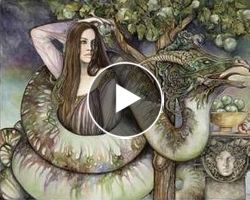
Created with great dignity and called to live as God’s children (Gen 2; A08), we have been wounded by sin (Gen 3; A09). We begin with a review of original sin and its consequences, then consider the following questions: What is concupiscence, and how can it lead to sin? What is the nature of sin and what are its effects? What is the difference between mortal and venial sin? What is the relationship between sin and culpability, and between temptation, sin, and conscience? Finally, we consider the remedies for sin: contrition, repentance, penance, and forgiveness.
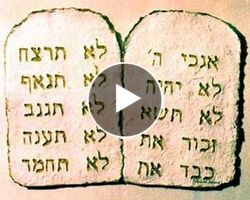
Called to beatitude (Gen 2, lessons A08, B07), but wounded by sin (Gen 3, lessons A09, B08), man stands in need of salvation from God. Divine help comes to him in Christ through the law that guides him (lesson A13 and this lesson) and the grace that sustains him (lessons A21-A29, B10-B11). The natural moral law, the Old Law (the Torah) and the New Law of the Gospel. The Ten Commandments are our “map of life”: they show us the way to live as God’s children and guide us on the way to holiness – our ultimate calling and vocation.
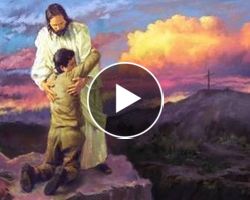
A review of how man lost God’s way, truth and life at the Fall, was cast out of paradise, and was left with a human nature prone to sin and condemned to suffering and death. How are we to find the way back to God? Through good works? Through religion? Through observing the moral law or Torah? These are all insufficient for salvation. Jesus’ Paschal Mystery accomplishes our salvation (lesson A27). Faith must be lived through love and obedience; merely professing belief in Jesus is not enough. Faith and works. Salvation: one-time event or process over time? Protestant understandings of salvation. Justification and sanctification. The new birth: baptism. Enduring to the end. The necessity of the Church for salvation.
The Law shows us the way we are to live (lesson B09), but it does not give us the power to live this life or to attain salvation (B10). God makes this supernatural life possible by giving our souls powers beyond those of our unaided nature, through grace—a participation in his own life. Grace renews God’s image in us, sanctifies us, and enables us to grow in virtue. Actual grace and sanctifying grace. Charisms. How do we receive grace? Chiefly through the liturgy and sacraments of the Church. Growing in grace and losing grace. Gaining merit before God. The universal call to holiness.
This lesson introduces the Church’s liturgy and sacraments. Now that we see the necessity of grace to live a holy life and attain salvation, we begin to look in more detail at how to receive grace. This lesson presents the OT background to the sacraments. Understanding Israel’s journey from Egypt to the Promised Land shows us how we are to live in order to reach heaven. We follow four stages: (a) the Exodus and Israel’s worship in the tabernacle; (b) fulfillment in Christ’s life; (c) continued fulfillment in the Church’s life, the “New Exodus”; and (d) ultimate fulfillment in heaven.
This lesson continues the previous one and examines the theological and practical aspects of the Church’s liturgy. The liturgy is the summit of the Church’s activity and the font from which all her power flows. It is our participation in God’s work. The Trinitarian dimension of the liturgy: the Father is its source and goal; in it the Messiah continues his work of redemption through the Holy Spirit, who makes it efficacious. The seven sacraments are the powers of the Messiah which now work in the Church. The participants in the liturgy and how it is celebrated. The forms of the liturgy. Liturgical times and seasons.
Baptism is the gateway to eternal life and to the other sacraments. Baptism in the economy of salvation and the symbolism of water in the OT. Circumcision as a foreshadowing of baptism. Jesus’ baptism. Baptism is the rebirth of water and the Spirit which truly saves. Those who are baptized are buried with Christ and raised to new life. The celebration of the sacrament. Who can receive baptism? Should infants be baptized? Who can baptize? The necessity of baptism for salvation. The grace and effects of baptism.
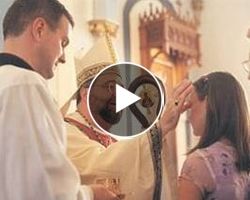
Confirmation is the outpouring of the Holy Spirit which completes baptismal grace and draws the believer more fully into the Church’s mission. The prefiguring of confirmation in salvation history. Jesus’ promise of the Holy Spirit and the descent of the Holy Spirit at Pentecost. The celebration of confirmation: the laying on of hands and the anointing with chrism. The effects of confirmation. The seal of the Holy Spirit. Who can receive confirmation? The minister of confirmation.
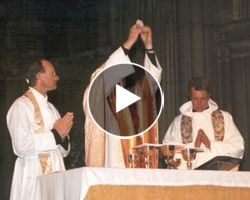
The Eucharist is the source and summit of the Christian life. The Eucharist in salvation history: Melchizedek’s offering, the Passover, the manna. Jesus’ “bread of life” discourse, the Last Supper, and the Paschal Mystery. The Eucharist is thanksgiving to the Father, the sacrificial memorial of the Messiah’s Passover, and Christ’s Real Presence among us. The Church unites her offering to his one sacrifice. Transubstantiation. Eucharistic adoration. Preparation before receiving the Eucharist. The fruits of Holy Communion. The Eucharist and the unity of Christians. The Paschal banquet: the Eucharist is an anticipation of heavenly glory.
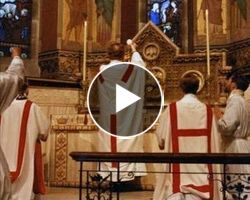
Continuing the study of the Eucharist, this lesson reviews the biblical prefigurations of the Mass in Israel’s tabernacle worship (B12). The Holy Mass is our participation in the Paschal Mystery and in the worship of the heavenly Jerusalem. We consider early Christian testimony to its structure and examine its two principal parts: the liturgy of the Word and the liturgy of the Eucharist. Together, they draw us into an encounter with our King and participation in his saving sacrifice.
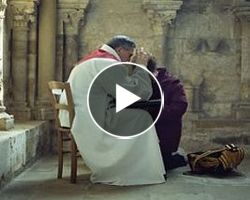
Even after baptism, our new life as children of God can be weakened or even lost through sin. Jesus willed that his Church continue his work of healing and salvation through the sacrament of reconciliation. Conversion, sacrifice and atonement in the OT. Jesus’ ministry of forgiveness. The paschal sacrifice makes possible man’s reconciliation with God. Jesus gave the ministry of reconciliation to his apostles and their successors. Interior penance; forms of penance. The acts of the penitent: contrition, confession, and satisfaction. The minister of the sacrament. The effects of the sacrament. The celebration of the sacrament.
By the sacred anointing of the sick and the prayer of the priests the Church commends those who are ill to the suffering and glorified Lord, that he may raise them up and save them. The sick person before God. Illness, sin and evil. Jesus’ ministry of healing, and his taking on our infirmities. Jesus gives to his disciples his ministry of healing. Redemptive suffering. Who receives and who administers the anointing of the sick? How is the sacrament celebrated? The effects of the sacrament.
Holy Orders is the sacrament through which the mission entrusted by Christ to his apostles continues to be exercised in the Church until the end of time. Holy orders in salvation history: the Aaronic priesthood. The institution of the Eucharist and of the New Testament priesthood. Jesus is both the High Priest and the sacrifice of the New Covenant. The priesthood in the early Church. The common priesthood of the baptized and the ministerial priesthood. The priest acts in the person of Christ. The three degrees of Holy Orders: bishops, priests, deacons. The celebration of the sacrament. Who can be ordained? Priestly celibacy. The effects of the sacrament.
God’s plan for marriage and the family: God who created man out of love also calls him to love. The source of love in the Trinity. The “one flesh” union between man and woman and the nuptial meaning of the body. Be fruitful and multiply. The effects of the Fall on human love. Marriage under the Torah. God’s love for Israel. Jesus’ teaching on marriage. Free, total, faithful and fruitful love. The two inseparable meanings of the conjugal act: union and procreation. Consecrated celibacy and virginity. Chastity and purity of heart.

In the covenant of marriage, a man and a woman establish between themselves a lifelong partnership. The sacrament of matrimony. The celebration of marriage. Matrimonial consent. Impediments to marriage and declarations of nullity (annulments). Mixed marriages. The marriage bond. The grace of matrimony. Eros and agape. The goods and requirements of marriage: a) The unity and indissolubility of marriage; b) the fidelity of conjugal love; c) openness to life. Adultery, divorce, and other sins against the dignity of marriage.

The family is the domestic church, a living cell of faith, love, and mission. The Christian family has four essential roles: (a) forming a community of persons – embracing the unique roles of men, women, children, and the elderly; (b) serving life through the transmission of life, the moral regulation of births, and the education of children; (c) participating in the development of society; and (d) sharing in the life and mission of the Church as a believing and evangelizing community, a community in dialogue with God, and a community at the service of man.
This lesson offers a clear and accessible overview of the history of the Church — a story of saints and sinners, growth and struggle, guided by the Holy Spirit from the first century to today. We trace the Church’s journey from the Acts of the Apostles and the age of the Fathers, through the rise of Christendom, the monastic movement, the schism between East and West, and the upheavals of the Protestant Reformation, all the way to the challenges and renewal of the modern world. A perfect starting point for anyone seeking the “big picture” of Christian history.
God called Israel to be his kingdom of priests and perpetual witness to the world. The coming of Jesus the Jewish Messiah and his rejection by his own people. The early Jewish Church and her calling to bring about reconciliation between Jews and Gentiles. Paul’s illustration of the olive tree. The Church becomes predominantly Gentile. The “passion of Israel” throughout Church history: replacement theology and Christian antisemitism. The “crucifixion” of Israel during the Holocaust. The resurrection of Israel? The modern rebirth of Messianic Judaism and Jewish Christianity. Modern antisemitism and the final redemption of Israel.
The Church has the obligation to evangelize all people and lead them to salvation in Jesus the Messiah. Review of lesson B01 on the Church: man has lost the way, the truth, and the life; Jesus has come to restore these through his Church. The Great Commission calls every believer to help make disciples of all nations. Salvation is in no other name than Jesus. Faith in Christ, baptism, and the Church are necessary for salvation. The Church and other religions. The problem of relativism. Dialogue and evangelization. The Church and Judaism. The Church and the unity of Christians.
Go to: Introduction | Portal to Lessons | Part I: God’s Story, Our Story
Purchase PowerPoint Presentations