

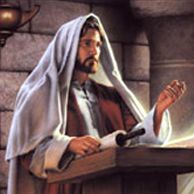
"But who do you say that I am?" … "You are the Messiah, the Son of the living God." (Matt 16:15–17)
Articles about Jesus, the Messiah of Israel and eternal Son of God. This section also includes reflections on the one God of Israel who has revealed Himself as Father, Son, and Holy Spirit.
 The Name of G-d is like a Temple: Just as a Temple locates G-d's Presence and offers men an opportunity to enter that Presence, the Name of G-d is the "place"—that through which-- we encounter the Presence of G-d.
 The Trinity is a distinctively Christian idea, but it articulates the concept of G-d implicit in the Jewish as well as the Catholic experience of G-d, for Jews, like Catholics, know G-d as Father (Source), as Son (Shekhinah), and as the Holy Spirit (His Love).
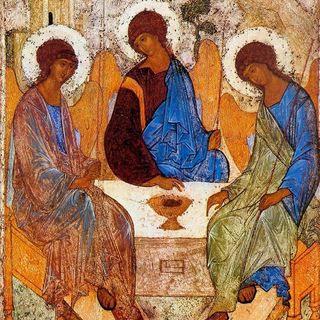 The Trinity is the central mystery of the Christian faith. The term describes the inner life of God, who is an eternal communion of Persons and a Family whose life is love. Is the concept of the Trinity a Christian invention, derived from Greco-Roman pagan ideas? Or do we already find hints of the Trinity in the Hebrew Bible and in Jewish sources?
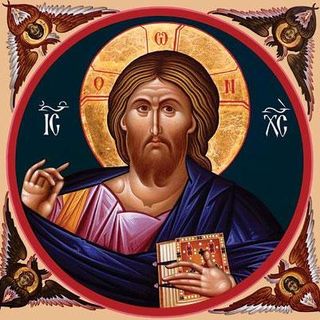 Is the Messiah to be a mere man, as is commonly thought in traditional Judaism, or is he divine, as it is held by Christians? Did the concept of a divine Messiah derive from Greek pagan influences, or is it rooted in the Bible? Is it a New Testament innovation or can we find hints and traces of this idea throughout the Hebrew Bible and Jewish literature? Read about the divinity of the Messiah in the Patristic writings, in the New Testament, and in the Hebrew Scriptures and Jewish literature.
 Why do we need Jesus? God created us to share in His divine life and love, but sin has broken our communion with Him. Jesus came to reconcile us to the Father. He established the Catholic Church to continue His saving work and, through her sacraments, to impart His forgiveness, salvation, and eternal life.
 Who is the Messiah promised in the Hebrew Scriptures? And what light do Jewish interpreters shed on his identity? Explore the messianic prophecies of the Tanakh alongside the Aramaic targums, the Midrash, the Talmud, medieval Jewish commentators, and other Jewish writings—and discover how this prophetic portrait comes into focus in Jesus of Nazareth.
 A study of the river flowing from Ezekiel's Temple (Ezek 47:1-12) and its underlying themes: Jerusalem and Zion as the Lord's cosmic mountain; water as a prophetic sign of eschatological healing; the Garden of Eden. The Feast of Tabernacles and its water libation ceremony in the Temple actualized these themes and anticipated God's future outpouring of the Holy Spirit. Jesus' words uttered during the same feast show that he identified himself with Ezekiel's temple and is the giver of the waters of life – the Holy Spirit. The eschatology of the book of Revelation and the vision of "a pure river of water of life" proceeding from the throne of God recapitulate and expand Ezekiel's vision by incorporating the other prophetic themes and Jesus' self-revelation.
