


Introduction
In recent years, a vocal group of Catholic influencers have gained prominence by arguing that Israel as a nation no longer has any role in God’s plan of salvation. They claim that the modern return of the Jewish people to the land of Israel carries no theological significance whatsoever, that “Catholics don’t embrace Zionism,” and even that Christian Zionism is a “heresy.”
These claims are, of course, false.
They can be refuted from multiple angles:
-
A good place to start is to consider the numerous divine promises of the land to Israel in the Bible, as well as the many prophecies of the people’s future return there.
-
These promises and prophecies are inseperable from the prominence of Zion across Scripture.
-
Next, the New Testament witnesses to the enduring validity of God's gifts and calling to Israel, even in the age of the Church.
-
Taken together, these biblical foundations allow for a coherent Catholic case for Zionism.
-
The straw men and other fallacies that anti-Zionists typically appeal to can then be easily refuted.
-
Also worthy of attention is the expectation of many Church Fathers for a future restoration of Israel, including in some cases a Jewish return to the land of Israel.
-
The contentious issue of the relationship between biblical and modern Israel should also be clarified.
Given the cumulative strength of these arguments, it is not surprising that many Catholics across history have embraced some form of Zionism.
Catholic Zionism is simply the belief that God will fulfill his biblical promises and restore the Jewish people to their ancestral land after a long exile. It is not an assertion that the modern State of Israel constitutes a messianic fulfilment or a “faith-state,” nor does it endorse the rebuilding of the Jerusalem Temple or justify injustice, violence, or the dispossession of anyone. Nor is it rooted in Protestant dispensationalism, dual-covenant theology, or end-times speculation.
Catholic Zionism has persisted despite the long shadow of supersessionism—the belief that the Church has replaced Israel as the “new” and “true” Israel. Although widespread historically, supersessionism was never an authoritative Catholic doctrine. Since the Second Vatican Council, the Church has explicitly rejected the idea that God has revoked His covenant with the Jewish people, and subsequent magisterial teaching has deepened this trajectory.
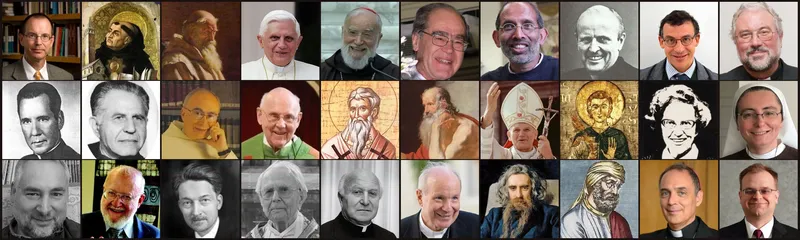
What follows is a curated selection of Catholic voices across history who articulate this vision with clarity and conviction.
 St. Justin Martyr (c. 90–165)
Church Father
What the tribes of the Jews will say and do when they see Him coming in glory has been thus foretold by Zechariah the Prophet: “I will command the four winds to gather the scattered children; I will command the north wind to carry them, and the south wind not to strike against them. And then in Jerusalem there shall be great lamentation, not the lamentation of mouths or of lips, but the lamentation of the heart; and they shall rend not their garments, but their hearts. Tribe by tribe they shall mourn, and then they shall look on Him whom they have pierced…” [Zech 2:6; 12:10-12; Joel 2:13; Isa 63:17].1
 St. Irenaeus (c. 125–202)
Church Father
Ezekiel also says: "Behold, I will open your tombs, and will bring you forth out of your graves; when I will draw my people from the sepulchres, and I will put breath in you, and you shall live; and I will place you on your own land, and you shall know that I am the Lord" [Ezek 37:12]. And again the same speaks thus: "These things says the Lord, I will gather Israel from all nations where they have been driven, and I shall be sanctified in them in the sight of the sons of the nations: and they shall dwell in their own land, which I gave to my servant Jacob. And they shall dwell in it in peace [Ezek 28:25-26].2
But in the times of the kingdom, the earth has been called again by Christ [to its pristine condition], and Jerusalem rebuilt after the pattern of the Jerusalem above, of which the prophet Isaiah says, “Behold, I have depicted thy walls upon my hands, and thou art always in my sight.”3
 Tertullian (c. 155–c. 220)
Church Father
For it will be fitting for the Christian to rejoice, and not to grieve, at the restoration of Israel, if it be true, (as it is), that the whole of our hope is intimately united with the remaining expectation of Israel.4
 St. Jerome (c. 345–420)
Church Father
We will attempt if possible to relate the same things to the Day of Judgment. When believers have been saved in Mount Zion and Jerusalem, and when the remnant of the Jewish people who have believed with the apostles and through the apostles have been called, at that time after the Lord restores the captivity of Judah and Jerusalem, who had come to preach sight to the blind and release to the captives, and he liberated those who confess the Lord and who dwell in the church, in which there is the vision of peace, he will gather together all nations that were unwilling to believe and he will bring them down into the valley of Josaphat.5
 Venerable Bede (672–735)
Church Father
And they will fall by the edge of the sword and be led away as captives among all nations, and Jerusalem will be trampled on by the Gentiles [Luke 21:24] … In accordance with the prophetic text that proclaims: In your anger, you will remember mercy [Hab 3:2], he immediately went on to say: Until the times of the nations are fulfilled [Luke 21:24b]. The times of the nations are certainly those which the Apostle recalls when he says: That blindness in part has happened in Israel, until the fullness of the Gentiles comes in, and so all Israel will be saved [Rom 11:25-26]. When Israel obtains its promised salvation, it is hoped, perhaps not rashly, that it will also return to its native soil and rejoice in the possession and habitation of its former chief city, because it is said that it was not going to be distressed in this way forever, but until the times of the nations are fulfilled. What follows, after the times of the nations have been fulfilled and Israel has thus been saved, the Lord reveals in sequence.6
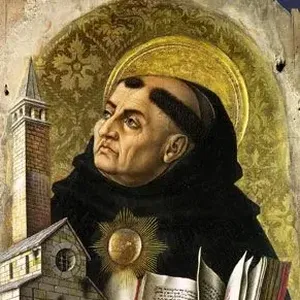 St. Thomas Aquinas (1225–1274)
Doctor of the Church
With regard to the end to which the liberation is directed: and there is hope for your future [Jer 31:17], to signify that in the last times [the Jewish people] shall be turned to the true faith and perhaps even to their own land, at the death of the antichrist.7
 Vladimir Solovyov (1853–1900)
Russian Philosopher and Mystic
In his fictitious “Short Story of the Anti-Christ,” Solovyov anticipates that the Jews will return to Palestine at the end of human history, before the appearance of the antichrist:
At that time [of the antichrist], the imperial residence was transferred from Rome to Jerusalem. Palestine was already an autonomous province, inhabited and governed mainly by the Jews. Jerusalem was a free and now imperial city.8
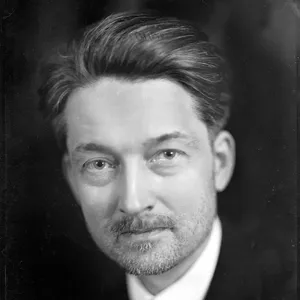 Jacques Maritain (1882–1973)
French Philosopher and Theologian
…it is a strange paradox to see disputed with the Israelians ‘the sole territory to which, considering the entire spectacle of human history, it is absolutely, divinely certain that a people has incontestably a right: for the people of Israel is the sole people in the world to whom a land, the land of Canaan, was given by the true God, the unique and transcendent God, creator of the universe and of the human race. And what God has given once is given for ever.
In speaking thus I was not making of the State of Israel a State by divine right… The State of Israel, insofar as State, is only a State like the others. But the return of a portion of the Jewish people and its regroupment in the Holy Land (of which the existence of this State is the sign and the guarantee),—this is the reaccomplishment, under our eyes, of the divine promise which is without repentance. In short, I remembered what was said to Abraham, to Jacob and to Moses, and what Ezechiel announced: not that I regarded the founding of the State of Israel as a kind of preface to the realization of this prophecy (about this I know absolutely nothing, though it is possible); but in order to keep in my mind respect for the ways of God. And I do not doubt that the event, however enigmatic it may be for the Jews as for the Christians, carries in it the mark of the faithful love and of the pity of God toward the people which is ever his…
It appears to me, consequently, that once the Jewish people has put its feet again upon the land which God gave to it, no one will be able anymore to wrest it from it; and that to wish the disappearance of the State of Israel is to wish to reject into nothingness this return which finally was accorded to the Jewish people, and which permits it to have a shelter of its own in the world; in other words, it is,—in another manner, but as grave, than that of ordinary anti-Semitism,—to wish that misfortune hound again this people, and that once more it be the victim of an iniquitous aggression. “Anti-Israelism” is no better than anti-Semitism.9
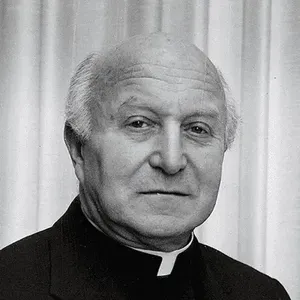 Monsignor John M. Oesterreicher (1904–1993)
Theologian and Scholar
Ever since 1948, the land and the people of Israel have been reunited… In view of Israel's quite unlikely history, it is fair to assume that her success is not altogether due to the cunning of her statesmen, the superior strategy of her generals, the bravery of her soldiers, and the steadfastness of her citizens. Rather was it the ‘outstretched arm’ (Ex 6:6) of the Lord which once more rescued His people… I, at least, cannot see how the renewal of the land could be anything to the theologian but a wonder of love and fidelity, how the reborn State could be anything but a sign of God’s concern for His people… Today’s Israel is new proof that God stands by His Covenant; that the last word lies, not with the inventor of the ‘final solution,’ but with Him.”10
 Sr. Charlotte Klein, NDS (1915–1985)
Sister of Zion, Scholar of Judaism and Jewish-Christian Relations
The problem therefore turns on the concepts of election and covenant. If one is prepared to accept that these have not been abrogated, then it follows that the bond which links Israel to the land has to be accepted as equally still in force. And here is the rub! If Christians can admit, without being unfaithful to their own beliefs, that the Jewish people have never been released from their covenant relationship with the one true God, if post-biblical Judaism is accepted as valid—in whatever manner this Judaism wishes to interpret itself and its role—then one cannot deny equal validity to the part played by the land in the Jewish people's religious self-understanding throughout the ages, including their return to it in our own time.15
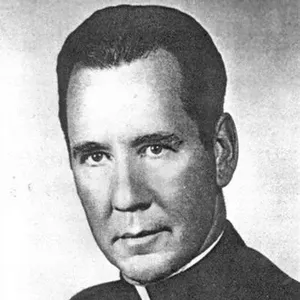 Fr. Edward Flannery (1912–1998)
American Priest and Author
…the present state of Israel may be a stratagem of divine providence to drive Israel into a “blind alley of grace”… we may then think that God wished to bring a representative cross section of the Jewish people to the Holy Land in order to bring it there face to face with the great question of the Messiah. Israel’s restoration to the land of promise, even though under secular auspices, may thus be a distant preparation for her final encounter with grace.14
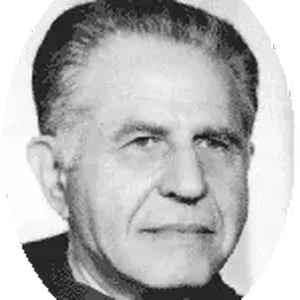 Fr. Elias Friedman (1916–1999)
Carmelite Monk and Priest, Stella Maris Monastery, Haifa, Israel
In Lk. 21:24, Jesus predicted, implicitly, the return to the Holy Land of the dispersed Jews and the reestablishment of their rule over Jerusalem…
The return of the Jews to the Holy Land after two thousand years of exile is a sign of the times and a fulfilment of prophecy, the capture of Jerusalem in 1967 no less so...11
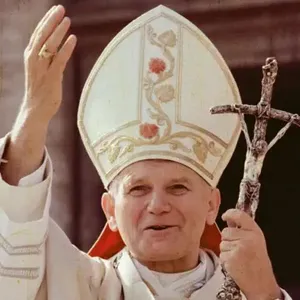 Pope Saint John Paul II (1920–2005)
Pope, 1978-2005
May our Jewish brother[s] and sisters, who have been led “out from among the peoples and gathered from the foreign lands” and brought back “to their own country” [Ezek 34.13], to the land of their ancestors, be able to live there in peace and security on the “mountains of Israel,” guarded by the protection of God, their true shepherd.12
It must be understood that Jews, who for two thousand years were dispersed among the nations of the world, had decided to return to the land of their ancestors. This is their right…Because you ask how the present rapprochement has developed between the Holy See and Israel, I shall answer citing the words of the Second Vatican Council. In the Nostra Aetate declaration, the Council states: “The Church ever keeps in mind the words of the apostle Paul about his kinsmen ‘who have adopted as sons, and the glory and the Covenant and the legislation and the worship and the promise; who have the fathers, and from whom is Christ, according to the flesh’” [Rom. 9:4-5]. If we stand by the declaration of the Council, we must conclude that the Church’s attitude toward Israel results from the same mystery of the Church that the Council undertook to plumb anew.13
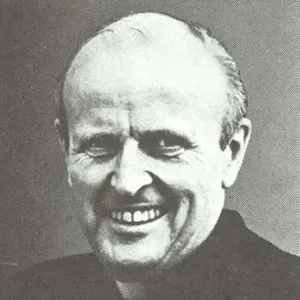 Fr. Robert F. Drinan (1920–2007)
Jesuit Priest, Lawyer, Member of the U.S. House of Representatives
Rabbi Abraham Joshua Heschel states in 1969 in his book, Israel: An Echo of Eternity, that the return of the Jews to Israel is the action of God, the Lord of history… This conclusion by Rabbi Heschel is built upon that profound and persistent yearning for return to the land that has always characterized Judaism. A Christian will accept Rabbi Heschel’s conclusion if he realizes that the Old Testament affirms a lasting union between God and the Jewish people.16
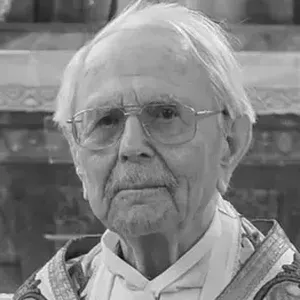 Fr. Franz Mussner (1916–2016)
German Priest and Theologian
The biblical promise of the land, which has as its consequence the mystical wedding of Israel with the land of the fathers, is therefore likewise the ultimate source of the so-called Zionism which is more than a political movement… The return of the people to the land of the fathers… does correspond to the promise of God in the mouth of his prophets, even if no one can say with absolute certainty whether the state of Israel as it currently exists is precisely the fulfillment of the prophetic promise. Nevertheless, the Christian must follow the events in the Near East with the greatest of attention. He can in no case say at the outset that the modern state of Israel has nothing to do with the prophetic promises, however difficult a final pacification in the Near East may appear to be. In any case the Christian cannot avoid the conclusion that without the will of God a return of Israel to the land of its fathers would never have been possible… The existence of the state of Israel brings the world and the Church daily into awareness that Jews exist and that God has not excluded them from his guidance. Therefore the state of Israel is a sign that cannot be overlooked.17
 Fr. Peter Hocken (1932–2017)
British Priest, Theologian, and Historian
Each [prophetic] passage promising the gift of the indwelling Spirit occurs in a context that also promises the gathering together of the people of Israel and Judah, and their return to the land. These two themes are so closely intertwined that it is virtually impossible to separate them, especially in Ezekiel… These passages suggest that there is a link in the divine plan between the gift of the Spirit and the gathering of the scattered people of Israel with their return to the land.18
In this light, the return of Israel to the land of Palestine is more significant than mainline Christians have generally recognized, but significant in a different way from what many fundamentalists proclaim. It is truly an affirmation of the enduring validity of the promises to Israel, but it is still a sign and harbinger of the future fulfilment at the second coming.19
 Fr. Carlo Colonna, SJ (d. 2017)
Italian Jesuit priest, Author, Theologian
In the twentieth century, however, after twenty centuries of Diasporas, we have seen the same God of Israel, who had scattered his people among the nations, working to rebuild them as a nation and bring them back to live in the land of their forefathers. The twentieth century had at its center an event of such a great magnitude that only the major biblical events are comparable to it. In fact, the reconstruction of Israel as a nation and its return to the land of its forefathers are two major biblical events, witnessing to the struggle between God and Satan in the era of the domination of an atheism which no longer recognized either God or Satan. On the one hand, Satan tried to annihilate Israel through his loyal executioner, Hitler; on the other hand, God reconstituted His people as a nation and led them back to live in the land of their origins. Now that the Church has definitively abandoned the replacement theology that denied the title of "People of God" to Israel, we can and must speak in these terms. For this reason, we cannot judge in a purely political terms the return of Israel; we must also consider it from a biblical and theological perspective. Let men continue to judge the events of history through a mere political lens. They are blind leaders of the blind! They have neither wisdom nor prophecy coming from God. Whoever has intimately understood that the God of Israel and the God of the nations are one and the same God, reigning over Israel and over the nations forever and ever, understands the reign of God over Israel and the Nations.
Why this return of Israel to the land of their forefathers? Here also there are not only political and ethnic reasons. The main reason is theological and biblical. This is because, in the plan of God’s rule over history, Israel has a great role to play in preparing the nations for the return of the Messiah in glory. In the twentieth century began the great epochal change preparing mankind for the conclusive event of history: the final coming of the Kingdom of God, for which all Christians pray every day, saying: Thy Kingdom come!20
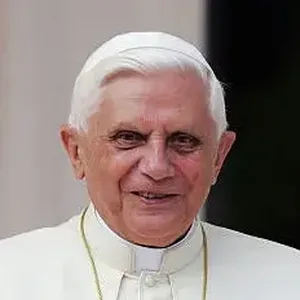 Pope Emeritus Benedict XVI (1927–2022)
Pope, 2005-2013
“[The State of Israel] expresses God’s faithfulness to the people of Israel.”21
“It is not difficult, I believe, to see that in the creation of the State of Israel the fidelity of God to Israel is revealed in a mysterious way.”22
 Cardinal Raniero Cantalamessa (1934– )
Former Preacher to the Papal Household
We share with the Jews the biblical certainty that God gave them the country of Canaan forever (cf. Gn 17:8; Is 43:5; Jer 32:22; Ezk 36:24; Am 9:14). We know, on the other hand, that ‘the gifts and the call of God are irrevocable’ (Rm 11:29). In other words we know that God gave Israel the land but there is no mention of his taking it back again forever. Can we Christians exclude that what is happening in our day, that is, the return of Israel to the land of its fathers, is not connected in some way, still a mystery to us, to this providential order which concerns the chosen people and which is carried out even through human error and excess as happens in the Church itself? If Israel is to enter the New Covenant one day, St. Paul tells us that they will not do so a few at a time but as an entire nation, as ever-living ‘roots’. But if Israel is to enter as a nation, it must be a nation, it must have a land of its own, an organization and a voice in the midst of other nations of the earth. The fact that Israel has remained an ethnic unity throughout the centuries and throughout many historical upheavals is, in itself, a sign of a destiny that has not been interrupted but is waiting to be fulfilled. Many peoples have been driven out of their land over the centuries, but not one of them has been able to remain intact as a people in their new situation. Faced with this fact, we cannot but remember the words of God in Jeremiah: ‘If this fixed order departs from before me,’ (the order that governs the sun, the moon, the stars and the seas!) ‘says the Lord, then shall the descendants of Israel cease from being a nation before me forever’ (Jer 31:36).23
 Cardinal Christoph Schönborn (1945– )
Former Archbishop of Vienna, Key Editor of the Catechism of the Catholic Church
Schoenborn said it was doctrinally important for Christians to recognize Jews' connection to the ‘Holy Land’ and Christians should rejoice in Jews’ return to Palestine as a fulfillment of biblical prophecy. He also said Pope John Paul II had himself declared the biblical commandment for Jews to live in Israel an everlasting covenant that remained valid today.24
“Hardly anybody will dispute that the foundation of this state [of Israel] had something to do with the biblical prophecy, even if that something is hard to define.”25
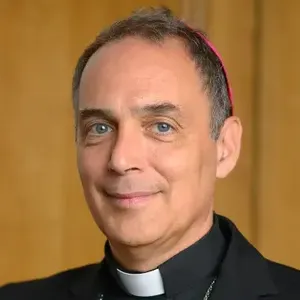 Bishop Etienne Vetö (1964– )
Auxiliary Bishop of Reims, France
In the end, the ingathering [of Israel] may possibly be the first step of the messianic accomplishment of the promises, but certainly not their full, effective and definitive realization… Two extremes should be ruled out. On the one hand, one cannot say that it is the full, effective, and definitive fulfillment of the messianic promises of the Tanakh. On the other hand, neither can one say that considering it as a first step of this fulfillment, or at least as divine providence, is impossible in the light of Catholic faith. It may well be from God; it may well be a messianic reality.26
 Dr. Lawrence Feingold
Associate Professor of Theology, Kenrick-Glennon Seminary, St. Louis
Israel as a whole, and Jerusalem in particular, cannot help being eschatological types; it is embedded by God into their identity… The fact that the Land of Israel is somehow “married” again, to use Isaiah’s language [Isa 62:4-5], to the Jewish people cannot be regarded as theologically insignificant from the Christian perspective, as from the Jewish. If Jerusalem is always an eschatological sign, how much more a Jerusalem in which the Land is “wedded” again in some sense to the People of the Promise. It makes sense, therefore, that the return of the Land and of Jerusalem to Jewish sovereignty after so many centuries of exile should be considered a sign of the times that should be read through the illumination of the Holy Spirit.
Since the People of Israel point by their very existence to the mystery of the Messiah, it follows that a return of the Chosen People to the Land after long exile can also be seen as a sign or type of the approach of the return of the Messiah.27
The rebirth of the State of Israel after nineteen centuries has often been compared to a resurrection, a fulfillment of the imagery of Ezekiel’s dead bones that have life blown into them by the Spirit (Ez 37).28

 Fr. Jean-Miguel Garrigues, OP and Eliana Kurylo, CB
Garrigues: Dominican Theologian, Toulouse
Kurylo: Religious Sister (Community of the Beatitudes), Biblical Scholar, Institut Catholique de Toulouse
The Catholic Church teaches that eschatological fulfillment of his promises by the Lord must take place though the particular spatio-temporal concretization of the Land of Israel and of Jerusalem. It is an affirmation that could surprise the majority of Catholics today… And yet what the Catholic Church condemns in millennialism… doesn’t seem to exclude that God himself brings his holy history regarding humanity to fulfillment through an ultimate mediation of the people of Israel, linked to Jerusalem and to the Promised Land.29
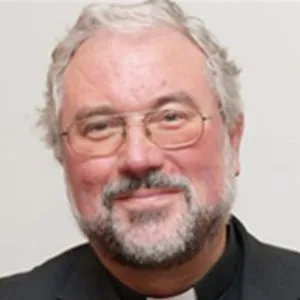 Deacon Johannes Fichtenbauer
Theologian and Author
Already in 1950, the renowned Jewish theologian Shalom Ben-Chorin posed a profound question: “Do we not have to see in all of these present-day developments the ‘Etsba Elohim’—the finger of God?” He continued: “First there was the judgment of God over Israel—the most terrible of all His judgments (the Shoah)—and then the gathering of the remnant in the re-established State of Israel in the Land of Promise”…
There were important Old Testament prophetic lines concerning Israel—four of which now seemed to have been fulfilled:
The Jews will possess the Land of Israel again as their own independent State (Amos 9:11-15);
The Jews will return to the Land coming from the four corners of the earth—north, south, east and west (Isa 43:5-6);
The arid desert will become a lush garden. Indeed, modern Israel is a vibrant green landscape, while many neighboring countries remain deserts (Isa 35:1-2; 41:18-20);
Before the end times, Jerusalem will be freed from Gentile dominion and become the capital of Israel (Zech 1:17; 2:4; 12:1-9; Luke 21:24).30
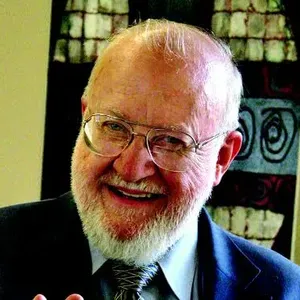 Dr. Richard C. Lux
Founding Director, Lux Center for Catholic-Jewish Studies, Sacred Heart Seminary and School of Theology, Franklin, WI
…for us Christians the State of Israel and Zionism is a new modality of covenantal fidelity of the Jewish people in the twenty-first century. Since we and the Jews are brothers and sisters in the one covenant, we ought to acknowledge the validity and reality of the profoundly religious meaning of the State of Israel as an institution of covenantal life.31
The modern State of Israel can be viewed as the twenty-first-century Jewish embodiment of the living covenant as the church is the Christian covenantal embodiment of our faith life, our walking in the way of Jesus.32
Do Jews and specifically the State of Israel have a religious right to the land? Clearly, God gives the land of Canaan to the Jewish people, it is part of God's covenant bond with the Jewish people, and the Roman Catholic Church recognizes that God's covenant with the Jewish people still endures. Thus, they have a religious right to the land.33
 Dr. William M. Wright IV
Professor of Catholic Studies and Theology, Duquesne University
Catholics can acknowledge the return of the Jewish people to live in their ancestral homeland as an instance of God’s loving-kindness and faithfulness to his covenant people. Catholics can do so in a manner akin to honoring the abiding value and religious significance of the plain-sense dimensions of the Old Testament and the realities which it presents.34
 Dr. Gary A. Anderson
Hesburgh Professor of Catholic Thought, the University of Notre Dame.
Still, we must also insist that the promises of Scripture are indeed inviolable and that Israel’s attachment to this land is underwritten by God’s providential decree. The miraculous appearance of the Israeli state just after the darkest moment in Jewish history is hard to interpret outside of a theological framework…
Is the return to Zion part of God’s providential design and eternal promise to His people Israel? I believe that it is.”35
 Dr. Gavin D’Costa
Professor Emeritus of Catholic Theology, University of Bristol
Professor of Catholic Jewish Relations, Pontifical University of St. Thomas Aquinas, Rome
In the modern era, close attention to key New Testament themes has led the Church to reject this supersessionist view and reconsider the proper disposition of Catholics toward the Jewish people, and toward the establishment in 1948 of a Jewish state. Many New Testament texts support the notion that Catholics should endorse Zionism. Jesus himself was a Jewish Christian Zionist. The Gospels situate his ministry in relation to the land, both at the beginning and at the end. The birth narratives enact the people's exile in Egypt followed by the Holy Family's return to the land from Egypt (Matt. 2:13-23). During his ministry, Jesus never leaves the land. He is concerned with Israel, his people (Matt. 15:22-28). He leaves the task of going "to the ends of the earth" to the Church gathered around him after the resurrection. The Church's mission conforms to expectations regarding the Jewish messiah. Christ makes Israel-the people and the land-a light to the nations so that all will worship Israel's God. Catholics accept that the Jewish people still have a providential role to play, and their return to the land of Israel may be part of the still-to-be-completed redemptive plan. A theologically grounded openness to this possibility is the seed of Catholic Zionism.36
The ingathering of the Jewish people and their preservation as a people in the founding of Israel in 1948 is deeply biblical and cannot be ignored. It is a sign of God’s providential love and care for his people and part of his irrevocable covenant. I call this minimalist Catholic Zionism…37
 Fr. Antoine Lévy, OP
Theologian and Author
The reassessment of the place of the Jewish nation in God’s providential economy as it is presented in the most recent official documents of the Catholic Church cannot leave aside the issue of the Land. The authors of The Jewish People and their Sacred Scriptures in the Christian Bible already showed themselves eager to emphasize that the universalization of the concept of the Land in the New Testament does not cancel God’s decision to give the Land to the Jewish nation… Supposing therefore, according to this modern Catholic theology of Israel, that the Jewish nation did not cease to be the object of God’s providence, even after—and regardless of—its rejection of Jesus’ messiahship, how could the return of Jews to the Land that God promised to give them once and for all not be interpreted as a sign of this ongoing providence? What is providence if it does not translate into concrete deeds—and what more spectacular materialization of this providence to the Jewish nation could one think of than the creation and development of the State of Israel after two thousand years of exile culminating in an attempt at global extermination? The truth is that the acknowledgement of the religious dimension of the State of Israel, a dimension that derives from its Biblical roots, is perfectly in line with the recent striving of official Catholic teaching to conceive the destiny of the Jewish nation in non-supersessionist terms.38
 Dr. André Villeneuve
Associate Professor of Sacred Scripture, Sacred Heart Major Seminary, Detroit
If God himself chose Zion as his eternal dwelling; if he persistently promises to return the people of Israel to Zion and to dwell among them there — then in this foundational sense, it is God himself, not Theodor Herzl, who is the Father of Zionism.39
-
St. Justin Martyr, First Apology 52, ANF 1:180.↩︎
-
St. Irenaeus, Against Heresies 5.34.1, ANF 1:563-64.↩︎
-
St. Irenaeus, Against Heresies 5.35.2, ANF 1:566.↩︎
-
Tertullian, On Modesty 8, ANF 4:82.↩︎
-
St. Jerome, Commentary on Joel 3:1-3, ACT Minor Prophets 2:292.↩︎
-
Calvin B. Kendall and Faith Wallis, eds., Bede: Commentary on the Gospel of Luke, VI.86.256 (Liverpool University Press, 2023), 576.↩︎
-
St. Thomas Aquinas, Commentary on Jeremiah 31:17; c.31 l.4,↩︎
-
Vladimir Solovyov, War, Progress, and the End of History, 174.↩︎
-
Jacques Maritain, On the Church of Christ: The Person of the Church and her Personnel (University of Notre Dame, 1973), 170-71.↩︎
-
John M. Oesterreicher, “The Theologian and the Land of Israel,” The Bridge: A Yearbook of Judaeo-Christian Studies V (1970): 241–42.↩︎
-
Elias Friedman, Jewish Identity, (Miriam Press, 1987), 152, 160.↩︎
-
1991 Pastoral visit to Brazil, in Eugene J. Fisher and Leon Klenicki, eds., The Saint for Shalom: How Pope John Paul II Transformed Catholic-Jewish Relations (Crossroad, 2011), 225.↩︎
-
Interview in Parade Magazine with Tad Szulc, April 3, 1994, in John Paul II, Spiritual Pilgrimage: Texts on Jews and Judaism 1979 - 1995 (Crossroad, 1995), 187–88.↩︎
-
Edward H. Flannery, “Theological Aspects of the State of Israel,” The Bridge III (1958): 324.↩︎
-
Charlotte Klein, “Theological Dimensions of the State of Israel,” Journal of Ecumenical Studies 10, no. 4 (1973): 710.↩︎
-
Robert F. Drinan, Honor the Promise: America’s Commitment to Israel (Doubleday & Co, 1977), 87.↩︎
-
Franz Mußner, Tractate on the Jews: The Significance of Judaism for Christian Faith (Fortress Press, 1984), 15–16.↩︎
-
Peter Hocken, The Glory and the Shame: Reflections on the 20th-Century Outpouring of the Holy Spirit (Eagle, 1994), 140–41.↩︎
-
Hocken, The Glory and the Shame, 146.↩︎
-
Carlo Colonna, “2012: Reading the Signs of the Times,” Catholics for Israel, February 4, 2012.↩︎
-
Benedict XVI, “Grace and Vocation without Remorse: Comments on the Treatise De Iudaeis,” Communio: International Catholic Review 45 (Spring 2018): 179.↩︎
-
Benedict XVI, “Reply to Rabbi Arie Folger,” August 23, 2018.↩︎
-
Raniero Cantalamessa, The Mystery of Christmas: A Comment on the Magnificat, Gloria, Nunc Dimittis (The Liturgical Press, 1988), 71-72. ↩︎
-
The Washington Post, March 31, 2005, as quoted in “Cardinal Schönborn Endorses Biblical Zionism,” Catholics for Israel, December 6, 2007.↩︎
-
David P. Goldman, “Zionism for Christians,” First Things, June 1, 2008.↩︎
-
Etienne Vetö, “Land and Redemption: Why does God Promise a Land?” in Gavin D’Costa and Faydra Shapiro, eds., Contemporary Catholic Approaches to the People, Land, and State of Israel (The Catholic University of America Press, 2022), 38, 40.↩︎
-
Lawrence Feingold, “The Return to the Land of Israel as an Eschatological Sign in the Light of Romans 11,” in D’Costa and Shapiro, Contemporary Catholic Approaches, 10–11.↩︎
-
Feingold, “The Return to the Land of Israel,” in D’Costa and Shapiro, Contemporary Catholic Approaches, 17.↩︎
-
Jean-Miguel Garrigues and Eliana Kurylo, “The Relationship of Israel to the Promised Land after Christ: Catholic Questionings,” in D’Costa and Shapiro, Contemporary Catholic Approaches, 49–50.↩︎
-
Johannes Fichtenbauer, The Mystery of the Olive Tree, revised third edition (Toward Jerusalem Council II, 2017, 2025).↩︎
-
Richard C. Lux, The Jewish People, the Holy Land, and the State of Israel: A Catholic View (Paulist Press, 2010), 89.↩︎
-
Lux, The Jewish People, the Holy Land, and the State of Israel, 94.↩︎
-
Lux, The Jewish People, the Holy Land, and the State of Israel, 108.↩︎
-
Gavin D’Costa et al., eds., Catholic-Jewish Engagements on Israel: Holy Land, Political Territory, or Theological Promise? (The Catholic University of America Press, 2025), 100.↩︎
-
Gary A. Anderson, “How to Think about Zionism,” in D’Costa et al., Catholic-Jewish Engagements on Israel, 113, 115.↩︎
-
Gavin D’Costa, “Catholic Zionism.” First Things, January 1, 2020.↩︎
-
Gavin D’Costa, “The Case for a Catholic Theological Affirmation of the Land and People of Israel,” in D’Costa et al., Catholic-Jewish Engagements on Israel, 28.↩︎
-
Antoine Lévy, “Tractatio Theologico-Politica: Palestinian Suffering and the Official Catholic teaching on the State of Israel,” in D’Costa and Shapiro, Contemporary Catholic Approaches, 213–14.↩︎
-
“God Dwells in Zion: Zionism across Scripture,” Catholics for Israel, February 14, 2026.↩︎