

 On September 2, 2009, Catholic apologist Robert Sungenis published a document entitled "The Erroneous Teachings of Catholics for Israel” in which he directly attacks the legitimacy of our apostolate. This document states that on the Catholics for Israel website “various and sundry claims about the Jews and Israel are being disseminated as Catholic Teaching” but these, according to Sungenis, are “not Catholic teachings.” The following is our response to Sungenis' attacks.
 A list of important works consulted during the writing of this book.
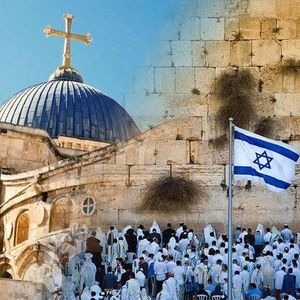 Dr. André Villeneuve addresses the problem of Catholic anti-Zionism—including 15 fallacies upon which it is based—and its underlying cause: the enduring influence of Catholic supersessionism.
It is impossible to understand the Bible with its narrative about the plan that God has for mankind without understanding the role of Israel as a people and a Nation. The Jews have been at the center of all that God does, beginning with the call of Abraham up to the book of Malachi at the end of the Old Testament; and they remain the center throughout the period of the first Christian century recorded in the New Testament.
Everything began with Abraham. The vocation of Abraham is the biblical foundation for Israel's key role in the divine plan of salvation. Genesis 12:1–3 refers to the call of Abraham and to God's promise to him as a permanent covenant for all his offspring. The Lord said to Abram, "... and I will make of you a great nation, and I will bless you and make your name great, so that you will be a blessing.I will bless those who bless you, and him who dishonors you I will curse, andin you all the families of the earth shall be blessed."
Something terrible happened. Very soon after the beginning of Church history, the Gentiles became the majority among the believers, and they rejected God's divine strategy. For the Evil One, it must have been clear: if this unity between Jews and Gentiles were to continue, his reign over mankind would finally be lost. Already, the key victory over evil and death had been won when Jesus died on the cross and rose again. However, as long as Satan can hinder the unity between Jews and Gentiles in the Messiah, the fruit of redemption—the social dimension of healing and restoration—cannot be fully realized.
One day, the Emperor of Prussia, Frederick II the Great (1712-86)—an agnostic and disciple of the Enlightenment movement—was discussing with his personal physician various problems related to late 18th century. Finally, he confronted the doctor with a frank question, "Is there any substantial reasoning for the existence of a personal God?" The physician replied, without hesitation, "The Jews, my king, the Jews!"
Today, the Messianic Jewish Movement is establishing itself—relatively small, yet spiritually strong. There are up to 150,000 Messianic Jews worldwide. Within their congregations, perhaps another 200,000 partly Jewish or Gentile relatives and friends have found a spiritual home. Their influence on both Jewish and Christian societies is far greater than one might expect. The faith of these Messianic Jews is expressed with deep conviction, dedication, and passion for the Lord.
The history of the Catholic Church's relationship with the Jews has been tragic across centuries. Jews were made second-class citizens, isolated into ghettos, and forced into conversion and baptism. Baptized Jews were often treated like prisoners, subjected to the controlling system of the so-called "Holy Inquisition."
The Messianic Movement is not inauthentic; on the contrary, it is a challenge to the Christian world to reconsider its theological foundations. The Christian Churches are confronted with an unexpected partner. This means that their presence compels us to think and to act decisively differently in the future than we have in the past.
It was a hot summer day in 1995 when young Rabbi Marty Waldman, Secretary General of the Union of Messianic Jewish Congregations (UMJC), was sitting in his office in Dallas, Texas, preparing a teaching on Acts 15—about the Council in Jerusalem. There, he had a "vision." Rabbi Marty saw a need for another Council in Jerusalem. This Second Council should revisit and redress the outcomes of the First. This time, the Gentiles would have to welcome back the Jews as their Older Brothers.
In keeping with our name as an initiative, we hope for a final unity of Jew and Gentile—expressed in something like a solemn convocation, reminiscent of the First Jerusalem Council described in Acts 15. This, in a sense, represents the ultimate goal of the TJCII initiative.
 Dr. André Villeneuve discusses the role of Israel in the age of the Church on Michael Lofton's "Reason and Theology" podcast. Topics include God's covenant with Israel, supersessionism, the idea of the Church as "new Israel", Israel's role in the age of the Church, the modern state of Israel, Zionism, the Israeli-Palestinian conflict, and Israel's role in regard to Jesus' Second Coming.
 Dr. André Villeneuve surveys the history of Jewish-Catholic relations, highlights the theological underpinnings of this relationship, and considers how it has undergone an extraordinary transformation in the past seventy years.
 While most Evangelical Protestants are generally friendly to the Jewish people and the State of Israel, there is a small band of Evangelical pastors and professors who want to line up all Evangelicals unilaterally on the Palestinian side. The most egregious example may be Anglican vicar Stephen Sizer, whose has chummed up with the likes of Naturei Karta and Iranian President Ahmadinejad. But Gary Burge probably wields the greater influence.
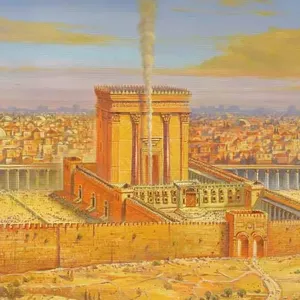 Who is the true Father of Zionism — Theodor Herzl, or God himself? Long before the nineteenth century, God declared Zion his eternal dwelling and promised to return his people there. Here is the complete biblical witness — 177 occurrences of "Zion" across the entire canon of Scripture.
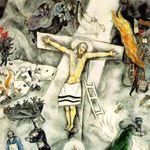 Part I: Israel and the Church from Abraham to Today - The origins of Israel: the Patriarchs; the Exodus and Mount Sinai; the kingdom of Israel; exile and return. Hebrews, Israelites and Jews. The Messiah and his rejection by his own people. The birth of the Church. Early Jewish-Christianity, the growth of Gentile Christianity, and the parting of ways. Israel in the patristic writings: the rise of "replacement theology." Christian anti-Semitism in the Middle-Ages. Theological evaluation: Israel and the Church in the New Testament.
 Faced with the "already here" of the Church, Israel is the witness of the "not yet". The Jewish people and the Christian people are thus in a situation of mutual imitation. Christians rejoice in the "already here", while the Jews remember the "not yet".
 Br. Tilbert Moser proposes a biblical alternative to the Two-State Solution and Vatican recognition of the Palestinian State. This article is currently available in German only.
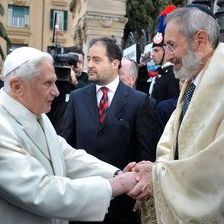 The purpose of my speech is to point out what the change in the relationship between Jews and Christians is about, and especially to show that in this change and in some prophetic events taking place in the world today between Christians and Jews, the heavenly Father is carrying out His plan in history looking more and more towards the day when Christ will return in glory to fulfill the Father's plan upon the world.
