
 The Catechism of the Catholic Church, initially promulgated in 1992, represents the most authoritative modern synthesis of Catholic doctrine. Among its teachings are a set of passages that address the Church’s relationship with the Jewish people and Judaism — a relationship the Catechism insists is unique, living, and theologically constitutive of Christian identity itself.
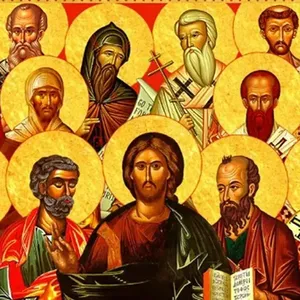 The Church Fathers are often remembered for their hostility toward Judaism. What is less well known is that nearly all of them also expected the Jewish people to be restored — returned not only to faith but, in the expectation of some, to their ancestral land. This article traces that overlooked tradition across more than a millennium of Christian thought.
Cardin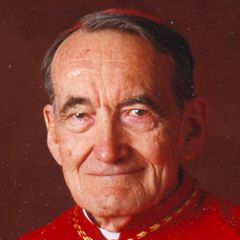 al Avery Dulles (1918-2008), of blessed memory, discusses the present status of God's covenant with Israel, a subject which has been extensively discussed in Jewish-Christian dialogues since the Shoah. Catholics look for an approach that fits in the framework of Catholic doctrine, much of which has been summarized by the Second Vatican Council...
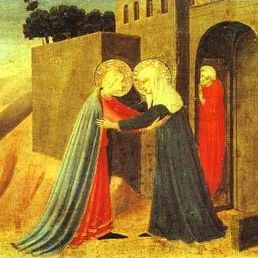
The slopes and trees of Nazareth are here in Judah’s hills, a sight familiar, as is she whom I have come to see. With Child, as I, we share a single joy, in laughter and in tears; in silent wonder.
 The New Temple will be erected when Judaism and Catholicism will be united to proclaim the only Word of God and the only one Messiah, to sing the only Glory of God that shines in all works performed in both Judaism and Catholicism, in the great works of mercy and in the great works of judgment for the sins of men. So the Nations will know that the true living God is among His people, living in His Temple, which is the Church of Jesus Christ.
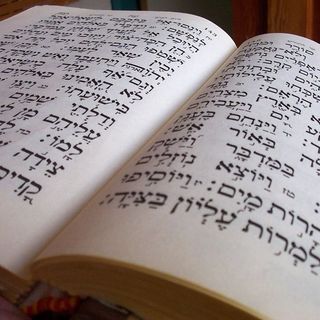
Ulpan programs - the modern Hebrew language schools - are known to be a hub of diversity, predominantly filled with new immigrants, Arab Israelis looking to learn Hebrew and Jewish students spending a semester abroad. But ulpan teachers say that in recent years, they have seen a remarkable influx of priests and priests-in-training being sent to ulpan programs officially by their seminaries.
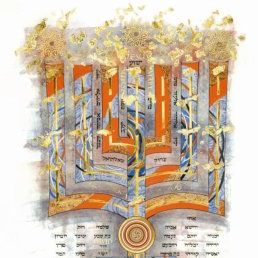 "The Chosen People, the Jews, teach us through the divine revelation of the living God that humility of heart is what is required to truly and more deeply encounter the living God. They knew the way of Christ before He was born."
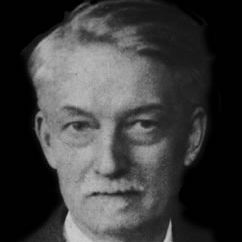 The central fact, which has its deepest meaning for the philosophy of history and for human destiny—and which no one seems to take into account—is that the passion of Israel today is taking on more and more distinctly the form of the Cross.
 This book is written as a simplified narrative of a complex historical and theological subject. It is written in prophetic language, providing a spiritual overview of the historical developments surrounding the rise and disappearance of Messianic Judaism in ancient times, as well as its rebirth in recent decades. This prophetic perspective explores the task before us and the fitting response to the resurrection of these "dry bones" by the power of the Holy Spirit, as prophesied by the Prophet Ezekiel.
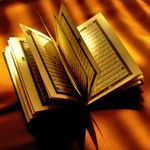 Since there are a number of passages in the Koran stating that God has given the Holy Land to the Sons of Israel, there can be no religious justification for radical Islamic opposition to the Jewish presence in this land.

Flanked by high Golan, Against the Syrian dawn, You mirror Galilean hills, And mingle with the Jordan As it bides with you awhile. Still lapping Caesar’s quay And green Kinneret’s plain, Your waters carry Ephraim again, recalling Simon and his friends.
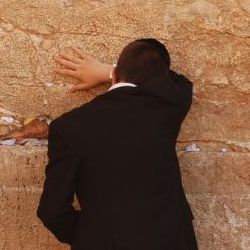
Nigh pristine still, these ancient stones arrest the sons of Abraham, and bid them weep, for they have lost their calling: the house they held aloft is swept away as once its builder’s nation was, and grief is here enshrined.
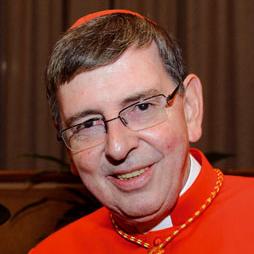 The history of relations between Christians and Jews represents a very complex history which alternates between proximity and distance, between fraternity and estrangement, between love and hate. On the one hand, Jesus cannot be understood without Judaism; on the other hand, the schism between synagogue and church forms the first split in the history of the church,
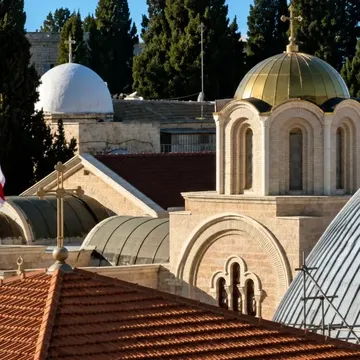 Is Christian Zionism really a “damaging ideology”—or is the controversy rooted in something deeper? This article examines the Jerusalem churches’ recent condemnation of Christian Zionism, probing its theological claims, political context, and implications for Palestinian Christians. It asks whether the churches’ opposition reflects timeless Christian theology—or a political posture shaped by the realities of the modern Middle East.
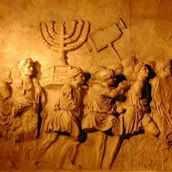 This coming Saturday night begins the fast of Tisha b'av on which we mourn the destruction of both the first and second Temples. According to the midrash, the messiah was born on Tisha b’av, when the first Temple, the Temple of Solomon, was destroyed. Something happened when the Temple was destroyed that kicked off the final redemption.
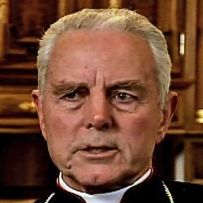 Following the reactions aroused by the recent Decree of the Congregation for Bishops, with which the excommunication of the four Bishops of the Fraternity of Saint Pius X was remitted, and in relation to the negationist and reductionist declarations concerning the Shoah on the part of Bishop Williamson of the same Fraternity, it is held opportune to clarify certain aspects of the matter.
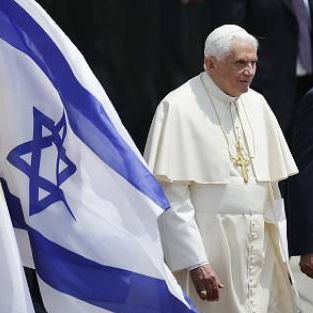 View videos showing the highlights of Pope Benedict's visit in Israel.
 The term 'a stiff-necked people,' used to describe the Jews' betrayal of God on Mt. Sinai, has been erroneously applied throughout history; but in one case, at least, it is sadly apt.
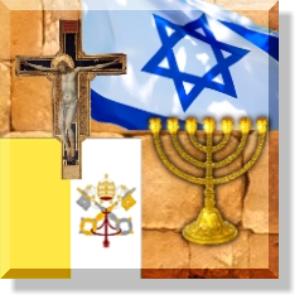 Dual-covenant theology is a theological error teaching that since God's covenant with the Jews is still valid for them, they don't need Jesus or the New Covenant to be saved. Jews could go to Heaven simply by keeping the Law of Moses, because of the "everlasting covenant" between Abraham and God (Gen 17:13), whereas Gentiles (non-Jews) must convert to Christianity to be saved.
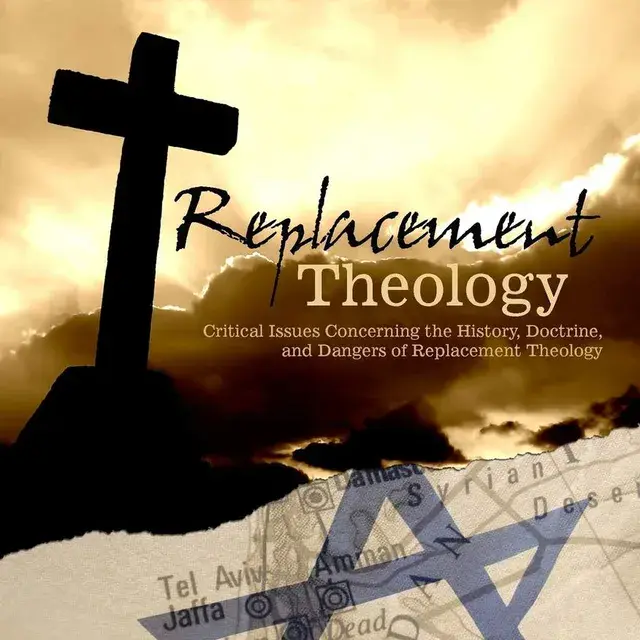
 Replacement theology (or supersessionism) is the idea that the Christian Church has "replaced" Israel (or the Jewish people) in God's plan of salvation as His chosen people. In its simplest expression, replacement theology could be expressed as follows: "The Jews have rejected Christ; therefore God has rejected the Jews, and the Church is now the 'New Israel.'"