

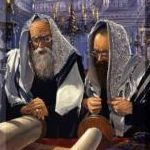
"Do not think that I came to abolish the law or the prophets. I have not come to abolish but to fulfill. For truly, I say to you, until heaven and earth pass away, not an iota, not a dot, will pass from the Law until all is accomplished." (Matt 5:17-19)
Articles examining how the Torah and the Gospel illuminate one another within the unity of God’s revelation. This section also considers the vocation of Jewish disciples of Jesus — Messianic Jews, Hebrew‑Catholics, and Catholic Jews — and their relationship to the mitzvot within the Catholic Church.
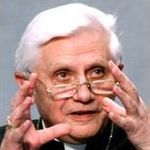 The history of the relationship between Israel and Christendom is drenched with blood and tears. It is a history of mistrust and hostility, but also - thank God - a history marked again and again by attempts at forgiveness, understanding and mutual acceptance... Can Christian faith, left in its inner power and dignity, not only tolerate Judaism but accept it in its historic mission? Or can it not? Can there be true reconciliation without abandoning the faith, or is reconciliation tied to such abandonment?
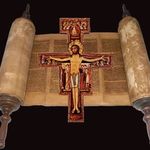 There are no disagreements between Judaism and Catholicism. Where their teachings diverge, it is because they apply to two different, well, let’s call them universes, two ways that human experience is unified (uni-verse, “turned into one”) in relation to G-d according to their respective covenants.
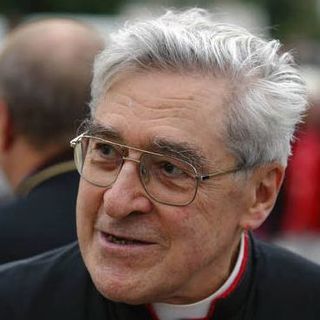 From Cardinal Jean-Marie Lustiger's Book 'The Promise':"The Church appears in Jerusalem, after Pentecost, as an "assembly" kahal in Hebrew, ecclesia in Greek. it is unthinkable that she would claim to replace Israel. She is not another Israel, but the very, fulfillment, in Israel, of God's plan..."
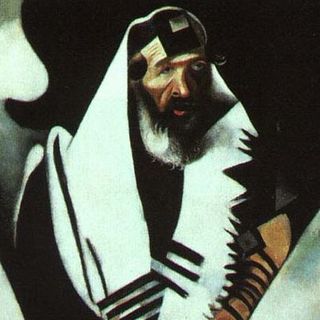 The commandments of the Law of Moses require both interior and exterior acts. There are commandments which pertain to the heart (love of G-d, to love of neighbor, fear of G-d etc.) and commandments which pertain to the body (resting on the Sabbath, eating kosher food, etc.). Virtually all the commandments of Jesus relate to interior acts. True, he requires acts of charity. He requires us to feed the hungry, clothe the naked, visit the sick etc. but that is because those acts bear witness to love. It is the love that he requires, and it has been said by Catholic saints that, without love, even such acts are meaningless.
 The sanctification of the body is important because, as St. Paul points out in Romans 7, the law of sin, i.e., the impulse to sin, resides in the body. The sanctification of the body through the repeated acts of obedience to the ceremonial law is directed to uprooting that impulse to sin.
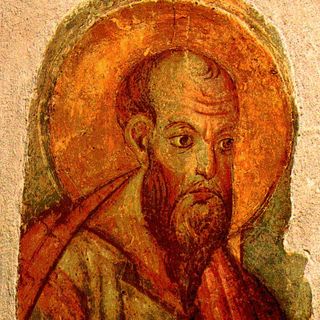 Is the baptized Jew still a Jew? Is he still obligated to keep the Law? Didn't St. Paul say that he's not? The purpose of this article is to address these questions by examining some of the most relevant passages from the epistles of St. Paul. We will see that a careful reading of his epistles suggests that the very reason St. Paul gives for exempting the Gentile from the observance of the Law deepened the meaning of the Law and value of observance for the Christian Jew.
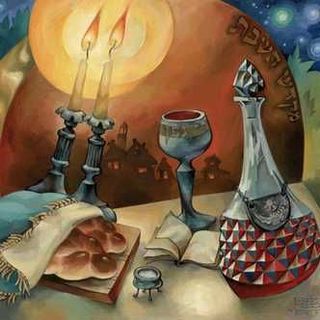 Are the laws of kashrut (the Jewish dietary laws) just empty, outdated rules, or do they serve a purpose in glorifying God for the Catholic Jew?
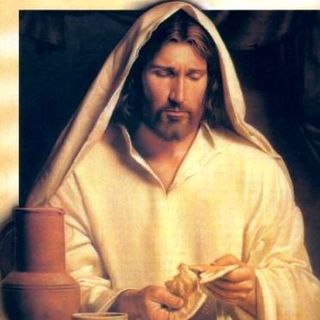 Did Jesus Suspend the Observance of the Law? This article examines some of the Biblical arguments in support of the traditional doctrine that exempts, not only the Gentile, but even the baptized Jew from keeping the Law of the Torah. We will examine here certain episodes which have been interpreted to show that Jesus suspended the observance of the Law: Jesus and the kashrut dietary laws, Jesus and the Sabbath, and Peter's vision of the animals in Acts 10.
 "Hebrew Catholic Vocation" by Aharon Yosef
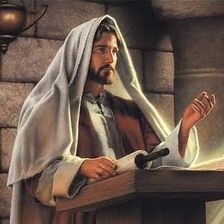 Is the baptized Jew obligated to keep the commandments of the Jewish Law? In the first part of this series, we see how Jesus did not abrogate the Law of Moses that was given to the Jewish people. We also see how the early Jewish-Christian community continued to live in accordance with the Torah.
