

"... blindness in part has happened to Israel until the fullness of the Gentiles has come in. And so all Israel will be saved... Concerning the Gospel they are enemies for your sake, but concerning the election they are beloved for the sake of the fathers. For the gifts and the calling of God are irrevocable." (Rom 11:25-29)
Articles on the theological relationship between Israel and the Church, the Church’s understanding of God’s covenant faithfulness, and the role of Israel in the unfolding plan of salvation.
 Who is the true Father of Zionism — Theodor Herzl, or God himself? Long before the nineteenth century, God declared Zion his eternal dwelling and promised to return his people there. Here is the complete biblical witness — 177 occurrences of "Zion" across the entire canon of Scripture.
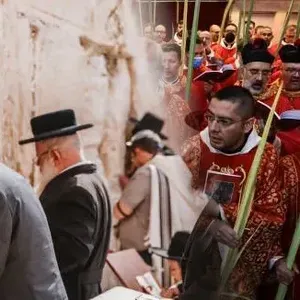 Who is the Israel of God? It’s one of the most explosive questions in Christian theology — and the answer isn’t what most people think. This article traces the interpretation of Galatians 6:16 from Paul to the Church Fathers to the modern Magisterium, exposing how a single verse became a battleground for identity, covenant, and the future of Israel.
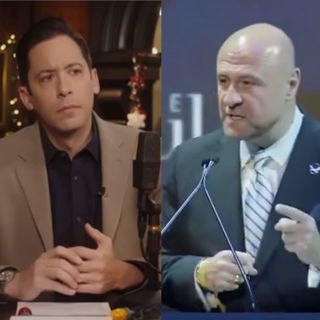 Michael Knowles should be commended for supporting the state of Israel based on international law. But when he lampoons Robert Stearns for his version of Christian Zionism, he misrepresents both Stearns and Catholic teaching.
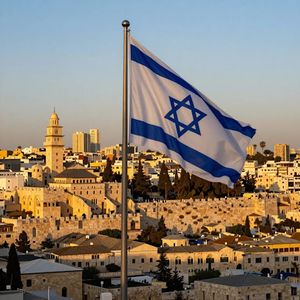 One of the most common objections raised by Catholics sceptical of Vatican II - particularly within traditionalist circles - is the claim that the Council's teaching on the Jewish people, especially as articulated in Nostra Aetate, represents a doctrinal novelty or rupture with prior tradition. This essay seeks to demonstrate that the Council's teaching on Israel does not originate in the 1960s but is firmly grounded in Sacred Scripture, patristic theology, medieval scholasticism, and the ordinary Magisterium prior to Vatican II.
In contemporary Catholic discourse, particularly in response to evangelical dispensationalism and political Zionism, a renewed emphasis has emerged on "fulfilment theology." This approach rightly insists that Jesus Christ is the fulfilment of the Law, the Prophets, and the promises made to Israel. However, a troubling tendency persists within some Catholic presentations of fulfilment theology: namely, the effective redefinition of Israel away from the Jewish people and into a purely christological or ecclesial abstraction.
 WATCH: Jonathan Cahn confronts a rising Christian trend to dismiss Israel's ongoing significance and to portray the Jewish people as spiritually obsolete. He shows how this thinking distorts Scripture and reopens the door to antisemitism. Catholics should have the confidence to affirm that God remains faithful to Israel and that the Jewish return to their ancestral land is not theologically irrelevant, but part of God's providential fidelity to His promises.
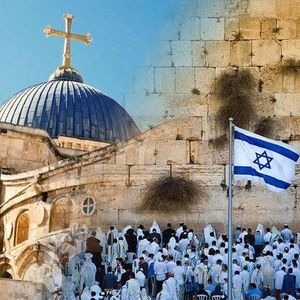 Dr. André Villeneuve addresses the problem of Catholic anti-Zionism—including 15 fallacies upon which it is based—and its underlying cause: the enduring influence of Catholic supersessionism.
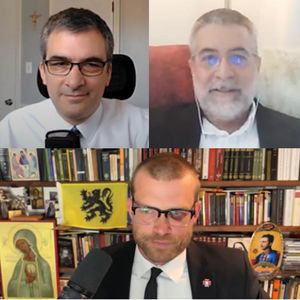 Dr. André Villeneuve and Dr. Matthew Tsakanikas debate the question of Catholic Zionism in light of Sacred Scripture, Catholic Tradition, and the teachings of the Magisterium.
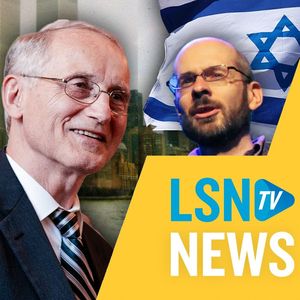 Since the October 7 Hamas attack against Israel, a troubling surge in global antisemitism has emerged—including within Catholic circles. A case in point is LifeSiteNews, given its track record of publishing anti-Israel narratives. Does LifeSiteNews have an antisemitism problem? Let's take a closer look.
 On the Beyond Rome podcast, Simone Rizkallah and James O’Reilly are joined by Andre Villeneuve to discuss how Catholics should navigate between the two heresies of Supersessionism (or Replacement Theology) and Dual Covenant Theology.
 The central fact, which has its deepest meaning for the philosophy of history and for human destiny—and which no one seems to take into account—is that the passion of Israel today is taking on more and more distinctly the form of the Cross.
