

A Document that Abandons Christian Discernment
The 2025 iteration of the Kairos Palestine II declaration — ironically titled "A Moment of Truth: Faith in the Time of Genocide" — presents itself as a Christian, faith-based response to suffering. Yet upon close examination, it reads less like an ecclesial or theological document and more like a manifesto shaped by contemporary revolutionary ideology. Its language, assumptions, and moral logic mirror those of secular activist movements and Islamist propaganda far more closely than the Christian moral tradition it claims to represent.
This essay argues that the document fundamentally fails on four levels: theological integrity, moral coherence, rhetorical responsibility, and empirical credibility. In doing so, it risks instrumentalising Christian faith in service of an ideological project that ultimately undermines both Christian witness and the actual survival of Christian communities in the region.
The document's self-presentation as a cry of faith and conscience therefore warrants careful scrutiny. Christian discernment has never consisted in the mere repetition of emotionally charged language or in the absolutising of one political narrative as salvific truth. Rather, it is marked by sobriety, moral proportionality, and an insistence on truth that resists both sentimentality and ideological coercion.
In the Kairos Palestine text, however, the categories of Christian moral theology are repeatedly displaced by the grammar of modern activism. Accusation replaces argument, slogans substitute for analysis, and theological language is pressed into the service of predetermined conclusions. Terms such as genocide, colonialism, and resistance are deployed not as contested claims requiring careful justification, but as axioms to which the reader must submit. In this sense, the document does not invite moral reflection so much as demand ideological assent.
This displacement has serious consequences. When Christian language is subordinated to revolutionary frameworks, the Gospel ceases to function as a measure by which all powers are judged and instead becomes a banner under which one power struggle is sanctified. The result is not prophetic witness but moral reductionism: complex human realities are flattened into binary categories of oppressor and oppressed, guilt is assigned collectively rather than personally, and the possibility of repentance, conversion, and reconciliation is eclipsed by perpetual accusation.
Such an approach not only departs from the Christian tradition; it endangers those it claims to defend. By aligning Christian theology with maximalist political rhetoric, the document risks further marginalising vulnerable Christian minorities on the ground and eroding the Church's credibility as a bearer of truth. What presents itself as moral courage thus becomes, on closer inspection, a failure of discernment with grave pastoral and theological implications.
The Abuse of Theological Language: "Genocide" as a Dogmatic Slogan
The most striking feature of the document is its repeated, unqualified use of the term genocide as a theological absolute rather than a legal or moral conclusion reached through careful argument. The term is deployed not as a contested accusation but as an article of faith, to be denied only by moral degenerates or theological traitors.
This rhetorical move mirrors precisely the language strategy used by Islamist militant movements, in which moral categories are absolutised, context is erased, and all opposition is framed as complicity in evil. In Christian theology, however, genocide is a grave juridical claim requiring rigorous evidentiary standards, moral proportionality, and careful differentiation between intent, consequence, and tragic collateral harm.
By collapsing all such distinctions, the document replaces Christian moral reasoning with revolutionary moral certainty. It becomes impossible, within its framework, to condemn Hamas atrocities without simultaneously relativising them as "contextual responses", while Israel's actions are treated as metaphysically evil by definition. This is not theology; it is moral Manichaeism.
The theological problem is not merely one of emphasis but of category error. Within the Christian moral tradition, especially as articulated in Augustinian and Thomistic just-war reasoning and later developed in modern Catholic social teaching, terms such as genocide are never self-authenticating. They require the careful assessment of intent (mens rea), scale, proportionality, discrimination between combatants and non-combatants, and the presence or absence of alternatives. To elevate such a term into a fixed theological predicate is to confuse moral theology with political denunciation.
Once genocide becomes a dogmatic slogan rather than a conclusion argued toward, it functions as a rhetorical weapon: it forecloses debate, anathematises dissent, and transforms prudential disagreement into moral heresy. This is precisely the opposite of the Church's disciplined approach to moral judgement, which insists on clarity without absolutism and condemnation without dehumanisation.
The pastoral consequences of this misuse are equally grave. When the language of genocide is invoked as an unquestionable article of faith, it conditions believers to interpret all facts selectively and all suffering asymmetrically. Violence committed by one side is metaphysically pre-interpreted as evil in se(by its very nature), while violence committed by the other is reduced to an unfortunate but intelligible reaction to oppression. Such a framework cannot sustain genuine moral accountability, because it assigns innocence and guilt prior to any examination of concrete acts.
In practice, this results in the moral sanitisation of terrorism and the erosion of the Church's capacity to name sin wherever it appears. Christian theology does not deny the reality of grave injustice, nor does it minimise civilian suffering; but it refuses to baptise revolutionary certainty as moral truth. Where distinctions collapse and moral absolutes are ideologically pre-assigned, theology gives way to propaganda — and the Gospel is reduced to a slogan of struggle rather than a word of judgement, mercy, and truth.
Selective Moral Vision and the Erasure of Hamas
Perhaps the most ethically revealing omission in the document is its near-total refusal to engage seriously with Hamas as a governing authority in Gaza. Gaza is described as if it were an abstract victim-space rather than a territory ruled for nearly two decades by an explicitly Islamist organisation that persecutes Christians, suppresses dissent, and embeds its military infrastructure within civilian areas.
The document speaks emotionally of Gaza's Christians, yet avoids the inconvenient fact that Gaza's Christian population has dwindled to roughly one thousand people — a decline driven not by Israel, but by sustained Hamas intimidation, Islamisation, and repression. If Christians have been "ethnically cleansed" from Gaza, it has been primarily by the Islamist rulers whom the document refuses to name as moral agents.
This selective silence is not accidental. It reflects a broader ideological pattern in which Islamist violence is consistently contextualised, excused, or rendered invisible, while Israeli action is treated as intrinsically criminal regardless of circumstance. Such moral asymmetry is incompatible with Christian ethics, which insist on universal moral accountability.
This omission has profound theological and ethical implications. Christian moral reasoning is inseparable from the recognition of agency: sin is committed by persons and structures that can be named, judged, and called to repentance. By refusing to treat Hamas as a governing power with moral responsibility for the welfare of Gaza's population, the document effectively dissolves agency into abstraction.
Gaza becomes a passive symbol of suffering rather than a lived society shaped by concrete political and religious forces. In doing so, the text shields an Islamist regime from moral scrutiny while simultaneously depriving its victims — including Palestinian Christians, political dissidents, women, and minorities — of an honest account of their oppression. Such an approach does not protect the vulnerable; it erases them.
The ethical distortion is further deepened by the document's treatment of violence. Hamas's deliberate targeting of civilians, its theological glorification of martyrdom, and its systematic use of human shields are either omitted or reframed as the inevitable by-products of occupation. This framing stands in direct tension with Christian teaching, which condemns the intentional killing of civilians and the instrumentalisation of human life without qualification.
To contextualise such acts is not the same as explaining them; it is to mitigate their moral gravity. Meanwhile, Israeli military action — regardless of intent, warning procedures, or internal legal constraints — is presented as inherently illegitimate. This asymmetry does not arise from careful moral discernment but from ideological pre-commitment. Christianity cannot sustain a moral vision in which one actor is forever exempt from judgement and another forever beyond exculpation. Where accountability is selective, justice ceases to be justice, and compassion is reduced to partisanship.
The Colonisation of Christian Language by Leftist Ideology
The document's vocabulary is saturated with the lexicon of contemporary Western activist movements: settler colonialism, structural sin, indigeneity, supremacy, decolonisation, intersectionality, ecocide, and resistance. These terms are not neutral descriptors; they are ideological constructs developed within neo-Marxist and post-colonial theory.
Their uncritical importation into Christian discourse represents a colonisation of theology by secular ideology. Biblical categories such as sin, repentance, justice, reconciliation, and forgiveness are redefined not by Scripture or tradition, but by activist frameworks in which power relations replace moral agency, and grievance replaces repentance.
This mirrors precisely the rhetoric now common in other settler-colonial narratives — including those applied uncritically to Australia's history — where moral complexity is flattened, historical continuity denied, and present-day guilt assigned collectively and permanently. Christianity, however, does not operate on inherited moral guilt or perpetual victimhood. It operates on conversion, truth, and moral responsibility.
The difficulty with this ideological transplantation is not simply that the terms originate outside Christian theology, but that they carry with them an entire moral cosmology incompatible with the Gospel. In activist frameworks, history is read almost exclusively through the lens of power, domination, and resistance, and moral worth is assigned according to one's location within that schema. Oppression becomes the primary category of sin, while agency, intention, and personal culpability recede into the background.
When such a framework is baptised into Christian language, the result is a radical distortion: sin is no longer something from which all persons must repent, but a condition permanently attached to one group and permanently denied to another. Redemption is reimagined not as conversion of heart, but as the dismantling of structures by political struggle. In this schema, forgiveness appears not as a virtue but as a betrayal of the cause.
This ideological shift also corrodes the Church's capacity to speak truthfully about history. By adopting the language of settler-colonialism as an all-encompassing explanatory key, the document collapses millennia of Jewish presence, religious attachment, and historical continuity in the land into a caricature of European imperialism. Complexity is replaced by moral theatre, and continuity by rupture. Similar dynamics are evident in other contexts where activist narratives have been uncritically imported into ecclesial discourse, including Australian debates over indigeneity, in which nuanced historical realities are often sacrificed to totalising moral claims.
Christianity resists such flattening precisely because it refuses to reduce human history to a single axis of blame. It affirms that injustice can be real without being total, that responsibility can be shared without being collective, and that healing requires truth-telling rather than ideological re-labelling. Where theology is colonised by secular activism, the Church loses not only its language, but its soul.
A Distorted Christology: Jesus as Revolutionary Symbol
The Christ presented in this document is not the Christ of the Gospels, but a symbolic revolutionary figure conscripted into a political struggle. Jesus is invoked repeatedly as standing "with the oppressed," yet stripped of His concrete Jewish identity, His covenantal context, and His rejection of violent messianism.
The document explicitly endorses resistance movements while maintaining a rhetorical fig-leaf of "creative resistance." Yet in practice, it morally legitimises violent struggle by framing it as an inevitable and righteous response to oppression. This logic is indistinguishable from that employed by Islamist movements, which likewise speak of dignity, resistance, and liberation while justifying terror.
Historic Christianity, by contrast, has always insisted that ends do not sanctify means. The Cross is not a licence for revolutionary violence; it is a judgement upon it. This revolutionary recasting of Christ represents a profound theological rupture. In the Gospels, Jesus consistently refuses the role of political liberator imposed upon Him by the expectations of His age. He rejects the sword in Gethsemane, resists being made king by force, and explicitly distinguishes His Kingdom from the coercive logics of worldly power.
His solidarity with the poor and the oppressed is never expressed through the sacralisation of violence or the legitimisation of revenge, but through a radical call to repentance, self-giving love, and truth spoken without fear. By abstracting Jesus from His Jewish covenantal identity and situating Him instead as a transhistorical symbol of resistance, the document empties Christology of its incarnational specificity and turns the Son of God into a moral mascot for a political cause.
The consequences of this distortion are not merely doctrinal but pastoral. When Christ is presented as endorsing resistance understood in revolutionary terms, the moral brakes that restrain violence are subtly released. "Creative resistance" becomes an elastic category under which almost any act may be excused, provided it is framed as a response to oppression. This mirrors precisely the justificatory patterns of Islamist movements, which likewise invoke sacred language to sanctify struggle while claiming moral immunity for their actions. Christianity has always resisted such reasoning.
The Cross stands as God's refusal to redeem the world through domination, even when domination is cloaked in the language of justice. To follow the Crucified is not to baptise violence, but to submit all power, all resistance, and all claims of righteousness to the judgement of sacrificial love. Where Christ is reduced to a revolutionary symbol, the Gospel is hollowed out, and the Church is left with a politics of resentment rather than a theology of redemption.
The Weaponisation of Antisemitism Discourse
The document devotes extensive space to redefining antisemitism in ways that render Jewish self-definition suspect and Jewish historical memory irrelevant. While claiming to oppose antisemitism, it systematically delegitimises Jewish collective identity by treating Zionism not as a contested political movement, but as a uniquely evil, quasi-demonic force.
This rhetorical strategy is deeply irresponsible. It echoes Islamist and far-left discourses that claim to oppose antisemitism while reproducing its core structures: collective Jewish guilt, moral inversion, and the denial of Jewish historical trauma. The insistence that dialogue with Jews must exclude "Zionist voices" effectively means excluding the majority of Jews worldwide from meaningful engagement.
Such a position is not reconciliation; it is ideological purification. The deeper danger of this approach lies in its redefinition of what constitutes legitimate Jewish presence in moral and theological discourse. By insisting that Jewish voices are acceptable only insofar as they repudiate Zionism, the document establishes an ideological test that Jews must pass in order to be heard.
This mirrors older patterns of antisemitism in which Jews were tolerated only when they renounced their collective identity, historical memory, or religious particularity. In this framework, Jewish self-understanding — including the post-Holocaust conviction that political self-determination is bound up with collective survival — is treated not as a historically intelligible response to trauma, but as evidence of moral corruption. The language may differ from earlier forms of antisemitism, but the structural logic remains alarmingly familiar.
Moreover, the document's attempt to cordon off "antisemitism" from opposition to Zionism collapses under scrutiny. While it is certainly true that not all criticism of Israel is antisemitic, it is equally true that rhetoric which consistently singles out the Jewish state as uniquely illegitimate, uniquely criminal, and uniquely beyond moral redemption creates the very conditions in which antisemitism flourishes.
When Zionism is described in quasi-theological terms as a racist, supremacist ideology alien to human morality, Jews who identify with Zionism — which includes a broad spectrum of religious, secular, left-leaning, and peace-oriented Jews — are implicitly cast as participants in evil. Dialogue conducted on such premises is not genuine encounter but moral sorting. Christianity, if faithful to its own history, must resist any discourse that revives ancient patterns of exclusion under the guise of prophetic critique. True reconciliation begins with the refusal to demonise, not with the demand that one party first disown its own history in order to be deemed worthy of conversation.
The Failure of Christian Witness
Most tragically, the document undermines the very Christian communities it claims to defend. By aligning Christian theology with ideological movements hostile to pluralism, religious freedom, and Jewish existence, it places Middle Eastern Christians on the wrong side of history — and often on the wrong side of their own neighbours.
Christian survival in the Middle East has historically depended not on revolutionary rhetoric, but on careful moral credibility, non-alignment with extremist ideologies, and fidelity to a Gospel that refuses both imperial domination and revolutionary absolutism. This document abandons that tradition entirely.
The cost of this abandonment is borne not by distant activists or ecclesial institutions in the West, but by fragile Christian communities living amid volatile religious and political pressures. When Christian leaders publicly adopt rhetoric that mirrors Islamist or revolutionary discourse, they do not gain protection or moral leverage; they lose credibility and invite suspicion. In regions where Christians survive as minorities precisely because they are perceived as non-threatening, non-aligned, and committed to coexistence, the sacralisation of political struggle places them at greater risk.
It collapses the careful distinction between Christian witness and partisan mobilisation, exposing local believers to reprisals from those who view such rhetoric as confirmation that Christians are ideological adversaries rather than neighbours. What is presented as prophetic courage from afar can become pastoral negligence on the ground.
Historically, Christian endurance in the Middle East has rested on a demanding form of fidelity: speaking truth without absolutising grievance, refusing violence without denying injustice, and maintaining moral independence from both imperial powers and revolutionary movements. This posture has never been easy, but it has been essential.
The Kairos II document departs from this inheritance by binding Christian identity to a single political narrative and presenting dissent as betrayal of faith. In doing so, it reduces the Church's vocation from sacrament of reconciliation to instrument of struggle. Such a transformation does not strengthen Christian witness; it hollows it out. Where the Church ceases to be recognisably Christian in its moral reasoning, it forfeits the very authority it seeks to exercise — and leaves the faithful it claims to defend more vulnerable, not less.
Convergence of Extremes: How Anti-Jewish Rhetoric Travels Under the Banner of "Anti-Zionism"
A further warning sign is the way rhetoric of the Kairos II type is now being mainstreamed by outlets that, in other contexts, present themselves as champions of "orthodoxy" and opponents of progressive activism. The LifeSiteNews article 'Faith in a Time of Genocide': Holy Land Christians call for solidarity, repudiation of Zionism (7 January 2026) functions as a case study in ideological cross-pollination: a platform widely associated with the extreme right amplifies a document whose conceptual grammar is largely drawn from the contemporary radical left (settler-colonialism, structural sin, indigeneity, apartheid regime, genocide as a moral absolute) and whose moral asymmetries frequently align, in practice, with Islamist informational framing (maximising Israeli culpability while minimising, contextualising, or marginalising Hamas as a governing agent and as a persecutor of Christians).
This convergence is not accidental. It reflects a deeper pattern in modern polemics: movements that otherwise loathe one another can form tactical alliances when they discover a shared animating resentment — here, hostility towards Jews — repackaged in a more socially acceptable idiom, namely "anti-Zionism". In such contexts, "anti-Zionism" becomes a permissive moral solvent: it allows actors on the far right to launder older anti-Jewish tropes through the language of political critique, and it allows actors on the far left to claim moral purity while enabling rhetoric that routinely collapses into collective suspicion of Jews and Jewish communal self-definition. In Australia this has lead to the Bondi Beach massacres of December 14 2025.
The LifeSiteNews article illustrates several mechanisms by which this laundering occurs. First, it treats the Kairos II text's most contestable claims as settled reality ("occupation and genocide"; "they don't mince words"), converting accusations into axioms and rewarding maximalist speech as "clarity". Secondly, it normalises a demand that churches "boycott dialogue with Zionist voices", a proposal that — whatever its authors intend — practically functions as a form of religious and ethnic exclusion. Given that Zionism (in its broadest sense) is a mainstream Jewish communal position across much of global Jewry, a blanket ecclesial boycott of "Zionist voices" is not a surgical critique of a policy platform; it is an attempt to redraw the acceptable boundaries of Jewish participation in Christian-Jewish engagement.
Thirdly, the article adopts the document's framing that accusations of antisemitism are chiefly "calumnies" weaponised to silence truth, which primes readers to dismiss genuine antisemitism concerns in advance. That rhetorical template is now one of the most reliable bridges between extremes: the far left uses it to delegitimise Jewish alarm at demonising rhetoric; the far right uses it to re-enter anti-Jewish discourse while claiming they are merely opposing "a political ideology"; Islamists use it to shield agitation that is overtly eliminationist. The result is a strange but increasingly common coalition of mutual convenience: left, right, and Islamist actors speaking different dialects, but converging on the same practical output — Jewish collective guilt, Jewish political illegitimacy, and Jewish exclusion from moral standing unless Jews first disavow their own communal narratives.
For Christian ethics, this convergence is not a minor sociological curiosity; it is a moral red flag. The Church's tradition insists on disciplined distinctions: between legitimate criticism of a state's actions and collective suspicion of a people; between moral accountability and totalising demonology; between political argument and theological scapegoating. When a putatively Christian outlet begins praising maximalist texts precisely because they are "shocking" and "don't mince words", it is often signalling that discernment has been displaced by agitation.
In that environment, anti-Jewish sentiment can masquerade as zeal for justice, and ideological enemies can become collaborators because the shared target overrides all other commitments. A genuinely Christian response must refuse that trap. It must defend Palestinian human dignity without adopting the rhetorical habits of extremist movements; it must condemn antisemitism without allowing "anti-Zionism" to become an exemption from moral scrutiny; and it must reject any ecclesial programme that implies Jews may only be engaged, heard, or treated as partners if they first pass an ideological purity test.
What makes this convergence particularly corrosive is that it thrives on the illusion of moral bravery. Outlets such as LifeSiteNews frame their embrace of Kairos II as an act of courageous truth-telling against powerful lobbies, thereby recasting ideological transgression as prophetic virtue. Yet this posture relies on a sleight of hand: the more extreme and rhetorically absolute the claim, the more it is praised as "clarity", while caution, nuance, or historical sensitivity are dismissed as cowardice or complicity.
In such a climate, discernment is reframed as betrayal, and restraint as moral failure. This dynamic is not new. It has long been a feature of movements in which ressentiment seeks moral legitimacy, and it explains why groups otherwise hostile to one another can momentarily align. What binds them is not a shared theology or coherent ethic, but a shared permission structure in which Jews may be singled out, pathologised, and excluded without incurring the stigma that open antisemitism once carried.
The ecclesial danger is acute. When Christian platforms adopt this rhetoric, they do not merely comment on political events; they reshape the moral imagination of their audiences. By repeatedly presenting Jewish communal self-understanding as suspect, Jewish political agency as uniquely illegitimate, and Jewish appeals to historical trauma as manipulative, they cultivate a form of moral hostility that is easily internalised by believers who would otherwise reject overt antisemitism.
The Church's long struggle to overcome the legacy of contempt for Jews is quietly undermined, not by explicit hatred, but by a steady erosion of sympathy and trust. In this environment, anti-Jewish sentiment no longer needs to declare itself; it can operate under the respectable banner of "anti-Zionism", endorsed simultaneously by progressive activists, reactionary polemicists, and Islamist propagandists. A Christian ethic worthy of the name must recognise this convergence for what it is: not a sign of newfound moral clarity, but a warning that ideological resentment has begun to eclipse the Gospel's demand for truth, charity, and disciplined judgement.
Personal Witness and the Collapse of Ideological Abstractions (2002-2008)
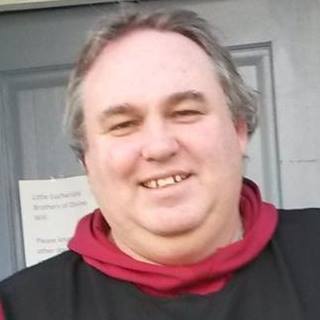
My own understanding of Israel-Palestine was decisively reshaped not by theory, but by lived experience. Between 2002 and 2008 I lived for extended periods in Israel and Jerusalem, including time spent in the Muslim Quarter of the Old City. I arrived holding views that would comfortably have been described as politically anti-Zionist . Like many Western Christians, I had absorbed a framework in which Palestinians were presented almost exclusively as passive victims and Israel as the primary, if not sole, moral aggressor. Much of what I believed at that stage now strikes me as second-hand ideology rather than first-hand knowledge.
That changed rapidly once I encountered the concrete realities on the ground. I moved daily between Israeli and Palestinian areas; I lived among Muslim neighbours; I worshipped alongside Jews and Christians of multiple rites. The contrast between rhetoric and reality was stark. In the State of Israel, I was able to practise my Catholic faith freely and openly, attending daily Mass at numerous churches without fear or obstruction. Christian liturgical life was visible, protected, and normal. By contrast, within Palestinian areas — particularly those under strong Islamist social pressure — I witnessed an atmosphere in which Christian presence was fragile, contested, and often actively discouraged.
What proved most confronting were the conversations I had with Palestinian Christians themselves, especially in Jerusalem. Many spoke to me privately, and often with visible fear, about pressures they experienced from Palestinian Muslim neighbours. Several repeated, almost verbatim, a phrase they claimed to have heard more than once: "First we will get rid of the Saturday people, then you Sunday people."
Whether spoken as threat, warning, or ideological slogan, its meaning was unambiguous. These Christians were deeply uneasy with the pro-Muslim political rhetoric adopted by parts of the higher clergy, which they felt did not reflect their lived reality and left them exposed. Far from seeing Islamist dominance as protective, they regarded it as existentially dangerous to Christian survival in the Holy Land.
It was in this context that claims of "genocide" demanded a more honest moral interrogation. If one uses the term loosely, as the Kairos II document does, it becomes a slogan rather than an analytical category. Yet if one asks soberly where Christian life has most rapidly declined, where emigration has been most intense, and where religious freedom has been most constrained, the answer is not difficult. The most consistent pressure driving Palestinian Christians out of the West Bank and surrounding areas has come not from Israeli civil authority, but from the Islamist controlled Palestinian Authority Establishment social, political, and religious dominance.
This does not deny the existence of Israeli extremists — they exist, as they do in every society — nor does it excuse acts of harassment such as spitting from a small minority of Jews, which I didn't personally witness, but heard about from others. But it does require intellectual honesty: the only people who physically spat on me for being a Christian were Muslims in the Muslim Quarter of Jerusalem where I lived with the Armenian Catholic Bishop, not Jews.
This personal testimony does not function as a universal claim, nor does it deny Palestinian suffering or Israeli wrongdoing where it occurs. It does, however, expose the inadequacy of totalising narratives. Ideological frameworks that flatten all agency into a single villain and sanctify all opposition as righteous resistance, collapse when confronted with concrete human experience.
My shift away from political anti-Zionism was not ideological conversion but moral awakening: a recognition that reality in the Holy Land is more complex, more tragic, and more morally demanding than activist rhetoric allows. Any Christian theology that refuses to listen to the lived testimony of vulnerable Christians on the ground — especially when that testimony contradicts fashionable narratives — has already ceased to be a theology of truth.
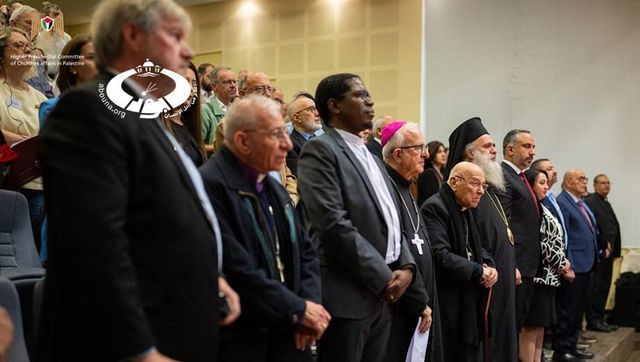
This lived experience also exposed the distance between ecclesial rhetoric and pastoral reality. I became increasingly aware that some elements of the higher clergy operated within political frameworks shaped by external pressures, funding streams, and diplomatic calculations that bore little resemblance to the daily vulnerabilities of ordinary Christians. Several local believers expressed, often in confidence, a sense of abandonment: their fears were minimised, their testimonies inconvenient, and their concerns subordinated to narratives designed for Western consumption.
I personally heard about and experienced the corruption of the higher up clergy in Jerusalem. I also encountered a painful disillusionment among deeply faithful religious — including holy women religious in Bethlehem — who spoke candidly about corruption, careerism, and institutional self-preservation within certain church structures. They warned that many religious bodies in the region were primarily concerned with money, power, and property, and would instinctively mistrust spiritual initiatives such as Perpetual Eucharistic Adoration, assuming them to be driven by the same motives.
This was not cynicism, but grief: a recognition that institutional survival strategies had, in some cases, displaced evangelical integrity. A group of young spiritual Armenian Catholic youth mentioned this to me as well and asked me whether it was just in Jerusalem or was the Church like that all over the world.
These experiences reinforced a conviction that no theology of the Holy Land can claim credibility if it ignores the testimonies of those who live there without protection or ideological leverage. Abstract theories about oppression and resistance dissolve when confronted with the concrete realities of fear, silence, and moral compromise. The reduction of complex human relations to a single explanatory narrative — whether framed as settler-colonialism, genocide, or resistance — fails precisely where Christian theology must begin: with truth spoken in humility and accountability.
My journey away from political anti-Zionism was therefore not a movement towards ideological certainty, but away from it. It was an acceptance of moral complexity and a refusal to sacrifice vulnerable Christians on the altar of rhetorical coherence. Any Christian witness that demands silence from those most at risk, or dismisses their experience because it disrupts a preferred narrative, forfeits its claim to truth. Theology worthy of the name must be accountable not only to ideas, but to reality — especially when reality is uncomfortable.
A Cry that Is Not of the Spirit
The 2025 Kairos Palestine declaration is not a prophetic Christian witness. It is an ideological document clothed in biblical language, echoing the rhetoric of Islamist militancy and Western activist culture rather than the moral wisdom of Christianity. Its absolutism, selectivity, and theological incoherence render it incapable of contributing to peace, reconciliation, or genuine justice.
True Christian solidarity with Palestinians — including Palestinian Christians — requires moral clarity, rejection of terrorism, respect for Jewish continuity, and resistance to ideological capture. This document offers none of these. Instead, it replaces the Cross with the slogan, repentance with accusation, and theology with propaganda.
In doing so, it speaks loudly — but not truthfully — and certainly not with the voice of Christ. The tragedy of the Kairos II declaration lies not only in what it says, but in what it displaces. By substituting ideological certainty for spiritual discernment, it forecloses the very possibilities it claims to seek. Peace cannot emerge from a framework that pre-assigns guilt metaphysically and sanctifies grievance as virtue.
Reconciliation cannot grow where one people's history is rendered illegitimate and another's suffering is instrumentalised as moral capital. Justice, in the Christian sense, requires truth spoken without fear or favour — including the courage to name terrorism as sin, to acknowledge the moral agency of all actors, and to resist narratives that absolve one side by demonising the other. Where these conditions are absent, what remains is not prophecy but performance, not witness but agitation.
A Christian response worthy of the Gospel must therefore take a different path. It must listen first to those most exposed to harm, especially vulnerable Christian minorities whose experiences do not fit activist templates. It must hold together what ideology seeks to tear apart: compassion and accountability, solidarity and truth, memory and repentance.
Above all, it must remain anchored in the Cross — not as a political symbol, but as God's judgement upon every claim to righteous violence and every attempt to co-opt divine authority for human power. The Spirit of Christ does not shout slogans or demand ideological conformity; He convicts, heals, and reconciles. A cry that refuses this discipline, however loud or impassioned, may stir emotions — but it does not speak with the voice of the Spirit who is Truth.
In the same way that, in my own country and within the Church in Australia, ecclesial elites frequently speak on political matters from a distinctly left-leaning perspective that does not reflect the convictions, experiences, or moral instincts of ordinary Catholic believers, so too must the statements of the ecclesial establishment in the Holy Land be approached with discernment rather than automatic deference. Institutional pronouncements, however solemnly framed, do not necessarily represent the lived faith of the faithful, nor do they possess intrinsic moral authority simply by virtue of their authorship. A genuinely Catholic response requires attentiveness to the sensus fidelium, humility before concrete reality, and the courage to distinguish between authentic Christian witness and the ideological positions of church elites who speak more readily in the language of politics than in the grammar of the Gospel.