

This section offers articles and resources on Jewish liturgy, prayer, feasts, and sacred times, exploring their meaning and the events they commemorate. These materials help you understand how Jewish worship is lived today and how its rhythms, symbols, and themes illuminate the life of faith. They also highlight the deep connections between Jewish and Christian prayer, showing how these traditions speak to one another within God’s unfolding plan.
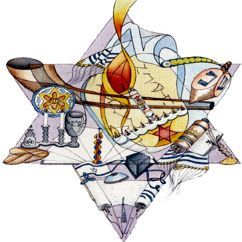 The Feasts of Israel commemorate God's deliverance of the Israelites from Egypt and his care for them during the Exodus. Yet the feasts also foreshadow God's salvation plan for humanity in Christ. This essay examines the significance of these feasts for the Jewish people as well as their messianic and typological fulfillment in Christ.
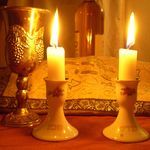 When I first moved to Israel, I was stunned to hear about the many prohibitions that bind orthodox Jews in their observance of the Sabbath day. Like many Christians who first encounter these practices, I couldn’t help but wonder: isn’t this legalistic approach to the Sabbath just like the pharisaic one that Jesus so severely criticizes in the Gospels? At the same time, I was fascinated by the earnestness with which religious Jews observe the seventh day, especially when compared to the fading role of Sunday as day of rest in most culturally Christian countries.
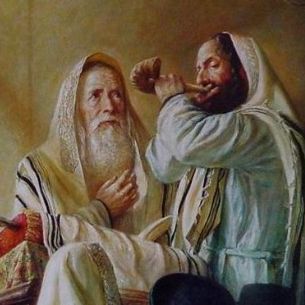 The four holidays of this coming holiday season correspond to the events of Holy Week and the Ascension. They are a figure of the great salvific events which mark the last days of Jesus’ human presence in this world. The Christian Jew participates in those saving events, and immerses himself in the Christian mysteries of salvation as he celebrates the Jewish holidays.
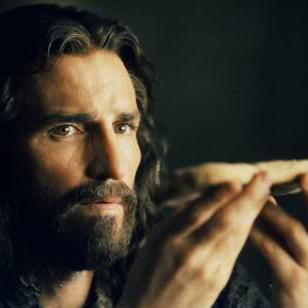 When Jesus distributed the matzo to the disciples saying, “This is My Body,” He perfected and updated the Biblical commandment to eat matzo on the Seder night, so that the commandment to eat matzo we received at Mt. Sinai would teach us how to respond to G-d as He revealed Himself through the Incarnation and the Cross.
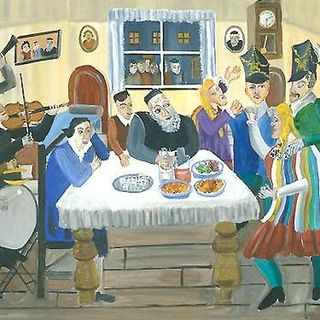 Purim is a day of ecstatic rejoicing, which the Jews celebrate as both a sign of G-d’s enduring love and a promise of their final salvation. There’s nothing in the holiday that contradicts Christian faith, except for one thing: it usually falls out smack in the middle of Lent.
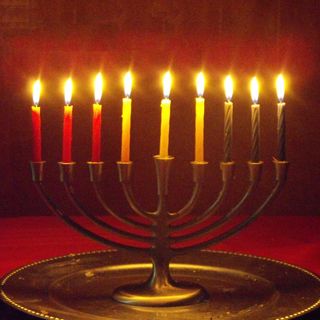 Hanukkah commemorates the 164 BCE rededication of the Second Temple in Jerusalem after its desecration by the Seleucid Kingdom, under Antiochus IV - and the re-establishment of religious freedom for the Jewish people after a period of harsh repression.
 The period preceding the Jewish New Year is marked by special penitential prayers, recited before the regular morning prayers, and the blowing of the ram's horn (shofar in Hebrew) after the morning prayer service...
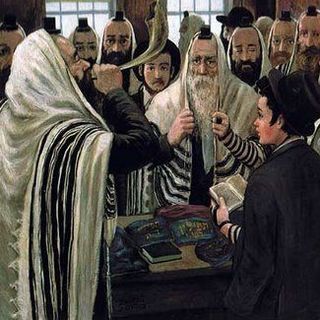 According to an ancient collection of legends (Pirkei d'Rabbi Eliezer-The Teachings of Rabbi Eliezer), the beginning of the Hebrew month of Elul marks the beginning of an especially solemn period of forty days that concludes with Yom Kippur.
 Many Christians do not realize that the seven feasts which God commanded in Leviticus 23 are still observed by their Jewish neighbors. The feasts, as given to Israel, have a multi-faceted significance. First, there was the seasonal aspect of each holiday, involving agricultural activities in the land; then the feasts were to be a memorial of God's dealings with the people of Israel; and, finally, there may be prophetic symbolism. Many Christians see parallel in God's dealings with Israel and with the Church.
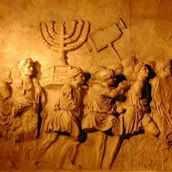 This coming Saturday night begins the fast of Tisha b'av on which we mourn the destruction of both the first and second Temples. According to the midrash, the messiah was born on Tisha b’av, when the first Temple, the Temple of Solomon, was destroyed. Something happened when the Temple was destroyed that kicked off the final redemption.
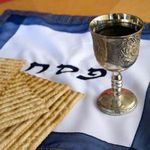 Why should the Jew who has been saved by Jesus celebrate his redemption from Egypt? What meaning could the statement in the Haggadah that we should regard ourselves as having participated personally in the Exodus, possibly have for him? What can the redemption from Egypt give him that he has not already received through the Cross?
