
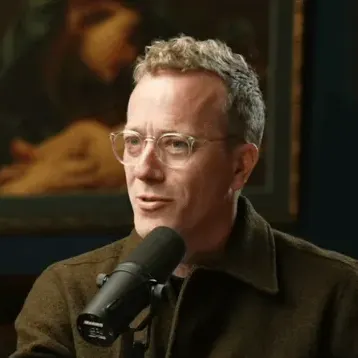
 Matt Fradd recently claimed that Catholic teaching clearly condemns Christian Zionism — and packaged that claim as a "catechism." But in doing so he committed a basic error: presenting a contested theological opinion as settled Church teaching. This point-by-point refutation exposes the loaded questions, false dilemmas, selective citations, and supersessionist assumptions that run through his argument.
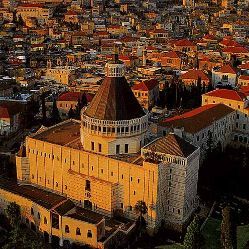
No film director’s dream, this Galilean town: an ordinary place. Do you think I put it down? Why, no! It is to ordinary men he came, to share their ordinary lives, that they might be his kith.
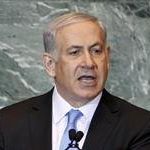 Prime Minister Benjamin Netanyahu speaks at the 66th session of the General Assembly at United Nations headquarters on September 23, 2011, following Palestinian President Mahmoud Abbas' speech.
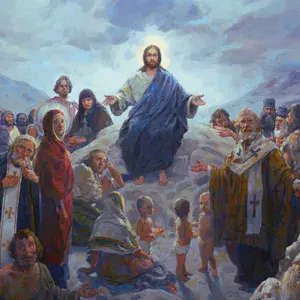 Has God rejected his people? Supersessionists claim that God's promises to Israel were "fulfilled" — and therefore abolished — by the coming of Christ. The New Testament itself tells a different story. Here is a compilation of NT verses affirming that God's covenant with Israel remains intact.
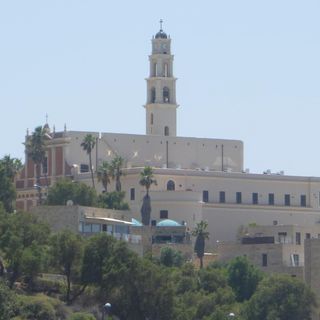 The Old City of Jaffa, located on the southern edge of Tel Aviv on the Mediterranean coast, was known in ancient times as the gateway to the Land of Israel. With its 3,000 years of history, Old Jaffa is the world’s most ancient port.
 Jesus Christ suffers in the passion of Israel. In striking Israel, the anti-Semites strike him, insult him and spit on him. To persecute the house of Israel is to persecute Christ, not in his mystical body as when the Church is persecuted, but in his fleshly lineage and in his forgetful people whom he ceaselessly loves and calls. In the passion of Israel, Christ suffers and acts as the shepherd of Zion and the Messiah of Israel, in order gradually to conform his people to him.
 If we wish to grasp the meaning of God's Plan in history with regard to Israel, we must go far beyond the issues relating to the present political Israel or any other temporal vision regarding Israel. We must grasp the role Israel has in God's Plan in the last days of history, wherein we have entered with the end of the time of the nations and the beginning of the time of Israel as God’s nation called in the end times to accept Messiah.
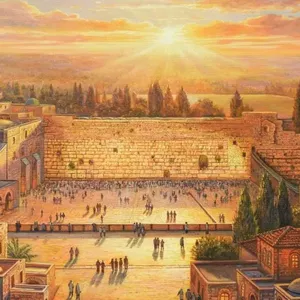 Two Catholic scholars have written directly to Pope Leo XIV, posing a question the Church has long sidestepped: does the modern State of Israel carry any theological significance, or is its existence a matter of politics alone? Their open letter considers this "theological silence" in the light of Scripture, Tradition, and Church history — and argues that the moment has come for an answer.
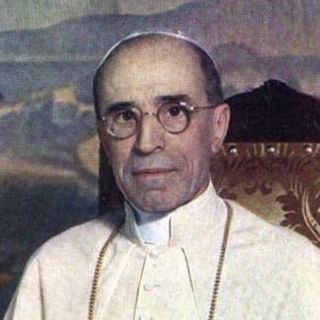 An organization researching the history of Pius XII's relationship with the Jews says that a series of documents recently uncovered show a pattern of direct actions by Archbishop Eugenio Pacelli (the future Pope) that culminated in the establishment of the modern State of Israel.
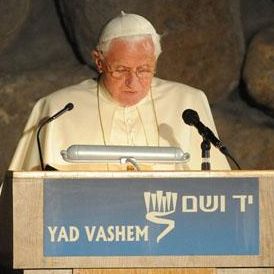 "May the Names of These Victims Never Perish." Here is the text of the address Benedict XVI gave on May 11, 2009 at the Yad Vashem memorial to the victims of the Holocaust.
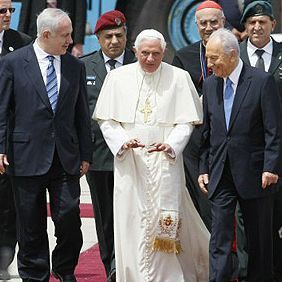 "Sadly, anti-Semitism continues to rear its ugly head in many parts of the world. This is totally unacceptable." The following is the speech delivered by Pope Benedict XVI at Ben Gurion airport upon his arrival in Israel on May 11, 2009.
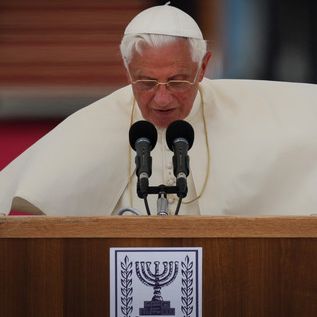 "We meet as brothers, brothers who at times in our history have had a tense relationship, but now are firmly committed to building bridges of lasting friendship." Here is the text of the farewell address Benedict XVI gave at Tel Aviv's Ben Gurion international airport, before boarding a plane to return to Rome.
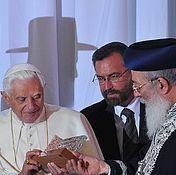 "Our Two Communities Are Challenged to Engage People of Good Will at the Level of Reason." Here is the text of Benedict XVI's address during a courtesy visit to the "Hechal Shlomo" center, seat of the Grand Rabbinate, after he visited the Wailing Wall in Jerusalem.
 LORD, that which You have given us, give to all Israel. May all Israel discover the sweet gentleness and sublimity of the Messiah, who is still waiting, and has already been with us for twenty centuries, Yeshua, the Lord. And together with the Messiah, may Israel discover the stunning beauty of the Good News that comes from heaven, the New Covenant capable of bringing to Israel the peace of her God, shalom upon Jerusalem.
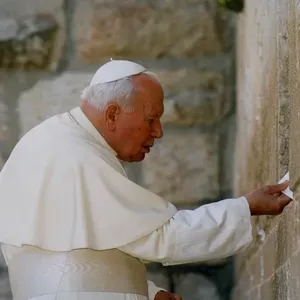 In March 2000 Pope John Paul II visited Israel. During the visit a historic ceremony was held in the Hall of Remembrance in Yad Vashem expressing the wish for reconciliation between the Catholic Church and the Jewish people.
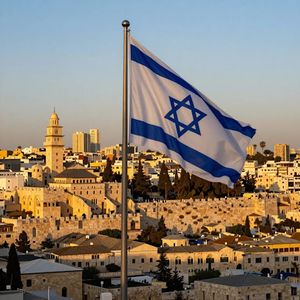 Test your knowledge of Israel and the Church. Don't worry if you're unsure about the answers; just take your best guess. This quiz highlights common beliefs and assumptions on these topics and then offers clear, well-grounded explanations drawn from Catholic teaching.
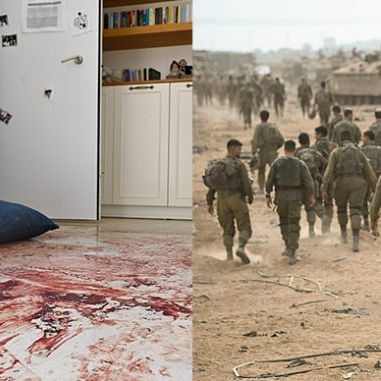 On October 28, 2023, Israeli Prime Minister Benjamin Netanyahu caused a stir when he quoted a controversial passage from the Bible identifying Hamas with Amalek--Israel's archenemy in the Bible--to justify Israel's ongoing war against the terrorist group.
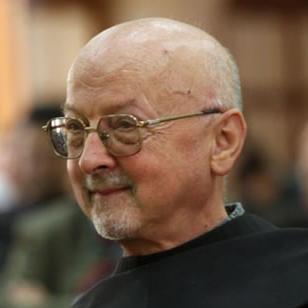 Faced with the "already here" of the Church, Israel is the witness of the "not yet". The Jewish people and the Christian people are thus in a situation of mutual imitation. Christians rejoice in the "already here", while the Jews remember the "not yet".
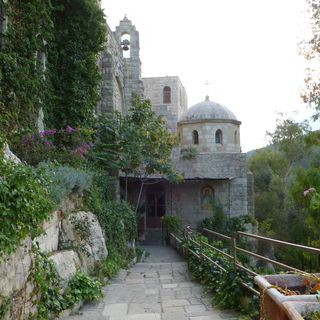 Tradition identifies the deserted place where John the Baptist grew up as the hermitage of St. John in the Desert, also known as 'Ain el-Habis (spring of the hermit.) The site is located in the heart of the Judean hills, about 3 km from Ein Karem, St. John’s birthplace, which is itself just 7-8 km west of Jerusalem.
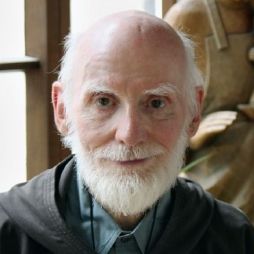 Br. Tilbert Moser proposes a biblical alternative to the Two-State Solution and Vatican recognition of the Palestinian State. This article is currently available in German only.