


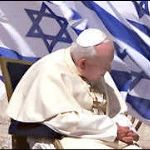
"...l'indurimento di una parte di Israele è in atto fino a che saranno entrate tutte le genti. Allora tutto Israele sarà salvato... Quanto al Vangelo, essi sono nemici, per vostro vantaggio, ma quanto alla elezione, sono amati, a causa dei padri, perchè i doni e la chiamata di Dio sono irrevocabili." (Rm 11,25-29)
Questa sezione presenta articoli sul rapporto teologico tra Israele e la Chiesa, sulla comprensione da parte della Chiesa della fedeltà di Dio alla sua alleanza e sul ruolo di Israele nel dispiegarsi del piano di salvezza.
 One of the most common objections raised by Catholics sceptical of Vatican II - particularly within traditionalist circles - is the claim that the Council's teaching on the Jewish people, especially as articulated in Nostra Aetate, represents a doctrinal novelty or rupture with prior tradition. This essay seeks to demonstrate that the Council's teaching on Israel does not originate in the 1960s but is firmly grounded in Sacred Scripture, patristic theology, medieval scholasticism, and the ordinary Magisterium prior to Vatican II.
In contemporary Catholic discourse, particularly in response to evangelical dispensationalism and political Zionism, a renewed emphasis has emerged on "fulfilment theology." This approach rightly insists that Jesus Christ is the fulfilment of the Law, the Prophets, and the promises made to Israel. However, a troubling tendency persists within some Catholic presentations of fulfilment theology: namely, the effective redefinition of Israel away from the Jewish people and into a purely christological or ecclesial abstraction.
 WATCH: Jonathan Cahn confronts a rising Christian trend to dismiss Israel's ongoing significance and to portray the Jewish people as spiritually obsolete. He shows how this thinking distorts Scripture and reopens the door to antisemitism. Catholics should have the confidence to affirm that God remains faithful to Israel and that the Jewish return to their ancestral land is not theologically irrelevant, but part of God's providential fidelity to His promises.
Leggi tutto: Jonathan Cahn on Israel, the Jews, and Tucker Carlson
 Dr. André Villeneuve addresses the problem of Catholic anti-Zionism—including 15 fallacies upon which it is based—and its underlying cause: the enduring influence of Catholic supersessionism.
Leggi tutto: Catholic Anti-Zionism: Straw Men, Dead Horses, and Other Fallacies
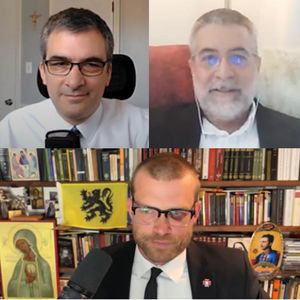 Dr. André Villeneuve and Dr. Matthew Tsakanikas debate the question of Catholic Zionism in light of Sacred Scripture, Catholic Tradition, and the teachings of the Magisterium.
Leggi tutto: Zionism Debate: Dr. André Villeneuve vs. Dr. Matthew Tsakanikas
 Since the October 7 Hamas attack against Israel, a troubling surge in global antisemitism has emerged—including within Catholic circles. A case in point is LifeSiteNews, given its track record of publishing anti-Israel narratives. Does LifeSiteNews have an antisemitism problem? Let's take a closer look.
Leggi tutto: Catholic Antisemitism: The Case of LifeSiteNews
 On the Beyond Rome podcast, Simone Rizkallah and James O’Reilly are joined by Andre Villeneuve to discuss how Catholics should navigate between the two heresies of Supersessionism (or Replacement Theology) and Dual Covenant Theology.
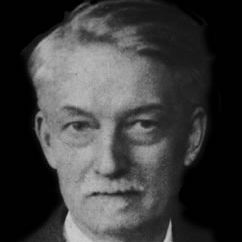 The central fact, which has its deepest meaning for the philosophy of history and for human destiny—and which no one seems to take into account—is that the passion of Israel today is taking on more and more distinctly the form of the Cross.

I terribili attacchi di Hamas contro Israele del 7 ottobre 2023 e la conseguente guerra a Gaza hanno sollevato molti interrogativi tra i cattolici: essi dovrebbero sostenere Israele? L'Israele moderno beneficia ancora oggi di uno status speciale in quanto nazione scelta da Dio, o dovremmo considerarlo un'entità politica puramente laica come ogni altro stato? Questo articolo prenderà in considerazione questi interrogativi e cercherà di fornire alcuni principi e linee guida teologiche e catechetiche di base per i cattolici riguardo al "mistero di Israele".
Leggi tutto: Perché Israele è importante: le radici bibliche del sionismo cattolico
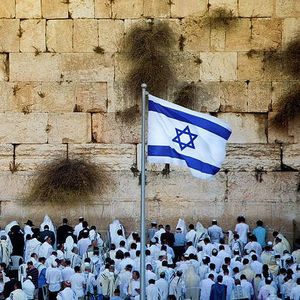 Il dono incondizionato dell'elezione del popolo ebraico è il fondamento teologico del sionismo cattolico. Molti testi del Nuovo Testamento sostengono l'idea che i cattolici dovrebbero approvare il sionismo. Gesù stesso era un sionista ebreo cristiano. I cattolici riconoscono che il popolo ebraico ha ancora un ruolo provvidenziale da svolgere, e il suo ritorno in terra d’Israele può essere parte del piano di redenzione, ancora da compiere.
 Il sionismo cristiano di solito è respinto da chi lo critica per uno o più di questi tre motivi: (1) dicono elimini completamente il Nuovo Testamento, dove l'attenzione dell'Antico Testamento su una particolare terra è sostituita da una visione che ha a che vedere con il mondo intero; (2) pensano sia l’unica preoccupazione dei dispensazionalisti premillenaristi; (3) si dice che sia più politico che teologico, legato ai partiti politici americani e israeliani di destra che identificano impropriamente l'attuale Stato israeliano con l'eschaton. Alcuni studiosi hanno recentemente sostenuto la causa di un "nuovo" sionismo cristiano che adotta un approccio inedito rispetto a questi tre problemi.
