


« l'endurcissement d'une partie d'Israël durera jusqu'à ce que soit entré l'ensemble des païens. Et ainsi tout Israël sera sauvé... Par rapport à l'Évangile, les voilà ennemis, et c'est en votre faveur; mais du point de vue de l'élection, ils sont aimés, et c'est à cause des pères. Car les dons et l'appel de Dieu sont irrévocables. » (Rom 11:25)
Cette section propose des articles sur la relation théologique entre Israël et l’Église, sur la compréhension par l’Église de la fidélité de Dieu à son alliance, et sur le rôle d’Israël dans le déploiement du plan de salut.
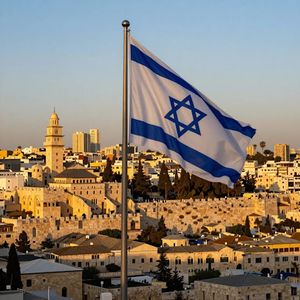 In contemporary Catholic discourse, particularly in response to evangelical dispensationalism and political Zionism, a renewed emphasis has emerged on "fulfilment theology." This approach rightly insists that Jesus Christ is the fulfilment of the Law, the Prophets, and the promises made to Israel. However, a troubling tendency persists within some Catholic presentations of fulfilment theology: namely, the effective redefinition of Israel away from the Jewish people and into a purely christological or ecclesial abstraction.
 WATCH: Jonathan Cahn confronts a rising Christian trend to dismiss Israel's ongoing significance and to portray the Jewish people as spiritually obsolete. He shows how this thinking distorts Scripture and reopens the door to antisemitism. Catholics should have the confidence to affirm that God remains faithful to Israel and that the Jewish return to their ancestral land is not theologically irrelevant, but part of God's providential fidelity to His promises.
Lire la suite : Jonathan Cahn on Israel, the Jews, and Tucker Carlson
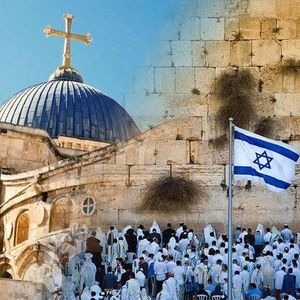 Dr. André Villeneuve addresses the problem of Catholic anti-Zionism—including 15 fallacies upon which it is based—and its underlying cause: the enduring influence of Catholic supersessionism.
Lire la suite : Catholic Anti-Zionism: Straw Men, Dead Horses, and Other Fallacies
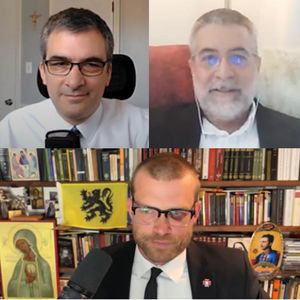 Dr. André Villeneuve and Dr. Matthew Tsakanikas debate the question of Catholic Zionism in light of Sacred Scripture, Catholic Tradition, and the teachings of the Magisterium.
Lire la suite : Zionism Debate: Dr. André Villeneuve vs. Dr. Matthew Tsakanikas
 Since the October 7 Hamas attack against Israel, a troubling surge in global antisemitism has emerged—including within Catholic circles. A case in point is LifeSiteNews, given its track record of publishing anti-Israel narratives. Does LifeSiteNews have an antisemitism problem? Let's take a closer look.
Lire la suite : Catholic Antisemitism: The Case of LifeSiteNews
 On the Beyond Rome podcast, Simone Rizkallah and James O’Reilly are joined by Andre Villeneuve to discuss how Catholics should navigate between the two heresies of Supersessionism (or Replacement Theology) and Dual Covenant Theology.
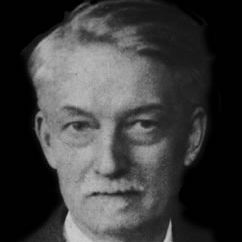 The central fact, which has its deepest meaning for the philosophy of history and for human destiny—and which no one seems to take into account—is that the passion of Israel today is taking on more and more distinctly the form of the Cross.
 Should Catholics support Israel? Does the modern State of Israel still share in any aspect of God's election, or should it be viewed simply as one nation among others on the world stage? This article takes up these questions by tracing the biblical and magisterial foundations of a Catholic understanding of Israel. It offers clear theological and catechetical principles to help Catholics navigate the enduring “mystery of Israel” in light of Scripture, Tradition, and the Church’s authoritative teaching.
Lire la suite : Why Israel Matters: The Biblical Roots of Catholic Zionism
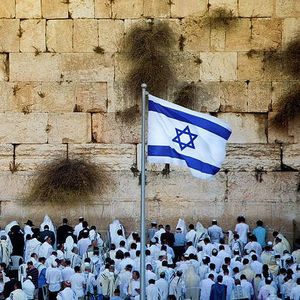 Le don inconditionnel de l'élection du peuple juif constitue le fondement théologique du sionisme catholique. De nombreux textes du Nouveau Testament peuvent venir à l'appui de l'idée selon laquelle les catholiques devraient soutenir le sionisme. Jésus lui-même était un juif chrétien sioniste. Les catholiques reconnaissent que le peuple juif a encore un rôle providentiel à jouer et que son retour sur la terre d'Israël pourrait faire partie du plan de rédemption en voie d'accomplissement.
 Les détracteurs du sionisme chrétien le rejettent généralement pour l’une ou plusieurs des trois raisons suivantes : (1) Ils disent que celui-ci met en miettes le Nouveau Testament, où l'accent mis par l'Ancien Testament sur un pays particulier est remplacé par la vision du monde dans sa totalité ; (2) Ils pensent que c'est là, la préoccupation exclusive des dispensationalistes prémillénaristes, dont la théologie inclue les Juifs pour promouvoir son propre rôle dans les calendriers présomptueux des événements de la Fin des Temps ; (3) Ils l’estiment plus politique que théologique, comme relevant des idées politiques de la droite américaine et israélienne qui identifient à tort l’État israélien actuel à l’eschaton.
 Gerald McDermott étudie la notion de substitution dans la théologie chrétienne, celle-ci estime que les promesses faites au peuple juif dans l'Ancien Testament, y compris la promesse d’une terre, ont été substituées par l'Église chrétienne. Il soutient que ce point de vue a dominé l'interprétation chrétienne depuis le quatrième siècle, conduisant à la marginalisation dans le Nouveau Testament, des références faites à la terre promise. McDermott démontre que le Nouveau Testament contient des propositions qui contredisent la théologie de la substitution, il soutient que la reconnaissance de la promesse d’une terre conserve une importance capitale dans le Nouveau Testament, car elle demeure essentielle pour comprendre la fidélité de Dieu et l'accomplissement de ses promesses.
Lire la suite : Pourquoi la terre promise appartient aux israélites
