



„Verstockung liegt auf einem Teil Israels, bis die Heiden in voller Zahl das Heil erlangt haben; dann wird ganz Israel gerettet werden... Vom Evangelium her gesehen sind sie Feinde, und das um euretwillen; von ihrer Erwählung her gesehen sind sie von Gott geliebt, und das um der Väter willen. Denn unwiderruflich sind Gnade und Berufung, die Gott gewährt." (Röm 11,25-29)
Dieser Bereich bietet Artikel über das theologische Verhältnis zwischen Israel und der Kirche, über das Verständnis der Kirche von Gottes Bundestreue und über die Rolle Israels im sich entfaltenden Heilsplan.
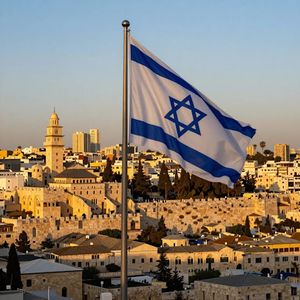 In contemporary Catholic discourse, particularly in response to evangelical dispensationalism and political Zionism, a renewed emphasis has emerged on "fulfilment theology." This approach rightly insists that Jesus Christ is the fulfilment of the Law, the Prophets, and the promises made to Israel. However, a troubling tendency persists within some Catholic presentations of fulfilment theology: namely, the effective redefinition of Israel away from the Jewish people and into a purely christological or ecclesial abstraction.
 WATCH: Jonathan Cahn confronts a rising Christian trend to dismiss Israel's ongoing significance and to portray the Jewish people as spiritually obsolete. He shows how this thinking distorts Scripture and reopens the door to antisemitism. Catholics should have the confidence to affirm that God remains faithful to Israel and that the Jewish return to their ancestral land is not theologically irrelevant, but part of God's providential fidelity to His promises.
Weiterlesen: Jonathan Cahn on Israel, the Jews, and Tucker Carlson
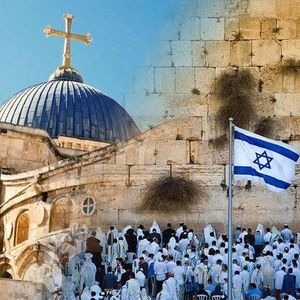 Dr. André Villeneuve addresses the problem of Catholic anti-Zionism—including 15 fallacies upon which it is based—and its underlying cause: the enduring influence of Catholic supersessionism.
Weiterlesen: Catholic Anti-Zionism: Straw Men, Dead Horses, and Other Fallacies
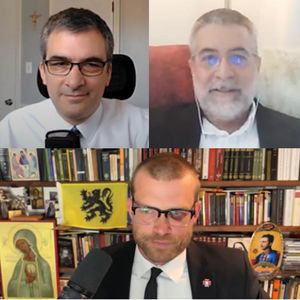 Dr. André Villeneuve and Dr. Matthew Tsakanikas debate the question of Catholic Zionism in light of Sacred Scripture, Catholic Tradition, and the teachings of the Magisterium.
Weiterlesen: Zionism Debate: Dr. André Villeneuve vs. Dr. Matthew Tsakanikas
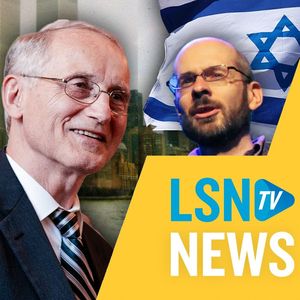 Since the October 7 Hamas attack against Israel, a troubling surge in global antisemitism has emerged—including within Catholic circles. A case in point is LifeSiteNews, given its track record of publishing anti-Israel narratives. Does LifeSiteNews have an antisemitism problem? Let's take a closer look.
Weiterlesen: Catholic Antisemitism: The Case of LifeSiteNews
 On the Beyond Rome podcast, Simone Rizkallah and James O’Reilly are joined by Andre Villeneuve to discuss how Catholics should navigate between the two heresies of Supersessionism (or Replacement Theology) and Dual Covenant Theology.
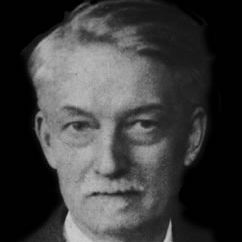 The central fact, which has its deepest meaning for the philosophy of history and for human destiny—and which no one seems to take into account—is that the passion of Israel today is taking on more and more distinctly the form of the Cross.
 Should Catholics support Israel? Does the modern State of Israel still share in any aspect of God's election, or should it be viewed simply as one nation among others on the world stage? This article takes up these questions by tracing the biblical and magisterial foundations of a Catholic understanding of Israel. It offers clear theological and catechetical principles to help Catholics navigate the enduring “mystery of Israel” in light of Scripture, Tradition, and the Church’s authoritative teaching.
Weiterlesen: Why Israel Matters: The Biblical Roots of Catholic Zionism
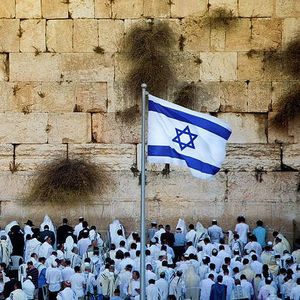 The unconditional gift of the election of the Jewish people is the theological foundation of Catholic Zionism. Many New Testament texts support the notion that Catholics should endorse Zionism. Jesus himself was a Jewish Christian Zionist. Catholics accept that the Jewish people still have a providential role to play, and their return to the land of Israel may be part of the still-to-be-completed redemptive plan.
 Critics of Christian Zionism usually dismiss it for one of three reasons: (1) They say it contradicts the New Testament, which replaces the Old Testament focus on a particular land by the vision of a whole world; (2) They think it is the exclusive concern of premillennial dispensationalists; (3) It is said to be more political than theological, attached to right-wing American and Israeli political parties that wrongly identify the current Israeli state with the eschaton. Scholars recently made the case for a "new" Christian Zionism that takes a fresh approach to all three of these problems.
 Gerald McDermott explores the notion of supersessionism in Christian theology, which suggests the promises made to the Jewish people in the Old Testament, including the land promise, have been superseded by the Christian church. This view has dominated Christian interpretation since the fourth century, leading to the marginalization of the New Testament's references to the land promise. Evidence in the New Testament contradicts supersessionism, and recognizing the ongoing significance of the land promise is vital for understanding God's trustworthiness and the fulfillment of his promises.
