


„Verstockung liegt auf einem Teil Israels, bis die Heiden in voller Zahl das Heil erlangt haben; dann wird ganz Israel gerettet werden... Vom Evangelium her gesehen sind sie Feinde, und das um euretwillen; von ihrer Erwählung her gesehen sind sie von Gott geliebt, und das um der Väter willen. Denn unwiderruflich sind Gnade und Berufung, die Gott gewährt." (Röm 11,25-29)
Dieser Bereich bietet Artikel über das theologische Verhältnis zwischen Israel und der Kirche, über das Verständnis der Kirche von Gottes Bundestreue und über die Rolle Israels im sich entfaltenden Heilsplan.
 The history of relations between Christians and Jews represents a very complex history which alternates between proximity and distance, between fraternity and estrangement, between love and hate. On the one hand, Jesus cannot be understood without Judaism; on the other hand, the schism between synagogue and church forms the first split in the history of the church,
Weiterlesen: Theological Questions and Perspectives in Jewish-Catholic Dialogue
 Ariel Ben Ami's and Mark Kinzer's reactions to my study regarding the different ways of understanding Israel have been important and I have appreciated the richness of their contents, albeit correcting some opinions I had expressed.
Weiterlesen: For a More Profound Knowledge of the Mystery of Israel, of the Church, of the World
 In this article, I examine three questions: First, the question "who is Israel?" - exploring five different ways of understanding the term "Israel." Second, I discuss the idea of God's blessing that comes "from" Israel and is intended "for" Israel. Third, I clarify the identity and mission of Catholics for Israel in light of these five ways of understanding Israel.
 If we wish to grasp the meaning of God's Plan in history with regard to Israel, we must go far beyond the issues relating to the present political Israel or any other temporal vision regarding Israel. We must grasp the role Israel has in God's Plan in the last days of history, wherein we have entered with the end of the time of the nations and the beginning of the time of Israel as God’s nation called in the end times to accept Messiah.
Weiterlesen: On the Diverse Realities that go under the name "Israel"
 Every time that I am asked to speak about Israel - and this happens often - I feel at first overwhelmed by the greatness and complexity of the subject. And so I simply try with my listeners to look at Israel, the Israel of yesterday, of today, and that of the hope of tomorrow.
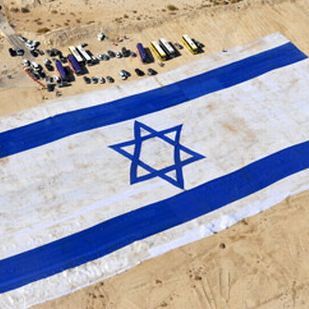 St. Jerome wrote long ago that "ignorance of Scripture is ignorance of Christ." Today, largely because of a widespread ignorance of Scripture, God's unique calling to the Jewish people is increasingly delegitimized and denied, and at the heart of this delegitimization stands their biblical connection to the Land of Israel.
 ….In the meantime, Israel retains its own mission. Israel is in the hands of God, who will save it “as a whole” at the proper time, when the number of the Gentiles is complete….the evangelization of the Gentiles was now the disciples’ particular task…. (Benedict XVI, Jesus of Nazareth, Vol 2, pp. 44-46).
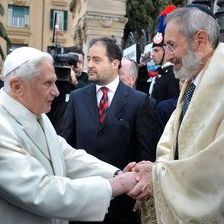 The purpose of my speech is to point out what the change in the relationship between Jews and Christians is about, and especially to show that in this change and in some prophetic events taking place in the world today between Christians and Jews, the heavenly Father is carrying out His plan in history looking more and more towards the day when Christ will return in glory to fulfill the Father's plan upon the world.
Weiterlesen: The Difficult Path of Unity between Jews & Christians
 Ich möchte drei Bilder vorstellen, eines aus dem Alten, die beiden anderen aus dem Neuen Testament, die den einzigartigen göttlichen Plan zum Ausdruck bringen, der Juden wie Christen umfasst: der Berg, auf dem sich alle Völker der Welt als Pilger einfinden; die Mauer, die einst die Menschheit teilte und schließlich von Jesus Christus niedergerissen wurde; der Baum, der durch eine Wurzel genährt wird und in der Fülle seiner Blätter erstrahlen soll.
Weiterlesen: "Licht für die Völker und Herrlichkeit für Israel"
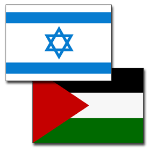 In the Catholic Church, disagreements are commonplace over a whole range of issues, be they political, social, economic, religious or historical, but at the end of the day these differences of opinion can be resolved through amicable discussion, prayer and a sense of fellowship and family in Christ. There is one issue, however, that divides so deeply that it has the potential to create permanent separation, and this is the issue of the Israeli-Palestinian Conflict.
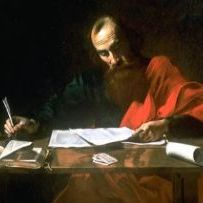 For most Jews, Saint Paul was a renegade Jew remembered with bitterness for the criticism he aimed at the Jewish religion after he became an ardent follower of Jesus of Nazareth. Perhaps it is time for this negative view of Paul to be balanced by the solid defence of the Jewish people that he wrote in the mid 50’s of the first century C.E., in a letter to the Roman church.
